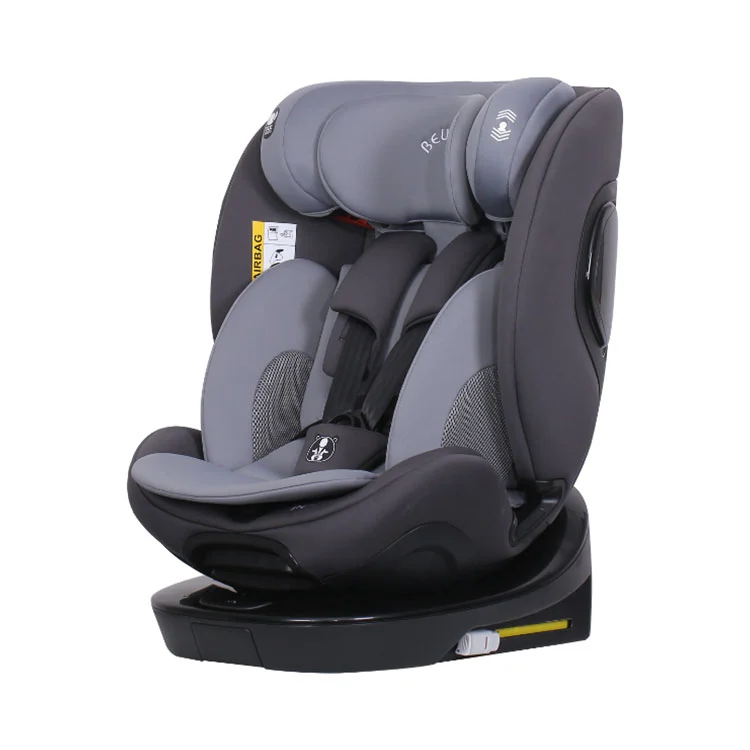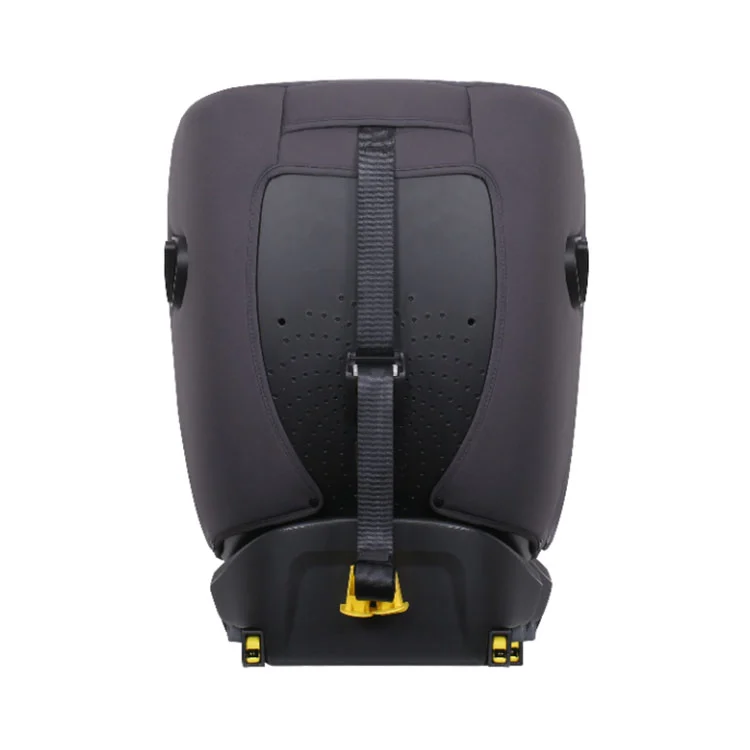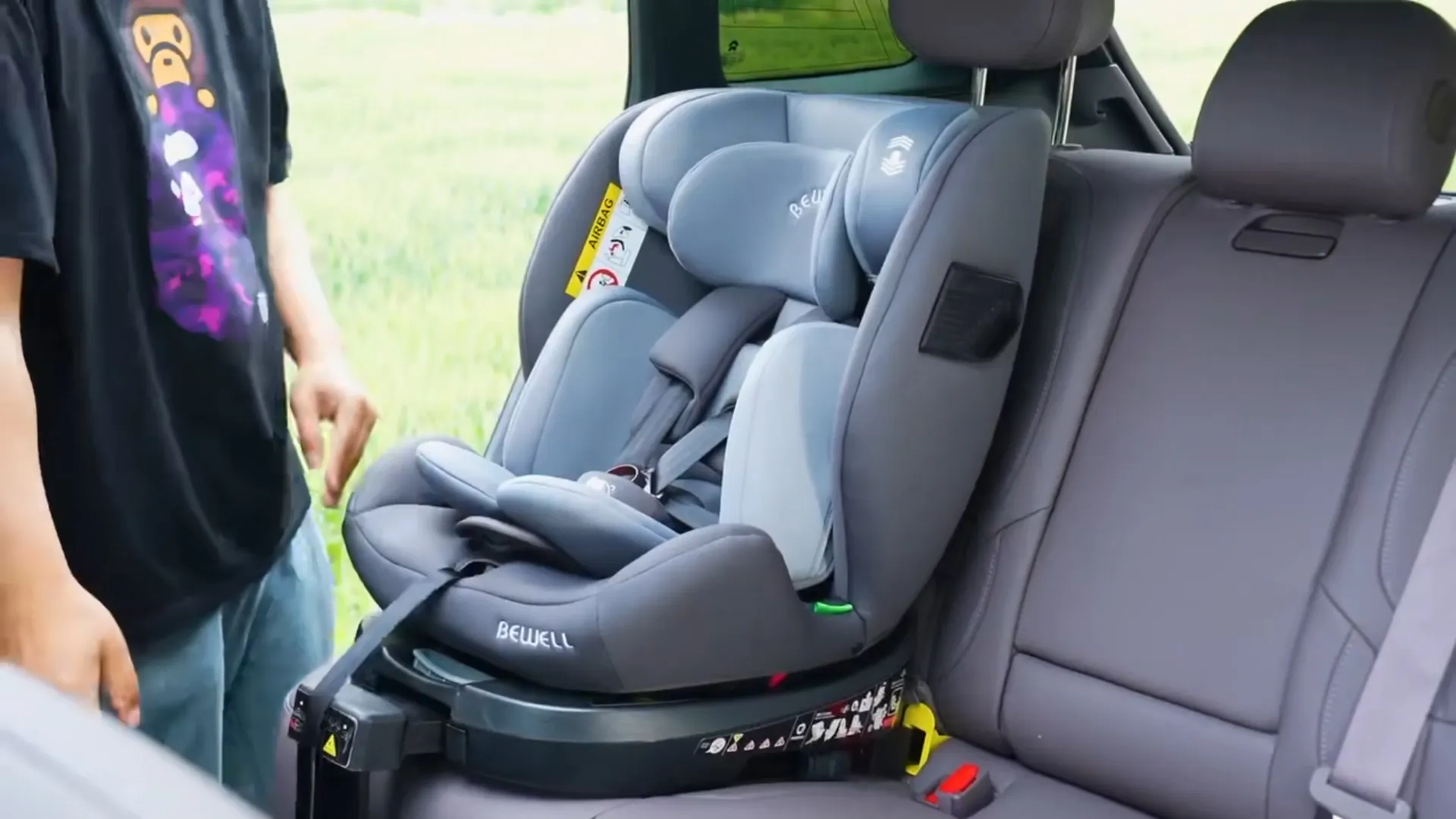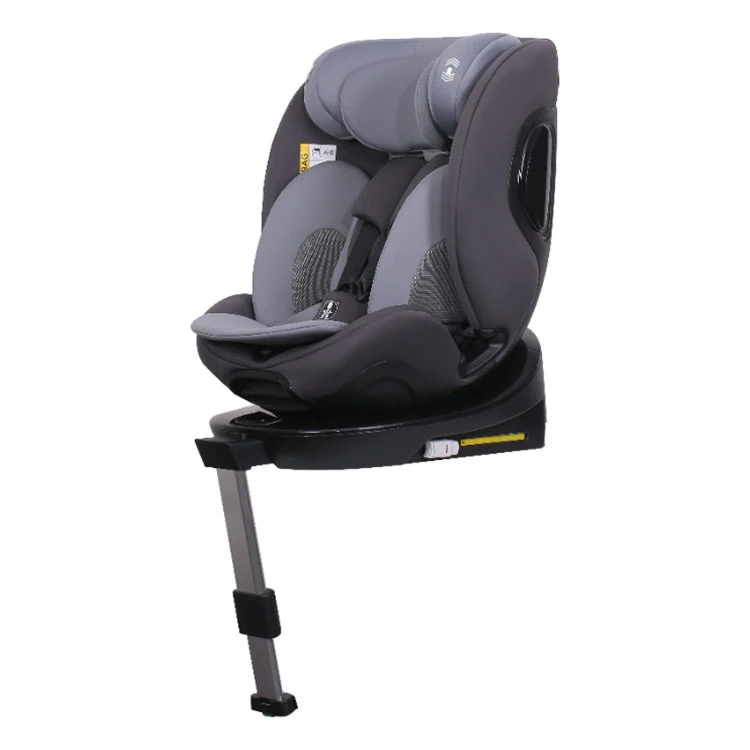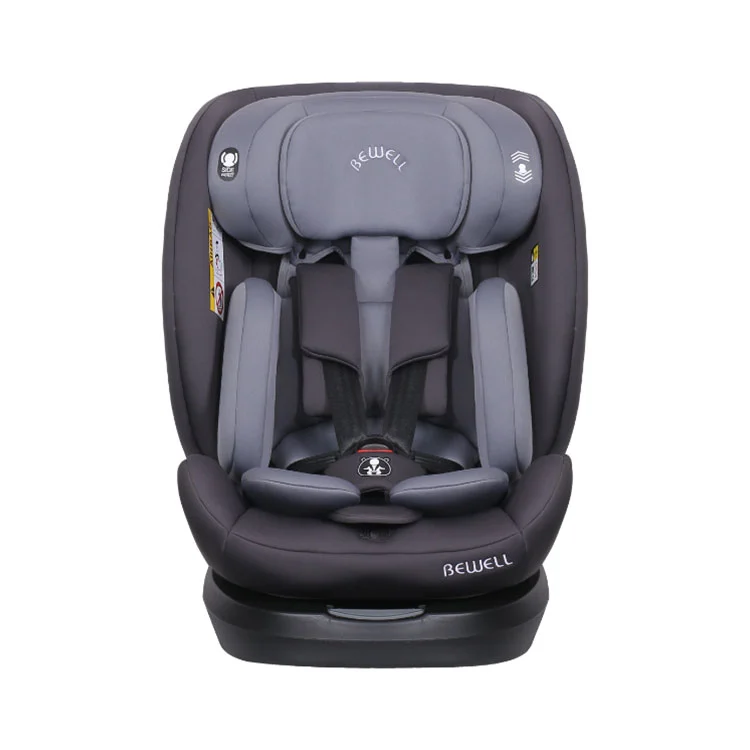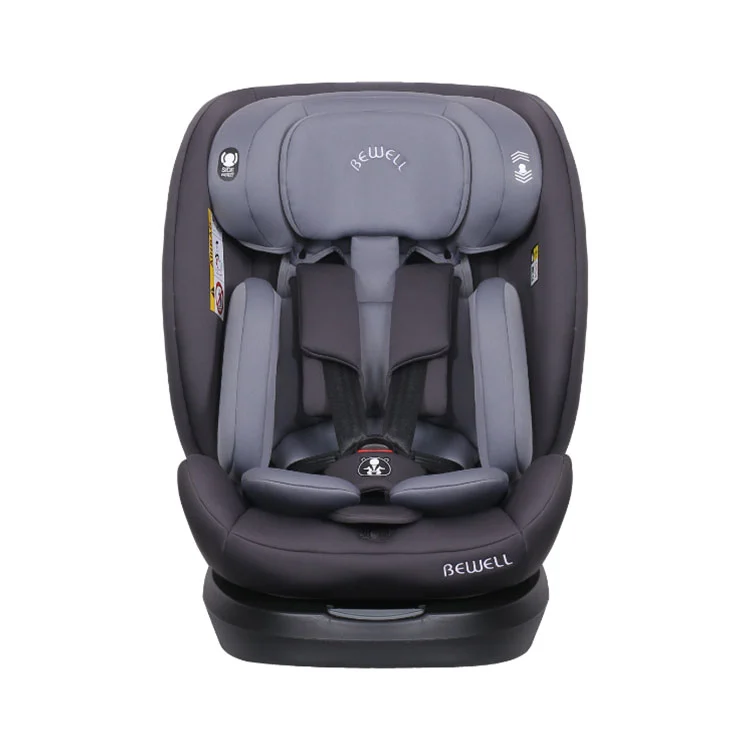
Vacuum the seat first. Machine-wash the fabric cover on a gentle cycle only if your manual allows it, then air dry. Wipe the harness straps with a damp cloth and mild soap — never machine-wash, soak, or bleach them. Rinse the buckle in warm water only. Wipe the plastic shell with a soft cloth. One rule sits above all others: cleaning must never weaken the parts that hold your child in a crash.
There are four car seat stages: rear-facing (birth to at least age 2, ideally longer), forward-facing with a harness (around age 4+), booster seat (until the seat belt fits, usually age 8–12), and finally the seat belt alone (around 4'9" tall). The golden rule at every stage: move your child up only when they've outgrown the height or weight limit of their current seat — never just because of age. And keep them in the back seat until age 13.
A car seat protects your child by doing three things in a crash: it spreads the crash force across the strongest parts of their body, it slows their body down over a longer time (called "riding down" the crash), and it keeps their head, neck, and spine aligned and contained inside a protective shell. A five-point harness, an energy-absorbing shell, and correct installation are what make all three happen.
Yes — car seats expire. Most have a useful life of 6 to 10 years from the date of manufacture, not the date you bought them. The plastic, foam, and harness degrade over time, and safety standards change. You'll find the expiration (or "do not use after") date on a sticker, usually on the back of the shell, or embossed into the plastic. Never use a car seat past its date, and never buy or accept a secondhand seat without checking it.