Buyers usually ask "what's your price?" first. It's the wrong opening question — the answer is meaningless until three other things are fixed. Here's how a car seat is actually priced, from the factory that has to cost it.
Quick Answer Expect an MOQ around 500 units (negotiable by project), a prototype in 7–15 days, and mass production in 30–40 working days after deposit. Payment is commonly T/T 40% deposit, 60% against copy of B/L. Unit price is driven by four things: the seat's stage coverage, its molding and internal structure, the certification it carries, and your customization. Two quotes are only comparable when the Incoterm, standard and specification match — and your true cost is the landed cost per seat, not the factory price.
A car seat is not a commodity with a market price. Two seats that look similar on a listing page can differ by a wide margin because one carries a current certificate, a steel-framed base and virgin plastic, and the other doesn't. That's the whole reason price comparison in this industry goes wrong.
This guide explains what actually sits inside the number, so you can read a quote instead of just ranking quotes.
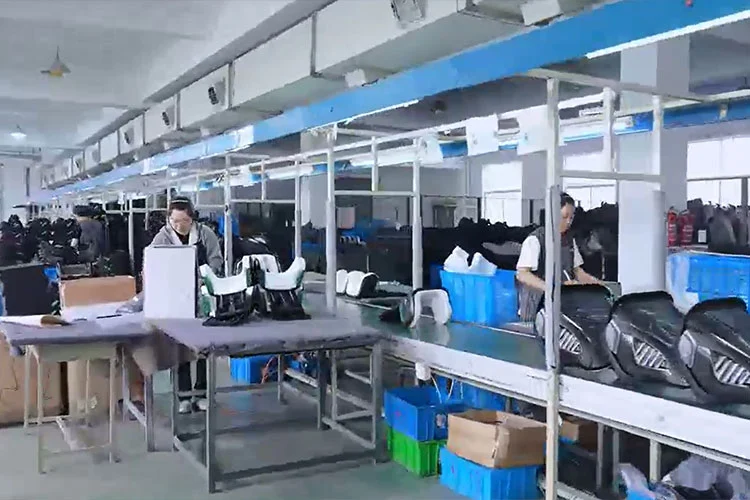
Why trust this guide: Bewell has manufactured child car seats in Ningbo since 2015 — 10,000+ m², 100+ staff, five blow molding and five injection molding machines, in-house sewing, assembly and QC, and 200,000+ seats a year. These are the terms and cost drivers we quote on every day.
Any factory that quotes you a number without these is guessing — and you'll pay for the guess later in revisions.
Your market's standard. ECE R129 for the EU and most i-Size markets. CCC for China. FMVSS 213 for the US. The Middle East generally references European regulations, with certification and manual language requirements. Southeast Asia is looser. The standard changes what's testable, sellable and therefore priceable.
The seat type and height range. A 40–150 cm all-stage rotating seat and a 125–150 cm backless booster are different products with different costs. Our guide to car seat types maps them.
Your volume and Incoterm. 500 units EXW and 5,000 units CIF are two different conversations.
02What actually drives the unit price
Here's the honest breakdown of where cost sits in a car seat, roughly in order of impact.
Cost drivers in a child car seat
Driver
Why it moves the price
Stage coverage
A 0–12 year all-stage seat carries more structure, more adjustment and more testing than a booster
Rotation mechanism
A 360° base adds parts, a lock system and a reinforced frame
Internal frame
A built-in steel-framed structure costs more than plastic alone — and it's the part you can't see
Molding method
Injection, blow, or both in one shell; each has different tooling and cycle costs
Anchoring system
ISOFIX with support leg or top tether adds hardware over a belt-only seat
Material grade
100% virgin plastic costs more than recycled — and it's the most common place to cut
Foam and fabric
Energy-absorbing foam, memory foam, breathable mesh, color fastness all vary
Certification carried
Testing and ongoing COP checks are a real, recurring cost the factory carries
Customization
Cosmetic changes are cheap; structural changes need new tooling
Two of these deserve attention because buyers underestimate them. Molding method changes both cost and crash behavior — see our molding explainer. And anchoring decides which cars the seat fits in your market, which affects returns; see support leg vs top tether.
From the factory floor — what testing costs us
Certification isn't one invoice. Beyond the approval itself, a compliant seat carries ongoing testing: structural strength (interface durability, five-point harness load), impact testing (front, side and rollover), material testing (flammability, toxicity, ROHS, REACH), service-life cycling of rotation and disassembly to 10,000+ cycles, and fabric color fastness and wash durability.
All of that sits inside the unit price of a properly certified seat. When a quote comes in far under everyone else, this is usually the budget it came out of.
03MOQ: why 500, and when it moves
Our typical MOQ is around 500 units, and it's flexible depending on the project. The number isn't arbitrary — it comes from setup. A production run means changing over molds, setting up the line, cutting and sewing a fabric batch, and running QC on the first articles. Below a certain quantity, that fixed setup swamps the per-unit cost and the price stops making sense for either side.
What moves it:
Down: ordering an existing model with minimal customization, or bundling several models into one shipment.
Up: custom fabric that needs a minimum roll, custom packaging with its own print minimum, or anything needing new tooling.
MOQ isn't a wall. It's the point where setup cost stops dominating the unit price — so tell the factory your real volume and let them structure the order around it.
04Lead times, stage by stage
Typical timeline for a car seat order
Stage
Typical duration
What can delay it
Quotation and spec confirmation
Days
Incomplete brief — the most common delay of all
Prototype / sample
About 7–15 days
Design revisions, custom fabric sourcing
Sample approval
Your side
Shipping time and your internal sign-off
New tooling (if needed)
Added on top
Structural changes; injection tooling is the slowest
Mass production
30–40 working days
Volume, peak season, complexity
Ocean freight
Route-dependent
Port congestion, booking availability
Plan backwards from your selling season. Between sample rounds, production and ocean freight, a first order can easily run several months door to door. Buyers who start sourcing two months before peak season are already late.
05How to compare quotes on the same basis
Most "cheaper" quotes aren't cheaper. They're different. Before you rank them, normalize all four of these:
Normalize
Why
Incoterm
EXW excludes getting goods to port — it always looks cheaper than FOB or CIF
Standard
An R44-only seat isn't comparable to an R129 seat; it can't be sold new in the EU
Specification
Steel frame or not, virgin material or not, ISOFIX or belt-only
You can verify the standards claim directly. We publish downloadable R129 certificates — BW25 all-stage, BW15 booster, and BW26A R129/04. Ask every supplier for the same, and check the approval number against the label on the sample.
06Landed cost: the number that decides your margin
This is where importers lose money quietly. The factory price is one input. What you actually pay per seat, on your shelf, includes freight, duty, and how efficiently the product fills a container — and that last one varies enormously between car seat types.
From the factory floor — container math
Car seats are bulky, so you ship a lot of air. How much air depends on the model. In our own loading, a compact backless booster fits roughly 2,190 units in a 40HQ, while a bulky high-back booster fits around 518. That's more than four times the units in the same container.
Spread the same ocean freight across those two, and the per-seat freight difference can easily outweigh a small win on unit price. Always ask "how many units per 40HQ for this model?" before you decide which quote is cheaper. We break the booster case down in the high-back vs backless guide.
Your rough landed cost per seat = (unit price × qty + freight + insurance + duty + clearance + inland) ÷ qty. Run it for each quote. The ranking often flips.
07What a suspiciously cheap quote is hiding
In a safety product, a price far below the market came from somewhere. Usually one of these:
Recycled instead of virgin plastic in the shell.
Thinner or uneven wall thickness — the cheapest way to save material, and where cheap shells fail.
No steel frame inside the base.
Older R44 certification being sold as if it were current.
No COP testing — one approval, no ongoing verification.
Comfort foam substituted for energy-absorbing foam in the head wings.
A trading company margin hidden by cutting elsewhere.
Our supplier screening guide has the questions that surface all of these before you pay a deposit.
Proof you can ask any supplier for
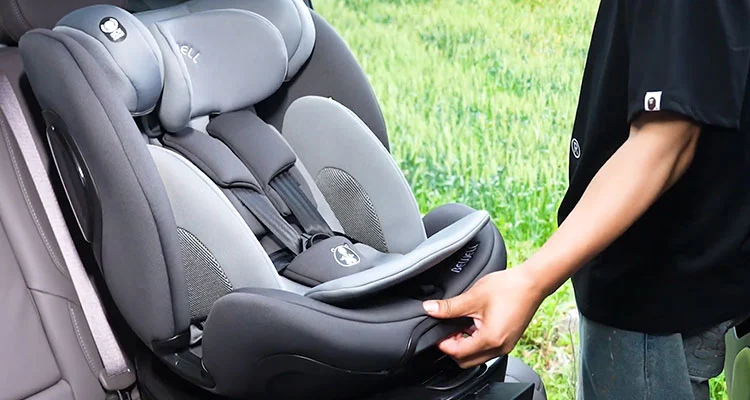
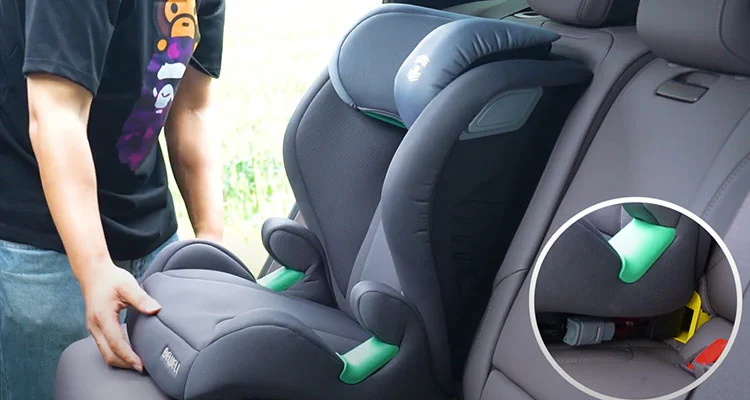
Price claims are cheap; verification isn't. Here's what a real factory can show you on request — the product itself, structural verification, and third-party certificates.
Product display and installation, filmed at Bewell. Ask any supplier to show you theirs before you compare prices.
08The inquiry that gets a real number
Send this and you'll usually get a firm quote in one round instead of a week of back-and-forth.
Include in your inquiry
Destination market and required standard (R129 / CCC / FMVSS 213)
Seat type and height range (e.g. 40–150 cm all-stage rotating)
Anchoring: ISOFIX with support leg, top tether, or belt install
First order quantity and expected annual volume
Incoterm and destination port
Packaging: neutral carton or custom color box
Manual language and local labeling requirements
Customization level: logo only, restyle, or structural
Around 500 units is typical, and it's negotiable depending on the project. Existing models with light customization can often go lower; custom fabric, custom packaging or new tooling push it up.
How much does a baby car seat cost wholesale?
There's no single figure — price depends on stage coverage, rotation, internal frame, molding method, anchoring hardware, material grade and certification. Ask for a quote against a specific spec and Incoterm rather than a general price.
How long does it take to produce a car seat order?
About 7–15 days for a prototype, then roughly 30–40 working days for mass production after the deposit and confirmed details. New tooling and ocean freight add to that.
What payment terms are standard?
T/T with 40% deposit and 60% balance against a copy of the bill of lading is common. Confirm the Incoterm — EXW, FOB or CIF — so quotes are comparable.
Why are some car seat quotes so much cheaper?
Usually because something was removed: recycled instead of virgin plastic, thinner walls, no steel frame, outdated certification, or no ongoing COP testing. Compare specification and standard before comparing price.
How do I calculate landed cost per car seat?
Add unit price, freight, insurance, duty, clearance and inland delivery, then divide by quantity. Ask how many units fit a 40HQ container — bulky and compact models can differ several times over, which moves freight per seat significantly.
About Bewell
Ningbo Bewell Baby Products Manufacturing Co., Ltd. has manufactured child safety seats since 2015. Our factory covers over 10,000 m² with 100+ employees, five blow molding and five injection molding machines, in-house sewing, assembly and quality inspection, and 200,000+ seats of annual capacity. We certify to ECE R129 (i-Size) and China 3C, run structural, impact, material, service-life and fabric testing, and export across Europe, the Middle East, Japan, South Korea and beyond.
Bewell company pages — order terms, testing programme, factory data and container loading
Commercial terms and quantities shown are typical ranges and vary by project, volume, model and specification. Confirm all terms in writing with your supplier.
We use cookies to offer you a better browsing experience, analyze site traffic and personalize content. By using this site, you agree to our use of cookies.
Privacy Policy