

A folding backrest can cut carton height and simplify storage. It does not tell you which child-restraint category, installation method or approval revision you are buying. Those details must be matched to the complete model suffix and its controlled documents.
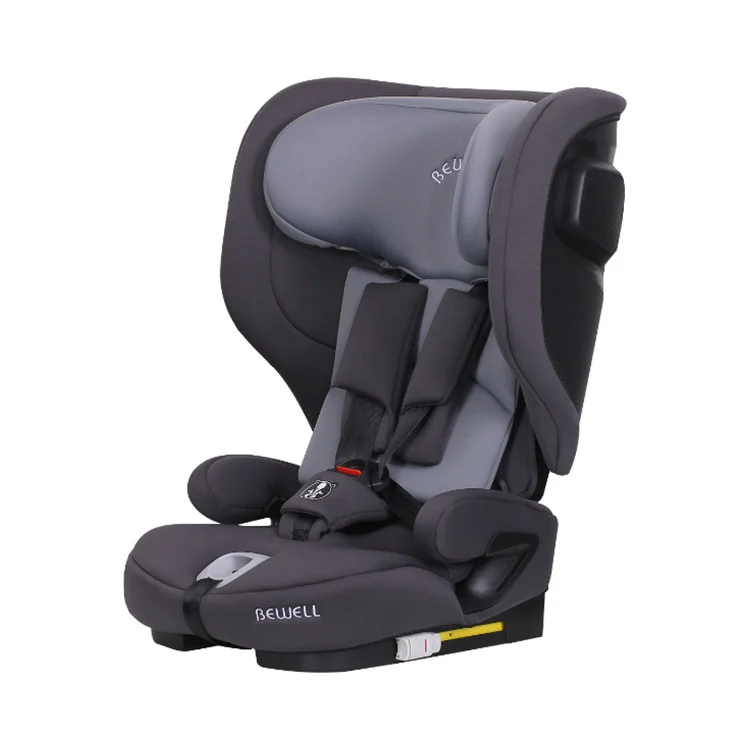
A foldable car seat is attractive on a product page because the benefit is visible. Fold the backrest over the base, reduce the package height and store the product in less space. For an importer, that is only the first line of the decision.
The harder questions start after the photograph. Does the child use the seat's five-point harness or the vehicle belt? Is the restraint fixed by the adult belt, ISOFIX, a top tether or a combination? Does the orange approval label match the manual? Which packed dimensions produced the quoted container quantity? Can the chosen cover and harness parts move through the fold without being trapped?
Our product-team view is direct: never compare foldable seats from a single feature list. Compare one exact approved configuration with another. The hinge saves space only when the documentation, lock and packaging remain under control.
1. "Foldable" is a feature, not an R129 category
The current consolidated text of UN Regulation No. 129 lists approval categories such as integral i-Size, Universal Belted and non-integral i-Size booster seat. It defines an integral restraint as one in which the child is held by components of the restraint, such as a harness. A non-integral restraint uses a means connected directly to the vehicle, such as the adult safety belt, to retain the child.
The regulation does not create a separate approval category for a folding backrest. That conclusion follows from the regulation's category list: folding is part of the product's design and construction, while the approval identity is determined by category, configuration and approved type. A folding model must still meet the requirements of whichever R129 categories appear in its approval.
Factory-side reading: the word "foldable" tells us how the product stores and packs. The approval label tells us how it may be used in the vehicle. We do not allow the storage feature to replace the mode table in a quotation.
This distinction also prevents three common overclaims. A folding seat is not automatically an aircraft-approved child restraint. It is not automatically suitable for every taxi or rental car. It is not automatically portable in the same way as an infant carrier. Each statement needs its own evidence.
2. Lock the complete model suffix before comparing numbers
BEWELL's public materials show why a family name is not enough. The live page is headed BW26 and its body identifies a BW26A configuration. The file currently linked from that page is a BW26B manual. The catalogue uses the family-level name BW26. A buyer should therefore write BW26A or BW26B on the inquiry, sample label, approval file, manual, packing specification and purchase order.
| Public source checked | Identity shown | Useful facts in that source | What still needs confirmation |
|---|---|---|---|
| Live product page | BW26 heading; BW26A in body copy | 76-150 cm headline range, 14 headrest levels, 6.5 kg net weight, 53 × 46 × 58 cm listed size and 1,200 units per 40HQ | Use the approval communication, not the overview copy, to settle installation and approval fields |
| Authority approval communication | BW26A | E8*129R04/00*15792*00; i-Size universal ISOFIX at 76-105 cm and up to 18 kg; i-Size booster seat at 100-150 cm | Photograph the production label and confirm it carries the same approval identity |
| Current linked manual | BW26B | R129/04 statement, 76-105 cm Belt + Harness mode, 100-150 cm belt mode, three-point vehicle-belt requirement and folding instructions | Approval communication, orange-label photograph and manual revision approved for the order |
| Current linked catalogue | BW26 family name | R129/03 listing, 7.5 kg, 46.5 × 45 × 63 cm product size, 53 × 46 × 25 cm carton, 1,150 units per 40HQ | Which suffix and approval revision the catalogue row represents |
This table is not an attempt to combine all four sources into one specification. It shows why the source name, suffix and revision belong beside every number. The authority document settles the approval of BW26A. The BW26B manual describes a different installation category. The catalogue lists family-level BW26 under R129/03, while the two model-specific documents state R129/04. Before publication or ordering, use the approval communication and orange label for the exact production model to settle the current status.
Do not resolve a document difference by choosing the larger number. A higher container quantity, broader installation list or newer approval series is not valid until it is tied to the ordered suffix. Ask for a single signed specification pack.
3. Map the use modes before discussing the fold
The BW26A approval and BW26B manual provide a useful comparison. Both show forward-facing integral use at 76-105 cm and non-integral booster use at 100-150 cm. They differ in how the integral ECRS connects to the vehicle.
| Documented variant and mode | Stature and stated mass | Child restraint | Vehicle connection in the manual | Approval-category notice |
|---|---|---|---|---|
| BW26A integral i-Size universal ISOFIX | 76-105 cm; up to 18 kg | Seat's five-point harness | ISOFIX configuration named in the authority approval | i-Size universal ISOFIX integral ECRS |
| BW26A non-integral booster | 100-150 cm | Vehicle adult three-point belt restrains the child | Adult belt is the child restraint; follow the approved BW26A instructions for any seat attachment | Non-integral i-Size booster seat |
| BW26B integral Universal Belted | 76-105 cm; manual shows 18 kg | Seat's five-point harness | Adult vehicle belt secures the ECRS | Universal Belted integral ECRS |
| BW26B non-integral booster | 100-150 cm | Vehicle adult three-point belt restrains the child | Adult belt passes through the model's shoulder and lap-belt guides | Non-integral i-Size booster seat |
The current BW26B manual tells the user to store the five-point harness once the child reaches 100 cm. It also says that variant is suitable for vehicles with a three-point belt meeting UN Regulation No. 16 requirements and is not suitable for positions equipped only with a two-point belt.
The 100-105 cm overlap on the printed ranges should not become an improvised retailer rule. The instruction to store the harness at 100 cm controls the BW26B example. Another BW26 suffix may use a different installation system or controlled manual, so its own approved instructions must be read separately.
Lower stature in the BW26B forward-facing harness mode.
Point at which the current manual directs the user to store the harness.
Upper printed limit of the integral harness mode.
Upper printed limit of the i-Size booster mode.
If you need a broader seat starting at 40 cm, compare it with a dedicated 40-150 cm i-Size configuration. A forward-only 76-150 cm seat and a rear-facing all-stage model do different jobs in a product range.
4. Inspect the folding system as a controlled interface
Folding concentrates several functions in one area. The backrest must reach its full use position, the lock must remain engaged, the cover cannot obstruct the joint and the harness or loose webbing cannot be pinched during opening or closing. A smooth demonstration in a video is useful, but it is not a sample acceptance result.
The BW26B manual describes five forward-facing seat-angle levels and a separate action that moves the backrest forward until it covers the base for storage. Those are different operations. A supplier's inspection sheet should keep the in-use adjustment positions separate from the packed condition.
Check the parts that set belt geometry
- Backrest reaches the defined upright or recline position and remains locked.
- Headrest adjusts through every declared position without catching the cover.
- Shoulder and lap-belt guides are visible, unobstructed and match the manual drawings.
- Harness storage leaves no buckle or strap in the adult-belt path.
Check what the carton must control
- Backrest folds over the base without trapping webbing, foam or cover edges.
- Loose components and cup holders have a defined packed location.
- Protective packaging separates hard contact points that could mark the shell or fabric.
- Opening instructions show how to return the product to its complete use position.
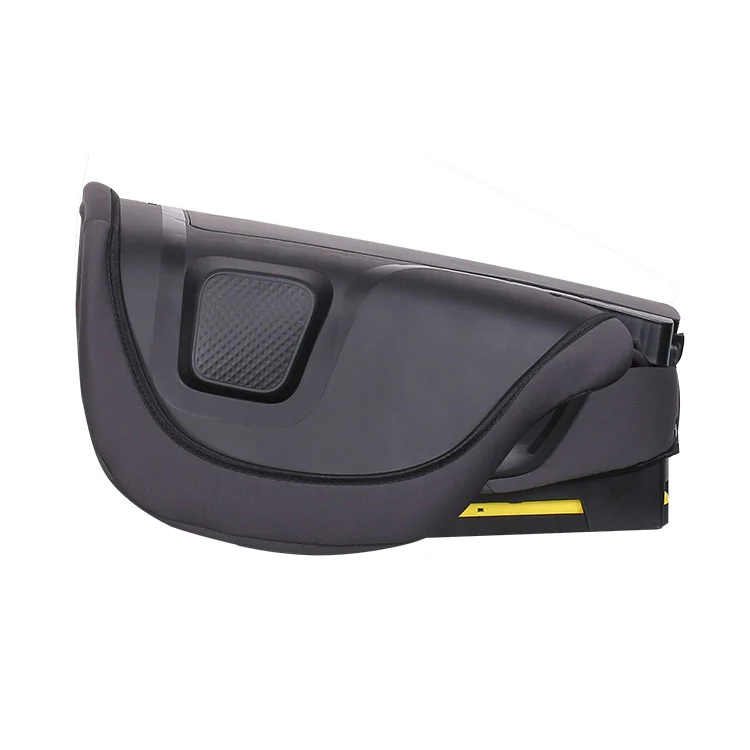
Watch the product movement, then verify it on the sample
The video embedded on the live BW26 page is useful for seeing the product's movement and visible components. Treat it as orientation before inspection. The signed specification, approved manual and physical sample remain the acceptance references.
5. Calculate the logistics benefit from the carton, not the adjective
The catalogue's BW26 carton is 53 × 46 × 25 cm. Multiplying those external dimensions gives a nominal carton volume of 0.06095 m³. That number is useful for a first-pass freight model. It is not the same as the usable cubic capacity of a container, because loading also depends on carton orientation, clearance and the supplier's actual loading pattern.
The same catalogue lists 1,150 BW26 units per 40HQ. It lists 515 units for BW17, another 76-150 cm forward-facing model, in a 48.5 × 47 × 62 cm carton. On the published figures, the BW26 quantity is 2.23 times the BW17 quantity. This is the commercial reason a folding product may matter to an importer: more units can share the fixed cost of a container.
| Catalogue model | Declared range | Carton size | Nominal carton volume | Published 40HQ quantity |
|---|---|---|---|---|
| BW26 | 76-150 cm | 53 × 46 × 25 cm | 0.06095 m³ | 1,150 units |
| BW17 | 76-150 cm | 48.5 × 47 × 62 cm | 0.141329 m³ | 515 units |
The live BW26 product page separately publishes 1,200 units per 40HQ. The difference from the catalogue is 50 units, or about 4.35% of the catalogue figure. That is enough to change a freight calculation. We would therefore put the carton drawing, gross weight, quantity per carton and loading orientation into the quotation before using either quantity in a landed-cost model.
A packed sample should also be measured. Catalogue dimensions can describe one revision, and carton compression or accessory placement can change the final external size. The practical workflow is covered in the car seat packaging and container-loading guide.
6. Keep cosmetic OEM work separate from structural changes
Foldable seats are tempting customization platforms because the feature is easy to demonstrate. The safe boundary is not defined by how small a change looks. It is defined by whether the approved design, material or construction changes.
Paragraph 11 of the current UN R129 text requires every modification of an approved ECRS to be notified to the Type Approval Authority. The authority may decide the change has no appreciable adverse effect, or it may require another test report. A different hinge, back board, belt guide, shell material, load-bearing fastener or folding stop cannot be treated as ordinary artwork without technical review.
| Requested change | Initial factory treatment | Evidence or control needed |
|---|---|---|
| Colorway, embroidery or carton graphics | Start as a controlled trim or artwork change | Approved material list, color sample, artwork proof and golden sample |
| Cover fabric, foam or sewing construction | Material and assembly review | Model BOM, material declarations, fit check and approval-impact review |
| Hinge, lock, back board or shell geometry | Structural engineering change | Written review against the approved type and Type Approval Authority decision where applicable |
| Belt guide, harness, buckle or anchorage hardware | Restraint-system change | Approval-impact assessment, controlled drawings and any required test report |
| Manual, orange label or warning artwork | Compliance-controlled artwork | Exact model, approval number, ranges, language set and signed proof |
Our recommendation is to freeze the technical base model first. Then build the fabric and cover specification and the label and manual artwork register around that approved identity. This sequence keeps a color or packaging project from quietly becoming an unreviewed structural revision.
7. Make the sample inspection answer operational questions
A sample review should do more than record color and appearance. For BW26B, the review has to cover two child-restraint modes and the storage transition between them. Use the manual beside the product, not after the sample has been approved.
- Identity: photograph the model suffix, production marking, orange approval label and approval number. Match all four to the submitted approval communication.
- Documents: confirm that the model name and R129 series on the manual, label, quotation and carton are identical.
- Harness mode: route the adult belt exactly as shown for 76-105 cm and check that the five-point harness, buckle and shoulder pads operate without twist or obstruction.
- Booster mode: store the harness as instructed, then verify the shoulder and lap portions of a three-point belt pass through the marked guides without crossing folded harness parts.
- Headrest: move it through the declared adjustment positions and confirm that it remains engaged at each position.
- Use positions: check every declared forward-facing angle separately from the fold-for-storage action.
- Folding interface: open and close the sample repeatedly, looking for trapped fabric, damaged foam, loose fasteners, abnormal play and incomplete locking.
- Packed product: place every included component in its specified location, close the carton and measure the final external dimensions and gross weight.
- Recovery after shipping: reopen the packed sample and confirm that belt guides, headrest, harness storage and backrest lock still function as the signed sample did.
Repeated opening and closing in this list is an incoming-sample check, not a claim that a particular number of cycles proves regulatory durability. If a buyer wants a cycle requirement, it should be written into the agreed specification with a method, count, load condition and acceptance limit. Our separate baby car seat sample inspection guide shows how to turn observations into pass or fail criteria.
8. Write the inquiry so the factory can answer with one configuration
"Please quote your foldable child car seat" is too broad. It does not tell the product team which suffix, installation method, approval revision, carton or customization boundary belongs in the answer.
A useful inquiry supplies the destination market, target stature range, preferred vehicle connection, sales channel, required languages, colorways, first-order quantity and annual forecast. It also asks for evidence in a defined order.
Product: Foldable child car seat, please state full model suffix
Market: [country or countries]
Required range: [stature range and any mass limit]
Vehicle connection: [adult belt, ISOFIX, top tether, or request factory recommendation]
Sales channel: [retail, marketplace, distributor, rental or other]
Customization: [fabric, color, logo, labels, manual languages and carton]
Commercial plan: [sample quantity, first order and annual forecast]
Please return: approval communication, orange-label image, manual, mode matrix, product drawing, folded and unfolded dimensions, carton drawing, net and gross weight, loading plan and change-control limits
We would place the returned fields into a baby car seat product specification sheet before comparing quotations. That document then follows the project through sample approval, packaging and pre-shipment inspection.
Sources checked for this guide
- BEWELL BW26 product page: public product-family identity, BW26A statements, images, video, listed dimensions and container quantity.
- BW26A authority approval communication: approval number, manufacturer, exact model, R129/04 categories, stature ranges and 18 kg integral-mode limit.
- BW26B manual currently linked from the product page: model suffix, R129/04 statement, stature ranges, restraint modes, three-point-belt requirement, harness storage, belt routing and folding instructions.
- BEWELL catalogue currently linked on the website: family-level BW26 range, product and carton dimensions, weight and 40HQ quantity used in the logistics calculation.
- UN Regulation No. 129 consolidated text published as 2026/1534: approval categories, integral and non-integral definitions, product-type definition and approval-modification requirements.
- UNECE Regulation No. 129 document index: official regulation source and amendment documents.
Scope note: public BW26 family materials identify more than one suffix and document revision. The figures above are attributed to the source in which they appear. A production claim should use the approval, manual and packing specification issued for the exact ordered suffix.
Frequently asked questions
What is a foldable child car seat?
It is a child restraint designed so part of the seat, usually the backrest, can fold over the base for storage or packing. "Foldable" describes product geometry. It is not a separate UN R129 approval category, so the label and manual must still state the actual restraint category and approved range.
Is the BEWELL BW26 approved to UN R129?
BEWELL publishes an authority approval communication for BW26A under approval number E8*129R04/00*15792*00. A separate BW26B manual states R129/04. Verify the approval communication and orange label for the exact suffix being ordered rather than transferring BW26A evidence to BW26B or the family name.
What height range does the BW26B foldable car seat cover?
The current BW26B manual shows a forward-facing integral Belt + Harness mode for 76-105 cm and a forward-facing i-Size booster mode for 100-150 cm. It directs the user to store the five-point harness once the child reaches 100 cm.
Does every BW26 foldable child car seat use ISOFIX?
No. The BW26A authority approval names an i-Size universal ISOFIX configuration at 76-105 cm. The separately published BW26B manual describes a Universal Belted configuration for that range. Ask for the full suffix and its matching approval, manual and installation matrix.
Is a foldable child car seat approved for aircraft travel?
Not automatically. Folding and UN R129 vehicle approval do not establish aircraft approval. This article makes no aircraft-use claim for BW26. Check the exact product label, manual and airline requirements before making or publishing such a claim.
How many BW26 seats fit in a 40HQ container?
The catalogue currently linked by BEWELL lists 1,150 units, while the live product page lists 1,200. Because those sources identify the family at different levels, use the loading plan and carton specification issued for the exact quoted suffix and packaging revision.
What should an OEM buyer request with a BW26 quotation?
Request the complete model suffix, approval communication, orange-label image, manual, use-mode matrix, product drawing, folded and unfolded dimensions, carton drawing, net and gross weight, loading plan, customization limits and sample-inspection plan.
Request a BW26 configuration, not a generic foldable-seat quote
Send the destination market, required installation method and target range. The BEWELL product team can then identify the applicable BW26 suffix and assemble the model-specific evidence needed for a commercial comparison.
Include with your inquiry
- Country, channel and target stature range
- Vehicle-belt, ISOFIX or tether requirements
- Fabric, color, logo and language plan
- Sample quantity, first order and forecast
Ask us to return
- Exact suffix and approved mode matrix
- Approval, label and manual references
- Folded product and carton specifications
- Sample, loading and change-control plan
Direct contact published on the BEWELL website: tic@nbbewell.com | +86-13586859678