

A usable child car seat RFQ tells the factory which approved configuration to price, which details may be customized and which files must match the sample. This guide turns a loose product idea into a specification that can survive the handoff to production.
Most weak RFQs are not short because the buyer lacks effort. They are short because product decisions, certification decisions and artwork decisions have been mixed into one email. The message may contain a model photo, an estimated order quantity and a request for the "best price." A supplier can answer that email, but two suppliers may price two different seats.
From our factory side, the dangerous line is not the blank cell. A blank cell is visible. The dangerous line is a familiar phrase that sounds complete but has several interpretations. "ISOFIX car seat" does not say whether the configuration uses a support leg or top tether. "Custom packaging" does not identify the carton structure, label language or artwork revision. "R129" does not by itself identify the exact product approval.
If you are still deciding whether to start from an existing platform or fund a new design, read our OEM baby car seat guide first. Use this page after you have chosen a sourcing route and need a controlled child car seat RFQ.
1. Do not ask one document to do three jobs
We separate an early enquiry from the records used after sample approval. The information becomes more exact as the project moves forward.
Document 1
RFQ brief
Defines the target market, product type, intended configuration, customization scope, estimated quantity and commercial destination. Its job is to let the factory assess feasibility and quote the same scope as other suppliers.
Document 2
Sample specification
Adds exact colors, parts, artwork files, manual version, packaging and allowed sample deviations. Its job is to define what the physical sample is supposed to prove.
Document 3
Production freeze
Records the approved sample identity, final bill of materials, drawings, labels, manuals, inspection criteria and signed changes. Its job is to stop an old email or obsolete attachment from reaching the line.
These documents can live in one workbook if the revision history is clear. The names matter less than the control. Every file should show the project code, model, owner, version, issue date and approval status.
Our rule when an RFQ arrives: we do not treat an undecided field as permission to choose the cheapest option. We mark the point for confirmation, because a hidden assumption may change the installation system, tooling, artwork, test scope, carton or lead time.
2. Fix the destination market before choosing trim and color
The destination market controls the compliance route, marking, language and instruction file. Put it at the top of the specification. "Export market" is not specific enough. Name the country or group of countries covered by the first launch.
For an ECE R129 project, the specification should point to the exact approval document that covers the proposed model and configuration. UNECE publishes the controlling text for UN Regulation No. 129. A buyer should use the applicable document and approval record, not a supplier's short marketing description.
For example, Bewell publishes a 3-page E8 UN R129 approval communication for BW25. It identifies approval number E8*129R03/09*14928*00, Ningbo Bewell as the manufacturer, 40 to 105 cm for i-Size universal ISOFIX and 100 to 150 cm for the i-Size booster mode. Those fields belong in the project file. The loose entry "ECE certified" does not identify any of them.
Do not reuse an approval statement from a similar model. The approval holder, approval number, model or type references, category, declared range and permitted configurations must match the seat you intend to sell. If the target market or product configuration changes, ask the responsible technical service or compliance specialist what must be reviewed again.
| Field | Write this | Reject this wording | Why it matters |
|---|---|---|---|
| Launch market | Named country or countries, sales channel and planned launch phase | Europe, overseas, global | Rules, language files and market access are not identical everywhere |
| Compliance route | Applicable regulation and project status: existing approval, extension review or new approval | EU standard, safety certified | The factory must know whether an existing configuration may be used |
| Approval identity | Certificate number, holder, product/type reference and linked PDF | Certificate available | Prevents a certificate from a different seat being attached to the file |
| Declared child range | Exact height and any applicable mass limits as stated by the approved configuration | 0 to 12 years, all stages | Consumer age wording cannot replace the approved classification |
| Languages | Country-specific list for labels, manual, carton and PE bag | English plus local | The factory needs a count and a final artwork set |
3. Describe the seat as a configuration, not a collection of features
A product specification must show how the seat attaches to the vehicle, how it restrains the child and which direction or mode applies at each declared size. A list of isolated features cannot answer those questions.
| Specification field | Entry needed for the RFQ | Common incomplete entry |
|---|---|---|
| Base product | Supplier model, buyer project code, current drawing or approved reference sample | Similar to attached photo |
| Vehicle attachment | ISOFIX, vehicle belt or other approved method, including the relevant mode | Easy installation |
| Anti-rotation device | Support leg, top tether or the exact approved arrangement | With ISOFIX |
| Child restraint | Integral harness or vehicle belt by declared mode, plus buckle and webbing references where controlled | Five-point safety |
| Orientation and mode | Rear-facing, forward-facing and booster conditions linked to the declared range | 360 rotating |
| Adjustment system | Headrest, recline, rotation and harness functions required for the selected platform | Multiple positions |
| Included parts | Insert, pads, cup holder and other removable parts, each with a part reference | Full accessories |
| Product dimensions | Controlled drawing dimensions, packed dimensions and net/gross mass when needed for freight | Standard size |
A real configuration example: BW25
The current BW25 product page identifies ISOFIX attachment, a support leg, 360-degree rotation and a red/green support-leg installation indicator. Those four facts belong together in a buyer's configuration line. Writing only "rotating ISOFIX seat" would remove the anti-rotation device and the indicator that the product page actually specifies.
This example does not authorize a buyer to copy every BW25 value into another project. The linked approval document and the factory's current controlled specification should confirm the final declared range, labeling and bill of materials.
4. Convert color and material choices into reproducible references
"Black fabric with grey details" is enough for a mood board. It is not enough for a repeatable order. Lighting, screen settings, fabric lot and texture can all change what a color photo appears to show. Name the fabric construction or approved supplier article, provide a physical swatch or agreed color standard, and give each colorway its own code.
Bewell's current customization list separates molding method from appearance. That distinction is useful. Blow molding or injection molding concerns how the relevant plastic component is produced. Logo, label and fabric-cover design are separate decisions. Do not place all of them under one line called "material."
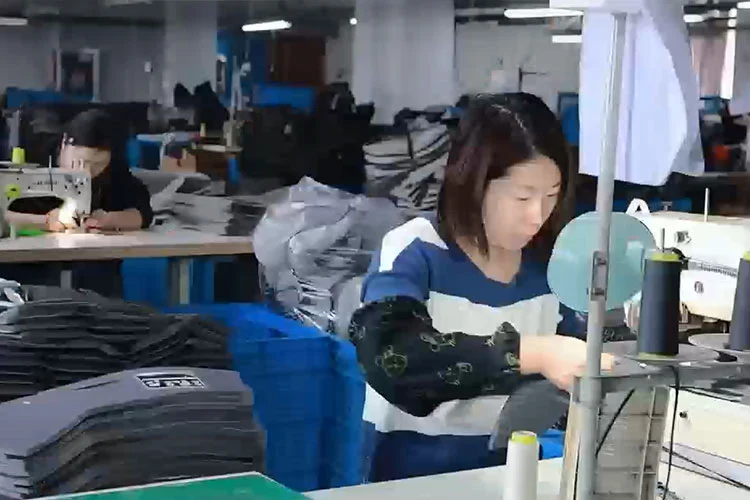
Minimum appearance file
- Colorway code and physical or recognized color reference
- Fabric article, composition or approved swatch reference
- Thread color and visible stitch requirements where appearance depends on them
- Logo method, size, position, orientation and artwork file name
- Label map showing each label's location and revision
- Surface finish and visible molded-color references for plastic parts
- Approved deviations for the first sample, stated line by line
Do not write "same as sample" without identifying the sample. Record its tracking number, date, colorway and signed status. A photograph can support that record, but it should not be the only color or construction standard.
5. Treat labels, manuals and packaging as product components
The user does not receive a naked seat. The product includes its markings, warnings, installation information, manual, carton, bags and included parts. List these files in the same revision register as the physical components.
| Item | Control in the specification | Approval evidence |
|---|---|---|
| Product labels | File name, revision, material, dimensions, language and position map | Artwork sign-off plus photo on the sample |
| Instruction manual | Language set, page size, print method, revision and packing position | Final PDF plus the printed copy reviewed with the sample |
| Retail or master carton | Structure, board requirement, dimensions, print file, marks and quantity per carton | Flat artwork and assembled packing sample |
| PE bag and warnings | Bag dimensions, material reference, print language and warning artwork | Approved artwork and packed sample |
| Included parts | Part number, quantity and exact packing location | Packing checklist and carton-open photo |
We ask for language versions before sample making because changing one manual may also change the carton text, product labels and packing sequence. If those files arrive after the sample is approved, the project has not really completed sample approval.
6. Classify every change by what it can affect
Not every edit has the same consequence. Moving a carton logo and changing an installation component should not travel through the same approval path. Use a change log that records the old value, proposed value, reason, owner and required review.
| Change type | Examples | Minimum response |
|---|---|---|
| Artwork or language | Logo file, carton copy, manual translation, label text | Artwork and compliance review, new revision and sample proof where needed |
| Cosmetic material | Fabric article, thread, visible plastic color, embroidery | Material confirmation, appearance sample and applicable material checks |
| Fit or function | Cover construction, insert shape, buckle pad, adjustment interface | Engineering review, functional sample and updated drawings or BOM |
| Structural or installation | Shell, base, harness route, ISOFIX part, support leg, top tether | Stop automatic substitution. Obtain engineering and compliance assessment before approval |
| Supplier or process | New component source, molding process, sewing construction, adhesive or foam reference | Supplier/process qualification and any verification required by the control plan |
Do not decide test scope from this table alone. It is a project triage tool. The responsible approval authority, technical service, compliance specialist and factory engineering team should determine what a specific change requires.
7. Copy this one-page child car seat RFQ template
Fill every line you know. Write "factory to propose" where you want a recommendation, and write "open" where a decision has not been made. Both entries are better than a plausible guess hidden inside a quotation.
Project identification
- Buyer / brand
- [Legal buyer name and consumer brand]
- Project code
- [Unique code used in all files]
- RFQ revision
- [Revision, issue date and document owner]
- Target market
- [Country or countries and sales channel]
- Expected quantity
- [First order estimate and forecast period, clearly labeled as estimates]
- Sourcing route
- [Existing platform customization, modified platform or new development]
Product and compliance
- Base model
- [Supplier model, buyer drawing or reference sample ID]
- Approval route
- [Applicable regulation plus exact certificate/project status]
- Declared range
- [Exact approved height and other applicable limits]
- Installation
- [Vehicle attachment, anti-rotation device and mode]
- Child restraint
- [Harness or vehicle belt by mode]
- Orientation
- [Rear-facing, forward-facing and transition conditions]
- Required functions
- [Headrest, recline, rotation and other selected platform functions]
Customization and files
- Molded parts
- [Process/material references and visible color references]
- Fabric cover
- [Fabric article or swatch, colorway code and stitch requirements]
- Branding
- [Logo method, size, location and artwork filename]
- Labels
- [Label list, language, artwork revision and position map]
- Manual
- [Languages, revision, format and print requirement]
- Packaging
- [Carton, PE bag, print files, included parts and quantity per carton]
- Sample scope
- [What the sample must prove and any accepted temporary deviations]
- Approval contacts
- [Buyer decision owner, factory contact and compliance reviewer]
Attach the files named in the template. Do not paste a logo into the spreadsheet and then send a different vector file in a messaging app. Put revision names in the filenames and keep one shared register of what was issued.
8. How we turn the sheet into a factory handoff
Bewell's published customization sequence contains 6 steps: submit the idea, confirm the drawing, make the prototype, complete custom molding where required, confirm the sample and begin bulk production. The broader manufacturing page places that work inside a 9-stage flow that continues through molding, cover production, assembly, quality inspection, bulk production approval, packing and shipment.
The sequence explains why we want decisions early. Structure and molding information goes to product development and tooling. Fabric, logo and label files go to the cover and artwork workstreams. Packaging and language versions continue into final assembly and packing. A late revision may cross more than one area even when the buyer changed only one sentence.
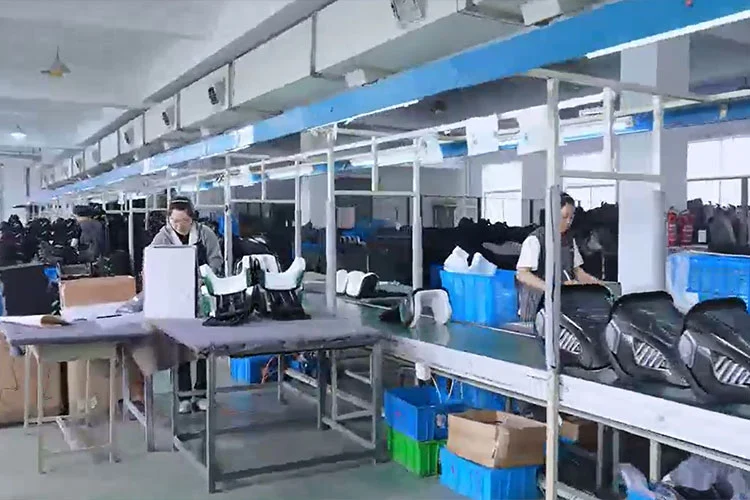
Our published prototype lead time is 7 to 10 days. Treat that as factory information for planning, not a guaranteed deadline for every custom project. New tooling, unconfirmed artwork, material sourcing or compliance work can change the schedule. Instead of asking only "How fast can the sample ship?" ask "Which inputs must be frozen before that lead time starts?"
After the sample arrives, switch documents. Use our current quality-control categories to plan evidence, and inspect the unit against the sample specification rather than the first sales email. The approved sample, final drawings, bill of materials, artwork register and deviation log should then become the production freeze.
Questions buyers ask before sending a car seat RFQ
Can I request a quotation before every specification is complete?
Yes. Mark unknown fields as open or ask the factory to propose an option. The quotation should list the assumptions used. This lets you compare suppliers without pretending the project is already frozen.
Is a product photo enough to identify the model I want?
No. A photo can support the brief, but it does not identify hidden construction, approval scope, installation configuration, materials or file revisions. Add a supplier model, drawing or uniquely tracked reference sample.
Should I put an age range in the specification?
Consumer-facing age guidance may be included where appropriate, but it should not replace the exact range and conditions stated by the applicable approved configuration. Confirm those values from the current controlled document.
When should the factory start a prototype?
Start when the sample's purpose and required configuration are defined. If key artwork, materials or compliance decisions remain open, list them as temporary deviations so the buyer does not approve the sample as a final production reference by mistake.
What should be signed after the sample is approved?
Record the sample ID, approved specification revision, final artwork and manual revisions, bill of materials or controlled parts list, packaging file, accepted deviations, inspection criteria and approval owners. Keep the signed record with the production order.
Send a specification our product team can assess line by line
You do not need a finished engineering pack for the first enquiry. Send the fields you know and label the open decisions. We will map them to an existing platform, a modified platform or a development project, then return the missing points that must be confirmed before sample making.
Include with the first enquiry
- Target country and planned sales channel
- Preferred product type or a current Bewell car seat
- Required installation and anti-rotation configuration
- Expected first-order quantity
- Logo, fabric, language and packaging scope
- Drawings, reference photos or a tracked sample ID
Points we confirm before the sample
- Base model and project route
- Applicable approval identity and open compliance review
- Configuration, materials and artwork versions
- Which details the prototype will and will not prove
- Temporary deviations that cannot enter bulk production
- Inputs required before the quoted sample schedule begins
Direct contact: tic@nbbewell.com | Tel/WhatsApp: +86 135 8685 9678