

A good sample review does more than find scratches. It confirms that the seat on your desk, the approval documents, the instruction manual and the future production specification all describe the same product.
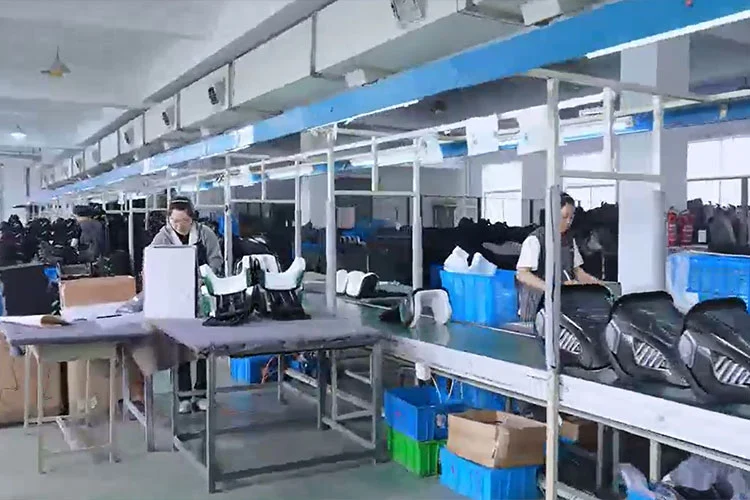
For our sample orders, we confirm material color, brand logo, delivery timing, price and expected follow-on quantity before dispatch. That is enough to produce the requested sample. It is not enough to approve mass production.
As a factory, we see the gap clearly. Buyers naturally focus on the parts they can see first: cover color, stitching, packaging and logo position. Our engineers begin with a different question: Which exact safety configuration is this sample supposed to represent? A beautiful sample with the wrong label version, approval scope or internal component is still the wrong sample.
This guide adds the approval gate that belongs between sample delivery and the bulk order. If you are still choosing a supplier or deciding between OEM and ODM, start with our OEM baby car seat sourcing guide. If the sample is already on your desk, use the process below.
1. Define what this sample is allowed to prove
A commercial sample can prove color, workmanship and basic operation. It cannot replace type approval, conformity-of-production control or an independent compliance test. Keep those jobs separate.
| Question | A physical sample can show | Evidence needed beyond the sample |
|---|---|---|
| Does it look and feel correct? | Color, fabric, sewing, trim, molding finish, logo and packaging | Approved color standard, artwork files and signed specifications |
| Can a user operate it? | Installation path, harness adjustment, buckle, recline, rotation and headrest movement | Final manual, label artwork and usability review |
| Is this the approved configuration? | Only if the sample identity is traceable | Applicable approval document, model identity, component list and revision records |
| Will bulk units remain the same? | No. One unit cannot prove ongoing consistency | Golden sample, production specification, incoming checks, line checks and pre-shipment inspection plan |
Our factory rule: never write "approved" on a sample report without stating what was approved. Appearance approval, engineering approval, compliance approval and packaging approval are different decisions.
2. Match the seat to its compliance identity before touching the buckle
Put the quotation, product specification, manual, label artwork and applicable approval document beside the seat. Check them as one set. The model reference, declared child size range, installation method, restraint type and orientation rules must agree.
For a product intended to be certified to ECE R129, use the applicable UNECE approval documentation and marking requirements, not a sales-page summary. "i-Size" should also not be applied loosely to every R129 seat. The approval category and exact certificate scope matter. For a US program, the relevant FMVSS 213 and 213a requirements lead to a different label, instruction and test file. The target market must therefore be fixed before sample approval.
Build a one-page sample identity sheet
- Supplier, buyer, project name and model reference
- Sample serial or unique tracking number
- Target country or region and applicable compliance route
- Declared child height and weight limits, where applicable
- Rear-facing and forward-facing conditions
- Vehicle attachment method and child restraint method
- BOM revision, drawing revision, label revision and manual revision
- Open deviations that the buyer has accepted in writing
If any line is blank, do not guess from the product. Ask the factory to identify it. The sheet is the bridge between the sample room and the production line.
3. Remove the cover and inspect what retail photography hides
Inspecting only the finished surface creates a predictable blind spot. The cover hides the shell, energy-absorbing material, harness route, fasteners and moving interfaces. These are also the areas most difficult for an importer to verify after thousands of units have been packed.
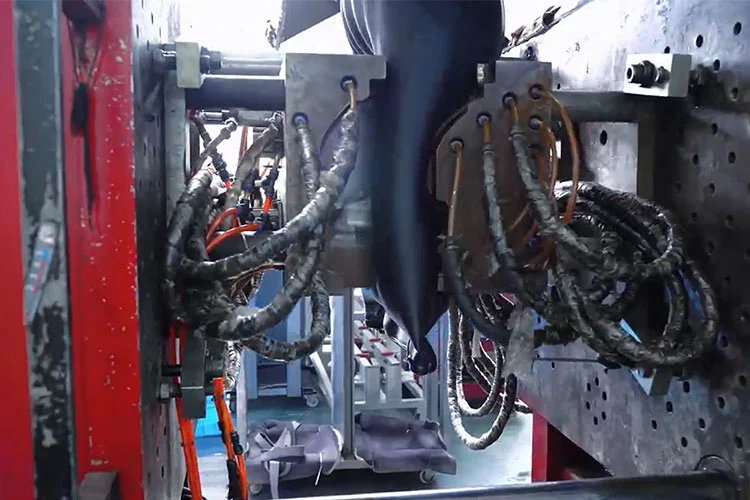
Start with a documented disassembly. Photograph each layer before removing it so you can check the reassembly sequence. Look for damaged foam, incomplete seating of inserts, sharp flash, stress whitening, cracked ribs, loose fasteners, trapped webbing or a harness path that disagrees with the manual. Do not cut or destructively test the only approval sample unless that was planned. If destructive checks are required, order a separately identified unit.
At our factory, a cosmetic issue and a structural issue do not enter the same correction queue. A loose thread may require a sewing adjustment. A locking interface that does not engage consistently goes back to engineering. Calling both issues "minor defects" hides the decision that matters.
Visible review
- Color and grain consistency
- Stitch path and loose threads
- Logo position and orientation
- Gaps, scratches and molding marks
- Packaging fit and included parts
Under-cover review
- Shell, foam and insert condition
- Harness and webbing routing
- Fastener presence and seating
- Moving-part interference
- Component and revision identity
4. Give the unopened carton to someone who did not design the seat
A sample can be mechanically correct and still fail at the point of use. To find that problem, ask a person who has not been coached by the supplier to unpack and install it using only the supplied labels and manual. Use a vehicle or an appropriate installation fixture for the intended attachment method.
Do not let the factory engineer stand beside the user and explain the missing step. Record where the person pauses, chooses the wrong belt path, cannot identify the locked position or needs a tool that was not listed. The factory should correct the product cue, label or instruction at the source.
This is not a soft marketing concern. In an EU-organised 2026 market-surveillance campaign, six of nine tested seats failed checks involving features such as markings and user instructions. The static review also covered warnings, declared height range, buckles, components, adjusting devices and corrosion. The campaign was small and should not be treated as a failure rate for the whole market, but it shows why paperwork and usability belong in a sample inspection.
Record the installation, not just the final result
- Time and sequence from opening the carton to confirmed installation
- Every point where the user consulted a diagram or warning
- Any step completed incorrectly before correction
- Visibility of indicators and labels in the installed position
- Vehicle compatibility questions that the manual does not answer
- Removal, reinstallation and child-restraint adjustment steps
5. Operate every user function repeatedly and in the wrong order
One smooth demonstration is not a functional inspection. Operate the buckle, harness adjuster, headrest, recline, ISOFIX connectors and any rotation or support mechanism through their full intended range. Repeat the sequence after the cover has been removed and reinstalled. Watch for webbing that folds, plastic that catches, indicators that remain ambiguous or parts that feel locked when they are not.
Our engineers also try foreseeable wrong sequences. Can a rotating seat appear ready for travel before it is fully locked? Can the harness be routed around the wrong side of a pad? Can a component be assembled backwards after cleaning? This does not replace regulatory testing. It finds product and instruction weaknesses while revision is still possible.
Take our BW25 support-leg car seat as a concrete example. Its current product page shows 360-degree rotation and a red/green support-leg indicator. A useful sample report should record each lock and indicator state. Writing only "rotation works" leaves too much open to interpretation.
Bewell's published quality-control process lists checks for dimensions, load-bearing capacity and function, with testing categories covering structural strength, impact, materials and fabric. A buyer's sample report should point to the applicable test evidence instead of turning a hand-operated check into a safety claim.
6. Treat labels, manuals and packaging as controlled components
Importers often leave artwork until the seat is approved. We recommend the opposite: review the near-final product with near-final labels and instructions. That is the only way to see whether the declared size range, installation path and warnings remain consistent across the physical seat, carton and manual.
The US NHTSA laboratory procedure for FMVSS 213 and 213a explicitly includes physical-feature reviews for labeling, installation instructions, registration forms and installation. UNECE Regulation No. 129 likewise contains approval and marking requirements. A sample review should use the rules for its actual destination market, with local legal or compliance review where needed.
| Control item | What to compare | Reason to stop approval |
|---|---|---|
| Product identity | Model, manufacturer details, date or batch method and required approval marking | The seat cannot be traced to the documents supplied |
| Use range | Height, weight and orientation rules across seat label, manual, carton and specification | Any conflict or unsupported range |
| Installation | Belt path, ISOFIX, tether or support method, indicators and diagrams | The illustrated route differs from the physical product |
| Warnings | Required language, visibility, permanence and market version | Placeholder copy, missing language or obsolete artwork |
| Included items | Inserts, guides, pads, manuals and accessories | The carton contents do not match the declared configuration |
7. Use three decisions, not one vague "sample approved" stamp
| Status | Use it when | What happens next |
|---|---|---|
| Approve | The reviewed configuration, documents and agreed workmanship match, with no open safety or compliance issue | Sign and seal the golden sample; release only the defined production revision |
| Revise | The issue is correctable and does not require the buyer to guess the final result | Issue a numbered correction list and review the changed part, artwork or full sample as appropriate |
| Reject | Identity is unclear, documents conflict, a critical function is unreliable or the supplier asks you to trust that "bulk will be better" | Stop production release until a traceable replacement configuration is supplied |
A factory may be able to correct a thread, label or color chip without rebuilding the whole sample. It should not quietly correct the file after the buyer has signed it. Every change needs a revision number and evidence showing what changed. For critical parts or compliance-related changes, the required engineering and approval review must be determined before production.
8. Turn the accepted sample into a production control package
The physical golden sample matters, but it is not enough by itself. Fabric can fade in storage, a label can be replaced and an internal part cannot be checked without disassembly. Pair the sealed unit with a digital and written production reference.
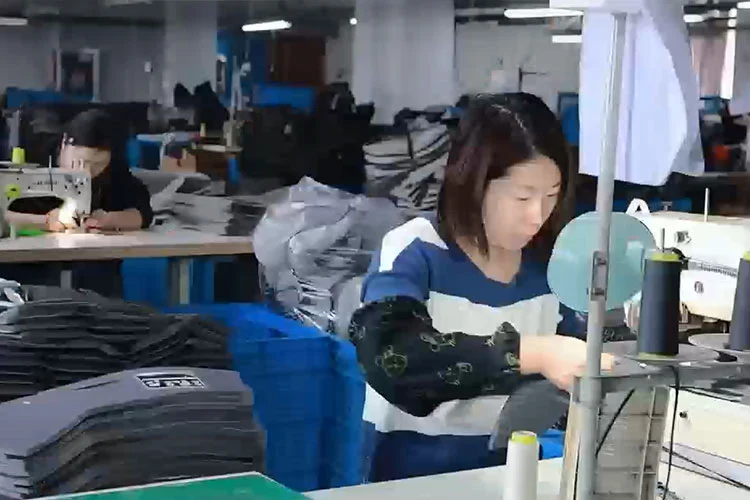
The minimum production freeze file
- Signed sample report: all findings, disposition and photographs, including under-cover views.
- Golden sample identity: unique number, seals, date, model and revision.
- Controlled specification: drawings, BOM, materials, color references, artwork and packaging details.
- Compliance pack: documents applicable to the exact model, configuration and market.
- Change-control rule: who may request, review and approve a substitution or revision.
- Inspection plan: what the factory checks during incoming inspection, assembly and final inspection, plus what the buyer or third party will check before shipment.
When we release a sample to production, the useful question is not "Does everyone remember what the buyer liked?" It is "Can purchasing, molding, sewing, assembly and quality control all work from the same approved revision?" If the answer is no, the sample process is unfinished.
For a closer look at where those controls enter the production flow, see how a child car seat is made inside our factory. You can also review our current child car seat range and sample policy.
How an approved sample moves through our factory
Bewell's factory was established in 2015. Our current manufacturing overview documents the route from sample confirmation and product development through mold making, molding, cover production, assembly, quality inspection, bulk production approval and shipment. This matters during sample review because one accepted change can affect several departments. A fabric update belongs in the cover specification. A belt-path change can affect the shell, label and manual at the same time.
Our customization scope is wider than color and logo. It covers product structure, the installation interface, height-range setting, molding method, labels, fabric covers, packaging and language versions for manuals and packaging materials. Those choices need different approval evidence. A color revision may need a new swatch and cover sample. A structural or installation change needs engineering and compliance review before the factory can treat it as a production instruction.
The Bewell service process starts by confirming the model, fabric color and special design requirements, followed by a design draft and sample for customer approval. During production, the team can provide process photos or videos and final-product photos. That record is useful only when every image and sample points back to the approved revision, which is why we insist on the production freeze file described above.