This question usually gets one of two answers: a scare, or a reassurance. Neither is useful. Here is the practical version — what a car seat is made of, which chemical rules apply, what testing actually covers, and where the honest limits of that testing are.
Quick Answer Car seats sold in regulated markets are subject to material testing as well as crash testing. A compliant seat is checked for flammability, toxicity, RoHS and REACH — rules that restrict heavy metals and hazardous substances. The smell of a new seat is off-gassing from fresh plastics, foams and adhesives, and it fades with airing. The two things most within your control: buy a seat that carries current certification and documented material testing, and do not add aftermarket covers or padding, which are outside all of it.
Worry about car seat chemicals is reasonable. A child sits in this thing for years, in a hot car, with their face close to the fabric. It is fair to ask what is in it.
The confusing part is that "toxic" gets used for three different concerns that have different answers: flame retardants, substances in the plastics and textiles, and the smell of a new seat. Taking them apart makes the topic manageable.
Why trust this guide: Bewell has manufactured child car seats in Ningbo since 2015. We specify the plastics, foams, fabrics and adhesives that go into our seats, and our testing programme covers flammability, toxicity, RoHS and REACH alongside structural and impact testing. This is written from that process — not as a health claim about any individual product.
Adhesives, dyes, and surface treatments also appear, in small quantities. Those are usually what people are asking about when they ask about chemicals, and they are covered by the substance rules below.
What material testing actually covers
Crash testing gets the attention, but a compliant seat goes through a parallel set of material checks. On our side, that programme includes flammability, toxicity, RoHS and REACH. Here is what each one is for.
Material tests and what they check
Test
What it addresses
Flammability
How the materials behave if exposed to a flame — a vehicle safety requirement, not a chemical one
Toxicity
Substances that could migrate from materials in contact with a child
RoHS
Restriction of hazardous substances, including heavy metals such as lead, mercury and cadmium
REACH
The EU chemicals framework, which restricts substances of very high concern in consumer products
Color fastness and washing
Whether dyes stay in the fabric through use and cleaning, rather than transferring out
Two honest points about this. First, these are compliance thresholds, not a guarantee that a product contains nothing. They set limits on specific substances. Second, they apply where they are legally required — which is why the market a seat was built for matters. Our certification by country guide maps which regimes apply where.
A test result tells you a material stayed within a defined limit. It is a meaningful answer to a specific question, not a blanket statement about everything.
The flame retardant question, honestly
This is the part of the topic with a genuine tension in it, and pretending otherwise does not help anyone.
Car seats have to meet flammability requirements. That rule exists for a real reason: a vehicle fire is a hazard, and a seat that ignites readily is dangerous. Historically, one common way to meet flammability requirements has been to treat fabrics with flame-retardant chemicals — and some of those chemicals have themselves been questioned.
So there are two safety concerns pointing in opposite directions. Neither is imaginary.
What has changed is that flammability performance can be approached in more than one way, including through fabric selection and construction rather than only through added treatments. If this is a priority for you, it is a fair and specific question to put to a manufacturer or retailer: how does this seat meet its flammability requirement? A vague answer is itself information.
What not to do: do not remove or replace the original cover to avoid treated fabric. The cover is part of the tested product. Swapping it changes flammability behaviour, can change how the harness sits, and voids the approval the seat was granted.
Why a new seat smells
Almost every new car seat has a smell. It is not evidence of something wrong, and it is not nothing either — it is worth understanding.
From the factory floor — where the smell comes from
Three sources, all of them fresh: newly molded plastic, newly formed foam, and adhesives that have not fully cured. A seat that was molded, assembled, boxed and containerised within weeks arrives with all of that still off-gassing inside a sealed carton.
That is also why the smell is strongest the moment you open the box, and why it fades. The practical response is boring and effective: unbox the seat and let it air in a ventilated room for a day or two before use, and avoid leaving it sealed in a hot car during that period. Heat accelerates off-gassing, which is why a new seat smells strongest in summer.
If a smell is still strong after a couple of weeks of normal use and airing, that is worth raising with the retailer or manufacturer rather than living with.
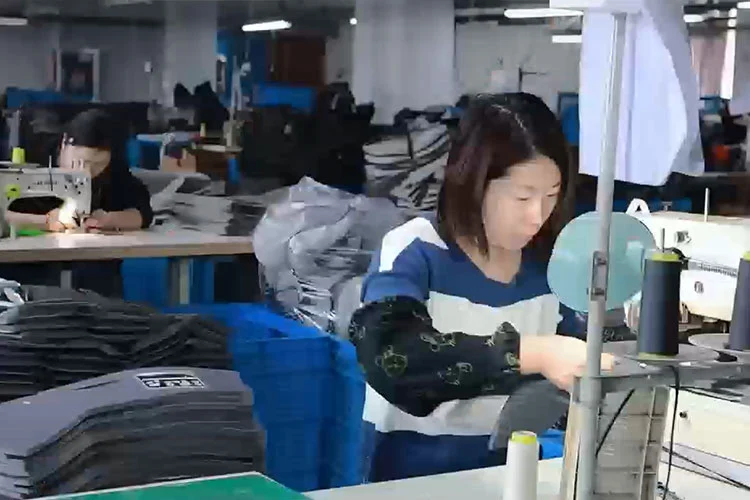
Cover fabric is the part in constant contact with a child, which is why textile testing sits alongside crash testing.
Virgin versus recycled plastic
Recycling is normally the responsible choice. Child restraints are one of the places where it is not, and the reason is worth knowing because it also explains something about material safety.
We use 100% virgin plastic in our shells. The usual justification is mechanical: recycled polymer has a mixed and less predictable structure, which is the wrong property in a part designed to absorb crash energy in a specific way.
But there is a second reason that speaks directly to this article's question. With virgin material, you know what went in. Recycled feedstock is by definition a blend of prior products, and its full history — including additives from those products — is not traceable in the same way. For a part that a child sits against for years, traceability is not a nice-to-have.
How that plastic then becomes a shell is covered in our molding explainer.
What you can actually control
Most of the anxiety in this topic is about things you cannot inspect. These are the parts you can.
Buy a currently certified seat. An ECE R129 approval for Europe and most i-Size markets, or the equivalent for your country, means the product went through a defined testing regime rather than none.
Air a new seat before use. A day or two in a ventilated room.
Use only the original cover and inserts. Aftermarket covers, strap pads, and seat protectors were never tested with the seat, chemically or structurally.
Clean it the way the manual says. Warm water and mild soap. Harsh solvents and bleach damage webbing and can leave residues on the surfaces a child touches most.
Keep it out of standing heat where you can. Park in shade when practical, or cover the seat. Heat accelerates material aging as well as off-gassing — see why car seats have a service life.
Be cautious with second-hand seats. You cannot verify the cleaning products a previous owner used, any more than you can verify a past crash.
For buyers: which documents to ask for
If you are sourcing rather than parenting, material compliance is a documentation exercise — and it is one of the easiest places to separate a real manufacturer from a reseller.
From the factory floor — what a real answer looks like
Ask for three things, in writing:
Test reports, not assurances. RoHS and REACH reports, flammability results, and toxicity testing — with the issuing lab named.
A material declaration. Which plastic, which foam, whether the shell is virgin or recycled. A factory that specifies its own materials answers immediately.
Scope and date. Which model the reports cover, and when they were issued. A report for a different model is not a report for yours.
A supplier who sends a certificate photo and changes the subject is telling you something. The same principle applies to safety approvals — check the number on the paperwork against the label on the physical sample.
Our approval certificates are published for download — BW25, BW15 and BW26A — and the wider screening process is in our supplier guide. To discuss material specifications for your market, get in touch.
Common questions
Are car seats toxic?
Car seats sold in regulated markets are subject to material testing as well as crash testing, including flammability, toxicity, RoHS and REACH. Those rules set limits on specific hazardous substances. Buying a currently certified seat, using only the original cover, and following the manual's cleaning instructions are the main things within a parent's control.
Why does my new car seat smell?
Newly molded plastic, fresh foam, and adhesives that have not fully cured all off-gas, and a sealed carton concentrates it. Air the seat in a ventilated room for a day or two before use. The smell normally fades. If it is still strong after a few weeks, contact the retailer or manufacturer.
Do car seats contain flame retardants?
Car seats must meet flammability requirements, and one traditional way to meet them has been treating fabrics with flame-retardant chemicals. Approaches vary between products. If it matters to you, ask the manufacturer or retailer specifically how that seat meets its flammability requirement.
Can I use a different cover on my car seat?
No. The cover is part of the tested product. Replacing it can change flammability behaviour and how the harness sits, and it falls outside the seat's approval. Use only the original cover or one sold by the manufacturer for that model.
What is RoHS and REACH compliance on a car seat?
RoHS restricts hazardous substances including heavy metals such as lead, mercury and cadmium. REACH is the EU chemicals framework restricting substances of very high concern in consumer products. Both are material compliance regimes, separate from crash testing.
Is recycled plastic used in car seats?
Quality manufacturers use virgin plastic in the shell. Recycled polymer behaves less predictably under impact, and its additive history is not traceable in the same way — both of which matter in a part designed to absorb crash energy.
About Bewell
Ningbo Bewell Baby Products Manufacturing Co., Ltd. has manufactured child safety seats since 2015. Our Ningbo factory runs in-house mold making, blow and injection molding, sewing, assembly and inspection, with an annual capacity of 200,000+ seats. Every model is certified to ECE R129 (i-Size); we hold China 3C certification and ISO 9001, use 100% virgin material, and run flammability, toxicity, RoHS, REACH, structural, impact, service-life and fabric testing alongside regular COP checks.
Bewell material testing programme — flammability, toxicity, RoHS, REACH, color fastness
General information only, not health or legal advice. Testing regimes and their scope vary by market and change over time — confirm current requirements with the relevant authority and ask your supplier for model-specific test reports.
We use cookies to offer you a better browsing experience, analyze site traffic and personalize content. By using this site, you agree to our use of cookies.
Privacy Policy