

A carton dimension and a units-per-container figure can describe different packing arrangements. Before using either to price a shipment, check the carton shape, pieces per carton and loading pattern. BW25 provides a useful worked example.
Calculate rectangular carton CBM as length × width × height in meters, then multiply by the number of cartons. For L-shaped car seat packaging, also obtain the carton outline and loading pattern. Confirm pieces per carton, gross weight and pallet use. A container's nominal volume alone cannot establish a shippable quantity.
For an importer, packaging affects more than the freight quotation. It determines how the seat arrives at a warehouse, how staff identify the SKU and whether the carton can continue through the final delivery channel. A pack that works for floor-loaded ocean freight may need a different arrangement for pallet storage or individual parcel delivery.
Our recommendation is to approve the complete packed unit while there is still time to revise it. Ask for the seat inside its carton, all inserts and accessories, the closed-carton measurements and a loading proposal. A photo of a finished seat leaves too much unanswered.
Choose the packing format before comparing quantities
Start with how the goods will travel after leaving the factory. A distributor unpacking master cartons has different needs from an online retailer dispatching each seat in its original box. Record the receiving warehouse's requirements before choosing carton artwork.
| Packing format | What to evaluate | What the buyer needs to confirm |
|---|---|---|
| Rectangular individual carton | Simple external measurement and a regular stacking footprint | Closed-carton dimensions, internal protection, orientation and stacking limits |
| L-shaped individual carton | Whether complementary carton outlines can use otherwise empty space | Full outline, permitted orientations, paired dimensions and the proposed arrangement |
| Multi-piece master carton | Handling several units together for wholesale distribution | Exact pieces per carton, separation between units, gross weight and split-carton handling |
| Palletized shipment | Warehouse handling and the customer's receiving rules | Loaded pallet dimensions, stack height, pallet weight and permitted overhang |
We list both cardboard boxes and PE bags within our packaging customization scope. These components need their own specifications. The outer carton controls the shipping outline; internal pieces control how the product sits inside it. Changing either can affect the packed dimensions.
For a folding model, specify the approved shipping position. Our BW26 folding seat page describes a folding backrest, but that feature alone does not establish the dimensions of the finished shipping pack. Obtain measurements with the selected accessories, protection and documents included.
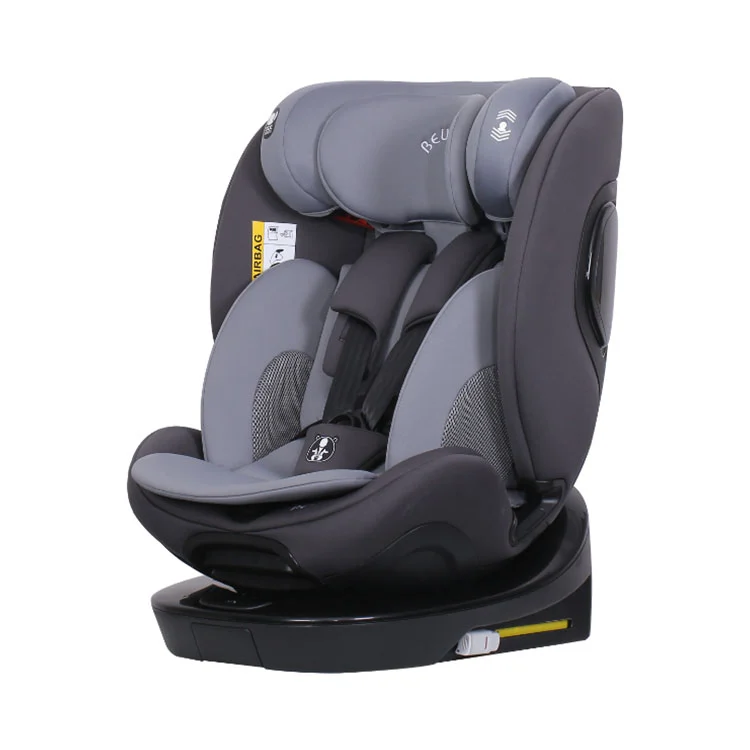
Calculate carton CBM, then check what the dimensions describe
CBM means cubic meters. For a rectangular shipping carton, multiply its closed external length, width and height. When dimensions are in centimeters, divide the result by 1,000,000. Use the shipping carton rather than the unpacked seat.
Rectangular carton formula
Carton CBM = length (cm) × width (cm) × height (cm) ÷ 1,000,000
Shipment CBM = carton CBM × number of cartons
If there are several packing sizes, calculate each carton type separately and add the results.
A worked check using the published BW25 measurement
The BW25 specification table shows "MEAS" as 53 × 45 × 61 cm, quantity as one piece per carton and 40ft HQ loading as 560 units. It does not provide a carton drawing alongside those figures. We can calculate the rectangular envelope of that measurement; we cannot establish the loading pattern from it.
| Check | Calculation or published value | Interpretation |
|---|---|---|
| Rectangular envelope of the listed measurement | 53 × 45 × 61 ÷ 1,000,000 = 0.145485 m³ | This treats the outline as a full rectangular box |
| 560 such rectangular envelopes | 0.145485 × 560 = 81.4716 m³ | The result assumes every unit occupies its entire envelope independently |
| Carrier reference for a 40ft high cube | 76.3 m³ | Hapag-Lloyd's published example, not a guaranteed cargo capacity for every container |
| Difference | 81.4716 − 76.3 = 5.1716 m³ | The full rectangular-box assumption cannot support 560 units in this reference container |
The container figure comes from Hapag-Lloyd's 40ft standard high-cube specification. The carrier notes that equipment varies by manufacturer.
Our FAQ identifies an L-shaped packing option for BW25. That is a reason to check the carton geometry. Complementary shapes may interlock, so their separate rectangular envelopes can overlap without the physical cartons overlapping. However, the FAQ does not document that the listed measurement and 560-unit count use the same packing revision.
We would ask for the carton drawing and loading record before using 560 as an order-specific commitment. The check above identifies a missing assumption; it does not measure the space saved by our L-shaped carton.
What a usable container loading proposal should show
A total at the bottom of a quotation is hard to review. Ask the factory to show how it obtained that total. For a regular rectangular load, a row-and-layer count can make the proposal understandable. Shaped cartons need a diagram of the repeated arrangement.
- Identify the model, packing revision and pieces per carton.
- Show closed-carton measurements and gross weight for that exact pack.
- Name the container type and the equipment dimensions used.
- Show carton orientation, counts by row or group, layers and any unused spaces.
- Include pallets, separators, securing materials and other cargo in the calculation.
- State whether the count comes from a proposed layout, a trial load or a previous shipment using the same pack.
For L-shaped cartons, a paired loading module is useful: show two or more cartons in the intended arrangement, give that module's overall dimensions and count the modules. This gives the buyer something that can be checked against a drawing or packing photo.
Keep the door opening separate from the internal height. Hapag-Lloyd's same example lists a 2,700 mm internal height and a 2,597 mm door opening height. A preassembled pallet has to pass through the opening. For floor loading, the proposal still needs a workable loading sequence.
Compare freight per seat on a consistent basis
For a full-container quotation, dividing the agreed freight amount by the confirmed unit count shows the freight allocated to each seat. Keep the cost scope fixed: a port-to-port amount and a quote including delivery to the warehouse are different inputs.
Freight per seat = agreed freight amount ÷ confirmed seats shipped
Illustrative sensitivity check: if the same freight amount covers 500 seats instead of 560, freight per seat rises by 12%: 560 ÷ 500 − 1 = 0.12.
This is arithmetic using hypothetical load counts, not a freight quotation or a verified BW25 packing comparison.
That calculation helps set a budget for packaging changes. Compare any extra carton cost with the change in freight per unit, then include the receiving and repacking work the new format creates. A smaller shipment pack may be unattractive if the warehouse must replace it before every customer delivery.
For less-than-container-load freight or a courier sample, ask the provider how it measures irregular packages, applies minimum charges and calculates chargeable weight. An interlocking arrangement inside a full container does not automatically determine the provider's billable measurement for individual cartons.
Our guide to car seat MOQ, pricing and lead time covers the broader quotation. This packing calculation belongs beside it so the commercial comparison uses the proposed shipping format.
Review the packed product before reducing the box
We would keep a larger pack if a smaller one leaves hardware pressing against the shell, fabric or adjustment controls. Start with a packed sample and examine where the product is supported, which parts can move and how a warehouse worker removes it.
For a support-leg seat, request photos showing the leg's specified shipping position and how it is held there. For accessories, identify the packing location and any separation from the product. Use the model's approved packing instructions rather than assuming every removable part should be detached.
Specify the packaging assessment for the actual distribution route. Agree the test method, sample arrangement and acceptance criteria with the packaging supplier or test provider. Examine the seat and its functions after the assessment as well as the carton. A neat outer box alone does not demonstrate that the contents arrived undamaged.
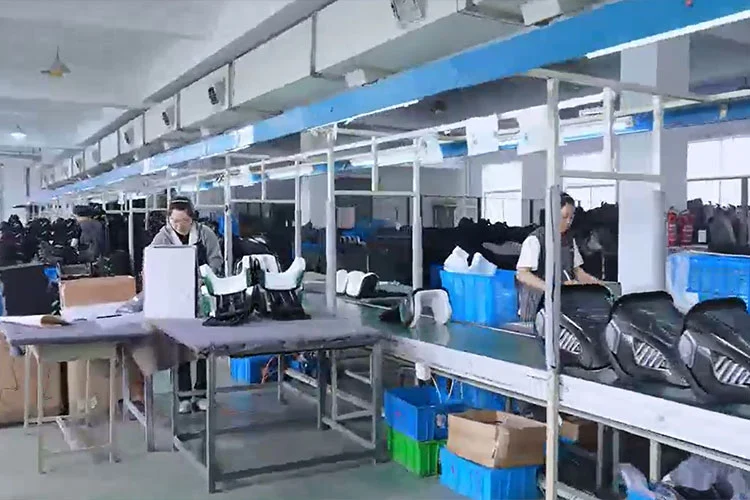
Our published service process includes confirming product details before production and sharing production or finished-product photos with customers. For a packaging review, request views of the packed interior, closed carton and shipping marks as part of that exchange.
For mixed-model orders, count cartons as well as seats
A mixed order needs a packing list by SKU and carton type. If a packing agreement specifies six boosters per master carton, a 120-piece line represents 20 cartons. A different 120-piece line packed individually represents 120 cartons. Both contain the same number of products, but they require different loading calculations.
Those quantities are an illustration. Confirm the actual master-pack quantity for the chosen booster model instead of applying the general FAQ to every SKU.
Sum the carton volumes for a first estimate, then request one combined layout. Adding a fraction of one model's full-container count to a fraction of another model's count does not establish that their shapes will fit together. Label carton ranges by model and colorway so receiving staff can reconcile the load without opening every box.
The packing brief to send with your order
| Your input | What to request from the factory |
|---|---|
| Model, colorways and order quantity | Pieces per carton, carton count and packing revision for each SKU |
| Full container, consolidated freight or parcel delivery | Suitable carton format, measured dimensions and loading basis |
| Warehouse address and receiving requirements | Pallet plan if needed, labels, carton marks and barcode positions |
| Retail carton or transit-only carton | Artwork proof, protection arrangement and packed sample |
| Manual languages and included accessories | Complete packing list and photos showing their positions |
| Required quantity per shipment | Written loading proposal with assumptions and evidence status |
Packing questions from importers
Does an L-shaped carton always cost less to ship?
No. The result depends on the loading arrangement and the freight provider's charging method. Compare the confirmed full-container count, carton cost and receiving work. For individual parcels or consolidated freight, obtain the provider's measurement rules.
Can I calculate container quantity by dividing container CBM by carton CBM?
That gives a volume-only upper bound for identical rectangular cartons. It does not account for gaps, orientation, stacking limits, pallets or securing materials. Use a loading layout to establish the proposed quantity.
What should I do when dimensions and a loading quantity do not agree?
Confirm whether the dimensions describe the seat, a rectangular carton or the outer envelope of shaped packaging. Then request the packing revision, units per carton and loading layout. Do not change a dimension just to make the calculation fit.
Discuss the packing format for your shipment
Send your model choice, quantities and receiving requirements. Specify whether cartons will travel directly to customers or first pass through a distributor's warehouse. That determines which packing options are worth comparing.
Include in your enquiry
- Model and quantity by colorway
- Container or consolidated shipment
- Floor-loaded or palletized receiving
- Retail artwork and manual languages
- Any onward parcel-delivery requirements
Request for approval
- Carton outline and measured dimensions
- Pieces per carton and gross weight
- Packed-sample photographs
- Loading layout and its assumptions
- Packaging revision on the order record
Bewell product team: tic@nbbewell.com