

A first product line should not be a row of similar-looking seats. Each SKU needs a defined child stage, installation logic, channel role and reason to remain in the assortment. This guide shows how to build that range before requesting prices and samples.
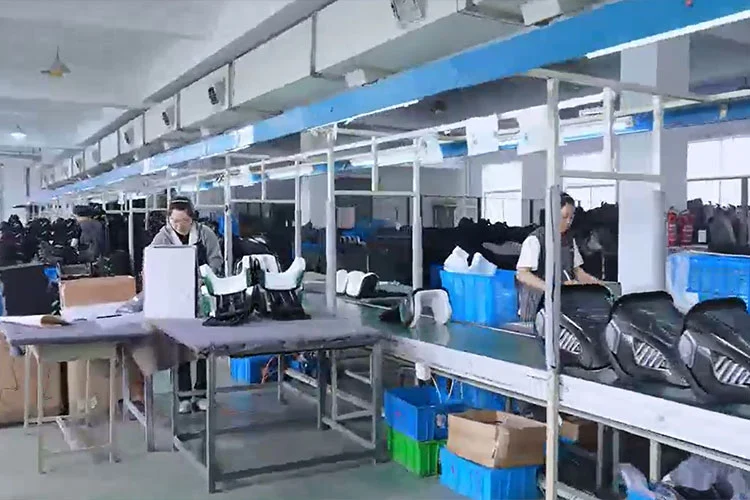
When an importer asks our factory for "three good car seats," the number three tells us almost nothing. We still need to know whether the seats are expected to serve the same child stage at three price positions, cover three different stages, or fit three different installation conditions. Each answer produces a different product range.
The common mistake is to choose from the supplier's model list first and justify the range later. That often creates several seats with the same customer, the same product-page promise and no clear reason for a retailer to stock all of them. More SKUs then create more samples, artwork versions, manuals, cartons and replacement-part records without adding a new customer choice.
We work in the opposite direction: define the job, then select the platform. If you have not yet decided whether to use an existing platform or develop a new one, start with our OEM baby car seat guide. This article begins at the next decision: which approved configurations belong together in one market-facing range.
1. Start with four market inputs, not a product catalogue
A useful range brief can fit on one page. It does not need a market-research report, but it must identify the conditions that change the product recommendation.
Destination market
Name the first country or group of countries, not "Europe," "export" or "global." The approval record, marking, manual language and vehicle environment must be checked against the actual launch market.
Customer stage
State which stages the range must cover: rear-facing restraint, forward-facing harness, booster, or a combination. Use the approved height range and restraint mode, not an age label alone.
Vehicle and installation conditions
Tell the factory what you know about ISOFIX availability, tether or support-leg conditions, typical vehicle size and any compatibility concerns already reported by your channel. Do not assume that one seat fits every vehicle.
Sales channel
An online listing, supermarket shelf, specialist baby store and distributor catalogue need different demonstrations, packaging information and comparison points. The channel changes the evidence buyers need before purchase.
Factory-side decision rule: we do not recommend a model only because its declared size range is broad. We first check what restraint modes sit inside that range, how the seat installs, what the approval communication covers and whether the model adds a distinct role to the buyer's proposed lineup.
2. Give every SKU one job
"Entry," "core" and "step-up" are useful labels only when they describe a real product difference. Price alone is not enough. For every proposed SKU, finish this sentence:
This model remains in the range because it serves ______ better than the other models.
The blank should contain a customer stage or use condition: a rear-facing period, a dedicated booster stage, a vehicle installation need, a compact storage requirement, or a defined channel format. "Different fabric" is usually an appearance option, not a separate product role.
| Possible role | What makes it distinct | Evidence to request | Warning sign |
|---|---|---|---|
| Broad-stage core model | Multiple approved restraint stages in one platform | Approval communication, mode table, installation instructions, vehicle-fit information | The range is described only by one large height span |
| Dedicated booster | Focuses on the non-integral booster stage and vehicle-belt routing | Approved range, belt-routing instructions, headrest positions, product and carton data | It is presented as a cheaper copy of the core model |
| Vehicle-fit alternative | Uses a different approved installation or anti-rotation solution | Installation method, compatibility limits, indicators and user manual | The alternative adds hardware but solves no documented fit issue |
| Channel-specific configuration | Changes the information, packaging or service format required by that channel | Carton specification, languages, artwork list, display requirements and content assets | One physical model is duplicated under several names without a clear channel need |
This framework is a product-planning method, not a claim about how every retailer should merchandise car seats. The final roles should come from your buyers, returns data, vehicle mix, competitor gaps and compliance route.
3. Cover child stages deliberately
A child car seat product line should not be mapped by age labels alone. Height and weight limits, orientation, integral or non-integral restraint, and the manufacturer's instructions determine when a child can use each configuration.
From our factory side, the first useful source is the approval communication for the exact model. For BW25, that document records rearward-facing use at 40 to 105 cm, forward-facing use at 76 to 150 cm, integral restraint at 40 to 105 cm and non-integral restraint at 100 to 150 cm. The model's marketing age label cannot express those four boundaries. A range plan should copy the approved modes first, then use the product instructions and destination-market requirements to decide how they will be presented.
| Stage question | What the buyer must confirm | What the factory should show |
|---|---|---|
| Where does rear-facing coverage end? | Target user range and market requirements | Exact approved rear-facing range and installation configuration |
| When is the integral harness used? | Which part of the range needs a built-in restraint | Approved integral range, orientation and adjustment instructions |
| When does the vehicle belt restrain the child? | Booster-stage customer and vehicle-belt conditions | Approved non-integral range and belt-routing instructions |
| Does the next SKU add a new stage? | Whether the overlap creates a clearer choice | A mode-by-mode comparison, not just model photos |
4. Worked example: why BW25 and BW15 are not the same SKU
The current Bewell range provides a useful example. BW25 and BW15 both reach 150 cm, and both cover 100 to 150 cm. If we compare only those numbers, the booster appears redundant. The approval modes and physical product data show a different picture.
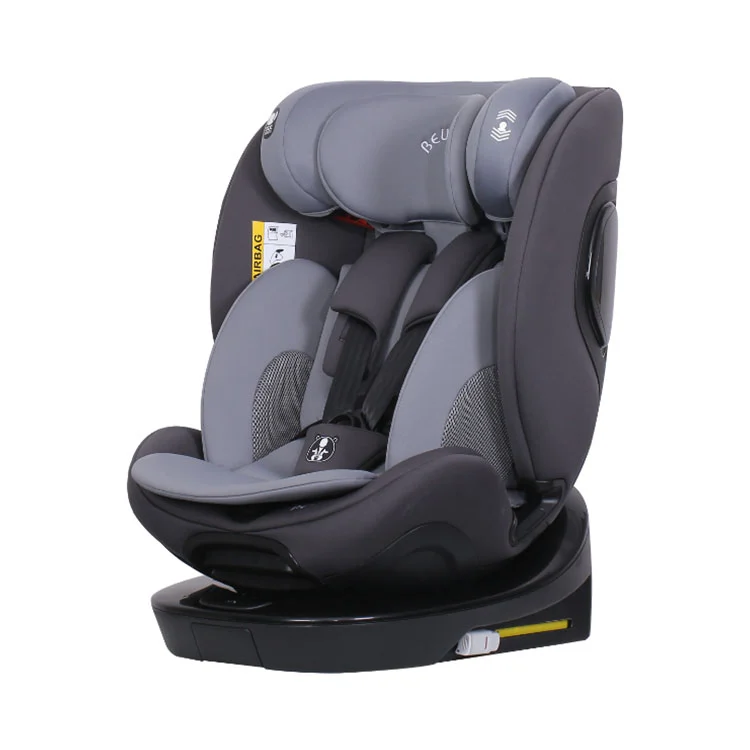
BW25: broad-stage platform
- Approval number: E8*129R03/09*14928*00
- 40 to 105 cm i-Size universal ISOFIX; 100 to 150 cm i-Size booster
- The approval communication records rearward-facing use at 40 to 105 cm and forward-facing use at 76 to 150 cm
- ISOFIX, support leg, 360-degree rotation and red/green support-leg indicator
- Net weight: 13.3 kg
- Published 40ft HQ loading: 560 units
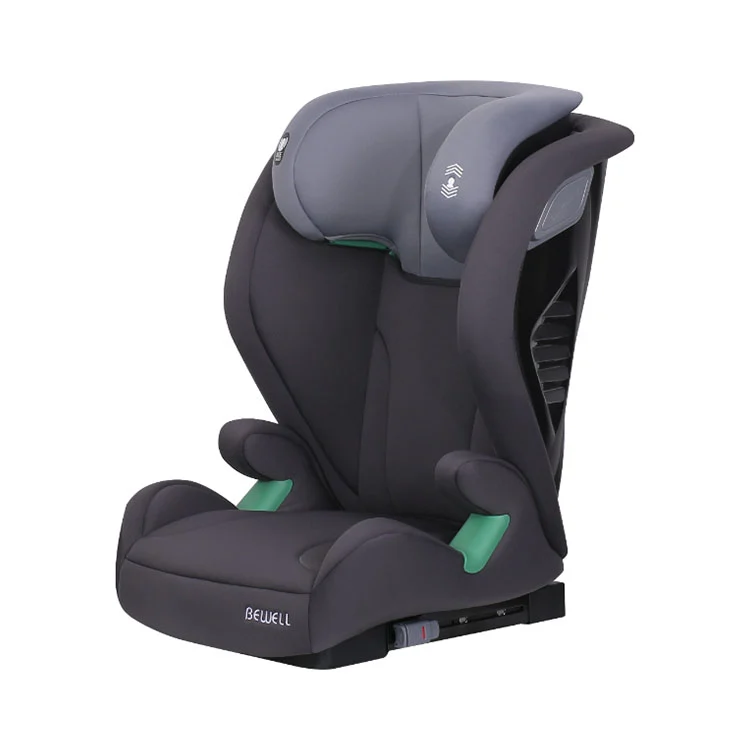
BW15: dedicated booster platform
- Approval number: E8*129R03/08*13652*01
- 100 to 150 cm forward-facing, non-integral i-Size booster
- ISOFIX, 14 headrest positions and two tilt positions
- Breathable mesh cover and removable, washable fabric
- Net weight: 6.2 kg
- Published 40ft HQ loading: 760 units
| Decision | BW25 | BW15 | Range-planning meaning |
|---|---|---|---|
| Child-stage coverage | Multiple approved modes from 40 cm, including booster use at 100 to 150 cm | Dedicated 100 to 150 cm booster | The size overlap does not mean the earlier-stage functions are duplicated |
| Physical platform | Rotating seat with support leg; 13.3 kg net | Injection-molded booster; 6.2 kg net | BW15 is 7.1 kg lighter based on the published product data |
| Published loading reference | 560 units per 40ft HQ | 760 units per 40ft HQ | BW15's published count is 200 units, or 35.7%, higher; confirm the current packing revision before freight planning |
| Possible lineup role | Broad-stage core model | Dedicated booster-stage model | One range can offer continuity and a separate later-stage choice without pretending the products are interchangeable |
The conclusion is not that every buyer needs these two models. It is that overlap must be examined at configuration level. If your channel wants one product story and minimal inventory, the broader platform may be enough. If it needs a separate booster-stage option, BW15 has a different approved role and a different physical and packing profile. Price and margin still require a current quotation; neither can be inferred from weight or container count.
5. How many models should the first range contain?
There is no reliable universal number. We recommend adding a SKU only when the buyer can document the gap it fills.
Use one clear proposition
A single-model launch can work when one approved configuration matches the intended customer stage and channel. The trade-off is limited coverage, not an automatically weaker offer.
Separate the roles
A broad-stage model plus a dedicated booster is a logical two-SKU structure when the channel has reasons to serve both roles. The BW25/BW15 comparison above demonstrates this pattern.
Add a documented fit or channel gap
A third model should solve a different installation, storage, price-position or channel requirement. Write that requirement before choosing the model.
Check operational cost before expansion
More models mean more controlled samples, artwork, manuals, carton files, spare-parts records and inspection references. Add them when your sales data or buyer commitments justify the added control work.
Before requesting a sample from every shortlisted model, compare approval identity, usable modes, installation, dimensions, net and gross weight, pieces per carton, customization scope and the evidence available for the channel. Once the shortlist is stable, use the same configuration when you compare the supplier's MOQ, pricing and lead-time terms.
6. Match product evidence to the sales channel
A model can be technically suitable and still be difficult for a channel to explain or support. The sales page, packaging and staff must communicate how the seat differs from adjacent SKUs.
| Channel | Range decision to make | Evidence to prepare before launch |
|---|---|---|
| E-commerce | Can a shopper understand the difference without touching the product? | Mode table, dimensions, weight, installation images or video, manual, comparison copy and accurate image set |
| Specialist baby store | Can staff demonstrate fit, adjustment and transitions correctly? | Training sample, installation instructions, approved ranges, vehicle-fit notes and replacement-part process |
| Distributor or supermarket | Does each SKU earn its shelf and inventory position? | Carton data, packaging languages, barcode and label files, product-role summary and current quotation |
| Private-label programme | Which parts of the platform remain controlled and which may change? | Approved configuration, customization matrix, artwork list, sample record and change-control route |
Bewell's current customization page groups options into five areas: product structure, material, appearance, packaging and language version. It also shows a six-step route from submitting an idea to drawings, prototype, molding, sample confirmation and bulk production. That does not mean every change is cosmetic. Installation interfaces and height-range settings appear under product structure, so they should be discussed against the applicable approval and test plan before a buyer treats them as selectable options.
7. Send a range brief that lets the factory make a decision
The fastest useful enquiry is not "send catalogue and best price." It gives the factory enough information to remove unsuitable configurations before the sample stage. Copy the fields below into your message.
| Field | What to send | Why it changes the shortlist |
|---|---|---|
| Launch market | Country or countries and planned launch timing | Defines the approval, markings, languages and document review needed |
| Channel | E-commerce, specialist retail, supermarket, distribution or another named route | Changes the product comparison, packaging and content assets required |
| Stages to cover | Rear-facing, forward-facing harness, booster, or the exact approved range sought | Prevents three models from serving the same customer stage accidentally |
| Vehicle conditions | Known ISOFIX, tether, support-leg or vehicle-size constraints | Removes configurations that do not fit the intended installation environment |
| Role of each SKU | One sentence explaining why each proposed model stays in the range | Exposes cannibalization before samples and artwork are commissioned |
| Order and logistics | Estimated first quantity by SKU, destination port and any packing limits | Lets the factory quote the actual mix and confirm packing data |
| Customization | Logo, label, cover, carton, manual languages and any proposed structural change | Separates artwork work from changes that may affect approval or tooling |
Ask each supplier to return the same comparison: model, approval number, approved size range and modes, installation configuration, product and carton data, current documents, customization boundary, sample scope and quotation assumptions. A catalogue cannot answer all of those questions; a controlled shortlist can.
Questions buyers ask before choosing a product range
How many models should a new child car seat brand launch?
There is no universal number. Start with the fewest models that cover your intended child stages and channel needs without performing the same job. One clear model can be more manageable than three poorly differentiated models. Add a SKU when you can name the customer, stage, installation or channel gap it fills.
Should one 40 to 150 cm model replace a separate booster?
Not automatically. Compare the approved restraint modes, physical platform, installation, weight, packing and channel role. In the Bewell example, BW25 includes broad-stage functions while BW15 is a dedicated 100 to 150 cm i-Size booster. A buyer may choose one or both depending on the intended range structure.
Can the same private-label car seat range be sold in every country?
Do not assume so. Name each destination market and verify the applicable approval, markings, instructions, language, vehicle environment and commercial requirements. A supplier's generic "global" or "ECE" description is not a substitute for the exact product approval and market review.
What should I send a factory before asking for a shortlist?
Send the destination market, channel, child stages, known vehicle and installation conditions, intended role of each SKU, estimated quantity by model, packing constraints and required customization. These inputs allow the factory to screen configurations instead of sending an undifferentiated catalogue.
How should I compare two supplier range proposals?
Use the same fields for both: approval number, approved size range and restraint modes, installation configuration, product and carton data, current documents, customization limits, sample scope and quotation assumptions. Do not compare model names or broad height ranges alone.
Send the market data that changes the product recommendation
If you want a useful shortlist, do not begin with color or logo. Send the details below and ask us to identify which current Bewell configurations match, which information still needs confirmation and where two proposed SKUs would overlap.
Include in your enquiry
- Destination country or countries
- Sales channel and intended customer stages
- Known vehicle or installation constraints
- Estimated first-order quantity by SKU
- Logo, cover, manual and carton requirements
Ask us to return
- A model-by-model role comparison
- Exact approval-document references
- Product and current packing data
- Customization points requiring confirmation
- A sample scope for the shortlisted models
Prefer email? Send the same brief to tic@nbbewell.com. Product approval, packing and quotation details should be reconfirmed for the selected configuration and order revision.