

The two numbers describe an approved child-stature range. They do not mean that the seat uses one installation method, one restraint or one orientation from 40 cm through 150 cm. A 40-150 cm model normally changes configuration as the child grows.
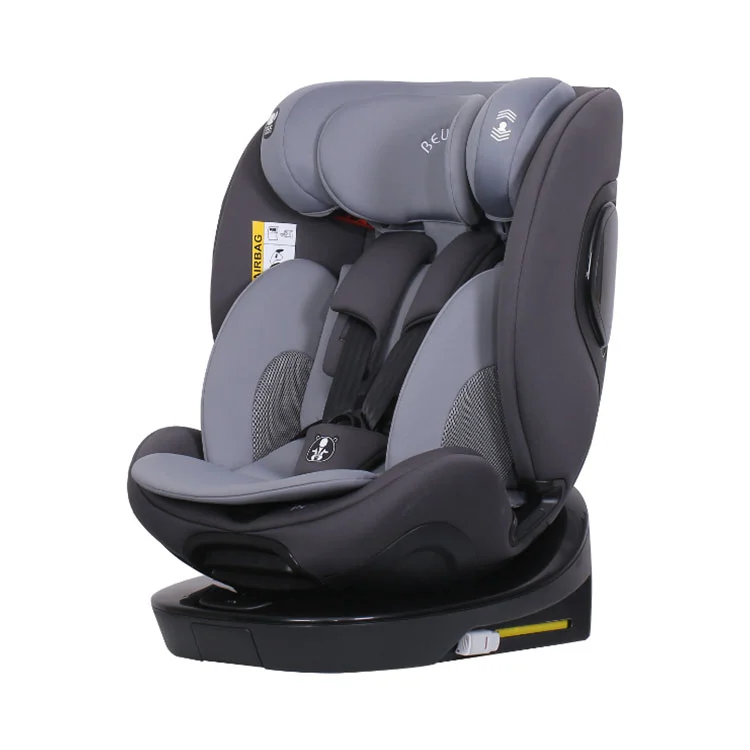
Product pages often compress this class into "birth to 12 years" or "all stages." Those phrases are easy to scan but weak for a technical decision. Children of the same age do not have the same stature, and the seat does not hold a 40 cm occupant in the same way that it guides the belt for a 150 cm occupant.
At the factory, we read 40-150 cm as a configuration map. The map tells engineering which restraint parts are active, tells artwork which labels are needed and tells an importer which vehicle anchors and user instructions must be checked. The wide range is useful only when those transitions are clear.
1. Under UN R129, the range refers to stature
The current consolidated text of UN Regulation No. 129 defines "size" as the child's stature and a "size range" as the range for which the restraint was designed and approved. This is the first distinction to keep: 40-150 cm is not a weight group and not an age band.
Age and weight can still appear in manuals as supporting information or limits. They cannot replace the approved stature range on an i-Size selection decision. The buyer should copy the exact size and mass limits from the model's approval communication, approval mark and manual, then make sure the product page says the same thing.
Product-team rule: never build the SKU title, carton, manual or distributor sheet from an age claim alone. Start with the approved stature range and configuration. Add age wording only after checking that it is appropriate for the market and consistent with the controlled product documents.
2. Five numbers define the usable transitions
A 40-150 cm seat is easier to understand when the intermediate limits are visible. The exact configuration remains model-specific, but the BW25 documents provide a useful worked example.
Lower limit of BW25's rear-facing integral configuration.
Lower stature listed for its forward-facing harnessed configuration.
Lower limit of its non-integral i-Size booster configuration.
Upper limit of its integral harnessed configuration.
Upper limit of the approved booster configuration.
Current UN R129 text says a forward-facing enhanced child restraint must not be designed for stature below 76 cm. A rear-facing restraint designed for children up to 15 months must accommodate a stature of at least 83 cm, and the rear-facing mode of a convertible seat must also accommodate at least 83 cm. The BW25 manual adds a direct user warning not to use the seat forward-facing before the child is older than 15 months.
Do not turn 76 cm into the only switch condition. For BW25, the child must meet the manual's stature condition and the forward-facing age warning. A product label or retailer listing that shows only "76 cm+" loses part of the instruction.
3. One shell contains three different restraint jobs
The BW25 approval communication and manual let us separate the range without guessing. The table below describes this model, not every 40-150 cm seat on the market.
| BW25 mode | Child stature | Orientation | Child restraint | Connection to vehicle |
|---|---|---|---|---|
| Integral rear-facing | 40-105 cm | Rear-facing | Seat's five-point harness | ISOFIX plus support leg |
| Integral forward-facing | 76-105 cm, subject to the manual's age warning | Forward-facing | Seat's five-point harness | ISOFIX plus support leg |
| Non-integral booster | 100-150 cm | Forward-facing | Vehicle's adult three-point belt | Adult belt, with optional ISOFIX according to the manual; support leg stowed |
The change at booster stage is substantial. The seat's harness is stored, the vehicle belt becomes the child's restraint and the support leg is put away. Current UN R129 text also states that an i-Size booster seat secures the child with the adult safety belt, with optional ISOFIX attachments where the approved design allows them.
This is why "ISOFIX car seat" can be an incomplete product description. In BW25's booster mode, ISOFIX can connect the seat to the vehicle, but the adult belt still restrains the child. The manual must explain both roles without suggesting that ISOFIX replaces the vehicle belt.
4. The 100-105 cm overlap needs a written transition rule
BW25 has an overlap: the integral range ends at 105 cm and the booster range begins at 100 cm. A distributor may see two listed configurations for a child between 100 and 105 cm. The overlap does not authorize a retailer to invent its own changeover advice.
The controlled manual, label and market instructions must tell the user which conditions apply. For an OEM project, the brand should decide how the transition is explained before artwork approval. Check at least these items:
- which restraint mode and orientation are permitted at each stature;
- the integral-mode maximum occupant mass shown in the approved marking or manual;
- how to store the harness and buckle for booster use;
- when the support leg or top tether stops being used;
- how the shoulder and lap portions of the vehicle belt pass through the guides;
- which warning must remain beside the mode diagram.
From a factory documentation perspective, the transition page is one of the first places we inspect in a private-label manual. A technically correct seat can still reach the buyer with a confusing mode chart if the copywriter treats 40-150 cm as a single setup.
5. Support leg and top tether versions solve the same sourcing question differently
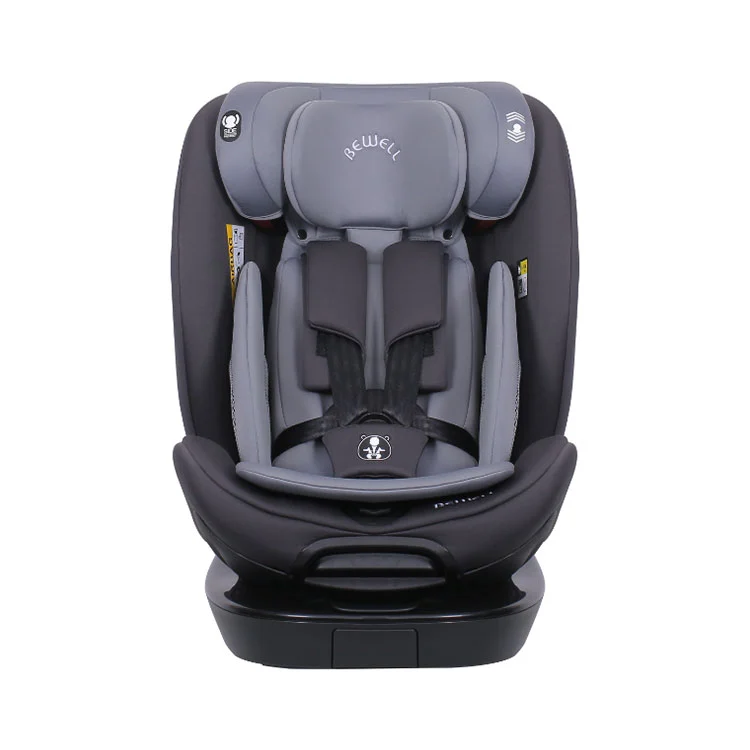
Two 40-150 cm seats can cover similar stature ranges and still require different vehicle anchors during integral use. This difference matters to an importer because the target vehicle fleet, user instructions, packaging diagrams and sales training must match the model.
| Documented point | BW25 | BW23 | Buyer question |
|---|---|---|---|
| Integral rear-facing range | 40-105 cm | 40-105 cm | Does the target vehicle support the model's required anchors and installation? |
| Integral vehicle connection | ISOFIX plus support leg | ISOFIX plus top tether | Which anchor arrangement is more practical in vehicles sold in the target market? |
| Forward-facing harness range | 76-105 cm | 76-105 cm | Do the label and manual preserve the stature and age conditions? |
| Booster range | 100-150 cm | 100-150 cm | Does the manual clearly show adult-belt-only and optional-ISOFIX use where approved? |
| Anti-rotation component in integral use | Support leg contacts the vehicle floor | Top tether connects to the vehicle's tether anchor | What vehicle limitations and user checks must appear in the market-specific instructions? |
The comparison comes from the current BW25 manual and BW23 manual. It does not establish that one anchor system is generally safer or better. It establishes that the two products ask different things of the vehicle and user.
6. i-Size does not remove the vehicle-fit check
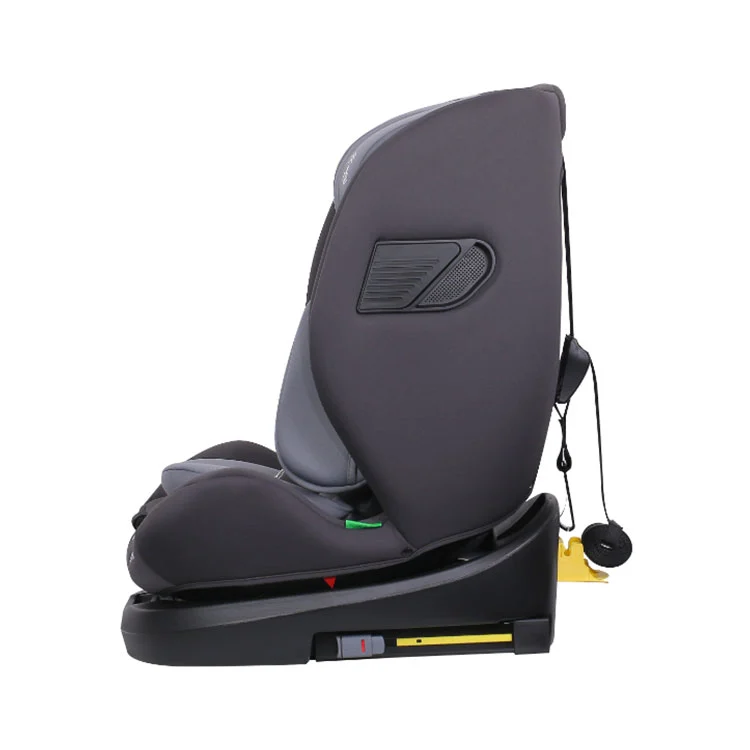
The BW25 approval covers i-Size universal ISOFIX use for 40-105 cm and i-Size booster use for 100-150 cm. Its manual still directs the user to the vehicle manufacturer's handbook and limits use to compatible seating positions. That is a practical reminder for product buyers: a broad child-stature range is not a promise that every mode fits every vehicle seat.
For a target-market review, test or document these points on representative vehicles:
- ISOFIX access and whether both connectors engage without interference;
- support-leg contact or top-tether routing for the selected model;
- space for the rear-facing shell through its required recline position;
- clearance during rotation and the locked travel positions;
- vehicle-belt length, buckle position and belt-guide routing in booster mode;
- headrest extension and roof or vehicle-head-restraint interference up to the upper range;
- visibility of indicators, labels and adjustment controls after installation.
A distributor who sells across several vehicle segments should not use one successful installation photo as the compatibility argument. Record the vehicle make, model, year, seating position, test configuration and result. If the product relies on an approved vehicle list, that list becomes part of the release package.
7. Verify four sources before repeating a 40-150 cm claim
We do not treat a product-page title as proof of the whole specification. Before a brand prints the range on a carton or asks a retailer to publish it, four sources should agree.
Read the complete communication
Match the approval number, manufacturer, model designation, stature ranges, integral or non-integral classification, orientations and marking. The UN R129 approval verification guide explains the document trail.
Check every visible mode
The approval mark, stature range, orientation and required warnings should match the approved model. A photo of an orange label without the complete approval document is not enough.
Trace the transition instructions
Check the mode table, installation hardware, restraint method, age and mass conditions, harness storage, booster belt routing, warning language and vehicle reference.
Operate the stated configurations
Confirm that the supplied sample matches the model and that its harness, support leg or tether, ISOFIX, recline, rotation, headrest and belt guides work as the documents describe.
BW25 has a strong evidence chain for this article because its live product page links directly to both its manual and an authority-issued approval communication naming BW25 and BEWELL. That is the standard an OEM buyer should ask a supplier to meet for the quoted configuration.
8. Decide what job this SKU has in the product range
A 40-150 cm model can reduce the number of broad height categories in a catalogue, but it does not automatically replace every dedicated product. A brand still has to decide how the seat fits its channel, price architecture, vehicle mix and support workload.
| Range decision | Question to answer | Evidence needed |
|---|---|---|
| One broad-range hero SKU | Can the sales channel explain three modes without reducing them to an age claim? | Approved mode chart, retailer copy, training material and customer-support script |
| Support leg or top tether variant | Which vehicle-anchor pattern better matches the destination market? | Vehicle sample, compatibility review and model-specific instructions |
| 40-150 cm versus narrower models | Does the range need a separate infant carrier, 76-150 cm seat or dedicated booster? | Channel use case, target customer, intended portability and assortment role |
| Color and trim variants | Can each cover and label revision remain tied to the approved base model? | Controlled bill of materials and fabric-cover specification |
| Carton and online listing | Do the range, modes and included hardware match what ships? | Golden sample, artwork register, packed sample and pre-shipment check |
The broader baby car seat product-range guide compares 40-150 cm with narrower height categories. This page owns the product-term explanation; the range guide owns assortment planning. Keeping those jobs separate reduces internal competition between the two articles.
9. Ask for a configuration matrix, not a feature list
A useful 40-150 cm inquiry names the market and asks the supplier to map each mode. "Need 360 i-Size seat, send quote" leaves the deciding fields undefined.
Send the target country, sales channel, expected vehicle segments, preferred support leg or top tether arrangement, colorways, languages, first-order quantity and forecast. Ask the factory to return:
- the exact factory model and product photographs;
- the complete approval communication and approval extensions;
- a table of stature, orientation, child restraint and vehicle connection for every mode;
- the current manual and approval-label artwork;
- the product dimensions, carton dimensions, net and gross weight for the quoted revision;
- the customization boundaries and changes requiring technical review;
- the sample, test and production-release plan.
Put the returned information into a product specification sheet. Our factory-side preference is simple: if sales cannot fit the mode matrix on one page, the product definition is not ready for a quotation comparison.
Frequently asked questions
What does 40-150 cm mean on an i-Size car seat?
It is the complete child-stature range for which the restraint was designed and approved. It is not an age range or one unchanging setup. Check the model's separate limits for rear-facing, forward-facing harnessed and booster configurations.
Does a 40-150 cm car seat use the same harness for the whole range?
No. In the documented BW25 configuration, the seat's five-point harness is used in the integral 40-105 cm range. From 100-150 cm, the seat works as a non-integral booster and the vehicle's adult three-point belt restrains the child.
Can a 40-150 cm i-Size seat face forward from 76 cm?
Do not use 76 cm as the only condition. UN R129 does not permit a forward-facing design below 76 cm, and the BW25 manual also says not to use the seat forward-facing before the child is older than 15 months. Follow every condition in the exact model's manual and approval.
What happens between 100 and 105 cm?
Some models, including BW25, publish an overlap between the integral harness range ending at 105 cm and the booster range beginning at 100 cm. The approved manual and label must define the permitted configurations and transition conditions. A retailer should not invent its own rule.
Is a support-leg 40-150 cm seat better than a top-tether model?
Neither system is automatically better for every project. BW25 uses ISOFIX plus a support leg in its integral modes, while BW23 uses ISOFIX plus top tether. Compare the approved models against vehicle anchors, installation space, user instructions and the target market's vehicle fleet.
What should an OEM buyer verify before ordering a 40-150 cm car seat?
Verify the complete approval communication, approval number, manufacturer, model, stature ranges, orientations, integral and booster modes, child restraint, vehicle connections, current label, manual and physical sample. The quotation should identify the exact configuration and document revisions.
Request a 40-150 cm model by configuration
Tell the BEWELL product team where the seat will be sold and which vehicle-anchor arrangement you need. We can use that information to identify a base model and prepare the document set needed for comparison.
Include with your inquiry
- Destination country and sales channel
- Target stature range and preferred installation system
- Representative vehicles or anchor requirements
- Languages, colorways, first order and forecast
Ask us to return
- Model-level mode and installation matrix
- Approval communication, label and manual references
- Product and carton specifications for the quoted version
- Customization, sample and technical-review plan
Direct contact published on the BEWELL website: tic@nbbewell.com | +86-13586859678