

Quick answer: A useful child car seat RFQ should identify the sales market, required approval, seat category, approved height range, installation method, restraint system, customization, order volume, packaging, documentation and delivery terms. Ask the supplier to separate unit price, tooling, testing, samples and freight. If one of those details is missing, two low quotes may describe different products.
"Please quote your best price for a baby car seat" is easy to send and hard to answer. The supplier has to guess whether you need a 40-150 cm rotating seat or a 125-150 cm booster, whether the order is for Europe or another market, and whether your logo requires a simple artwork change or a new product configuration.
The result is usually a fast price built on assumptions. Those assumptions surface later as revised quotations, certification questions, packaging charges or a sample that does not match the product you expected.
This checklist is the practical follow-up to our guide to OEM baby car seat sourcing. Use it to write a new RFQ or to check a quotation already on your desk.
1. Start with the market and approval requirements
Do this before choosing colors or asking for a unit price. The destination market determines the approval path, labels, instructions and product configurations that the manufacturer should evaluate.
- Target country or countries. Write the actual countries where the seat will be sold, not just "Europe" or "international." A multi-country launch may require different languages, packaging marks and commercial documents.
- Required regulation and approval series. Name the standard you believe applies, then ask the supplier to confirm it for the proposed model and market. For an EU project, request model-specific UN R129 approval information rather than a general statement that the factory makes R129 seats.
- Planned sales channel. Tell the supplier whether the seat is intended for retail stores, distributors, your own website or a marketplace. The physical product may be the same, but carton artwork, product identifiers, manuals, image sets and compliance submissions can differ.
- Launch date and approval status needed by that date. State whether you want an existing approved platform or a new design that requires development and approval work. The second route should not be priced against the lead time of the first.
Documentation deserves space in the first RFQ. In an EU market surveillance campaign reported in April 2026, seven of nine child car seats failed the selected dynamic test requirements and six failed checks that included markings and user instructions. The sample was small and does not describe the whole market, but it shows why a buyer should review the product, label and manual together. The European Commission also advised importers to monitor quality and consider independent retesting where feasible. See the European Commission campaign report.
2. Define the product before asking for a price
A seat category is not a specification. Two 40-150 cm products can differ in attachment, anti-rotation device, rotation, shell process, carton volume and approved configurations. Those choices affect tooling, assembly, loading quantity and the evidence you need to review.
- Seat category. Specify infant carrier, rear-facing or convertible seat, forward-facing harness seat, high-back booster or backless booster.
- Approved child height range. Use the range you intend to print and sell, such as 40-150 cm, 76-150 cm, 100-150 cm or 125-150 cm. If the assortment is not final, compare the commercial role of each option in our child car seat height range guide. Ask the supplier to map the selected claim to the approval documents.
- Travel orientation and transition points. State which parts of the range must be rear-facing or forward-facing. Do not rely on an age label alone. Ask for the approved configuration for each part of the height range.
- Vehicle attachment method. Choose or compare ISOFIX, vehicle belt, top tether, support leg and any permitted combinations. Write out each mode you want to offer.
- How the child is restrained. Define where a five-point harness is required and where the vehicle belt restrains the child. Include the requested harness adjustment and buckle configuration.
- Mechanical and comfort features. List rotation, recline positions, headrest adjustment, removable backrest, foldability, side-impact components, removable cover and any accessories. Mark each item as required or optional so the supplier can quote alternatives.
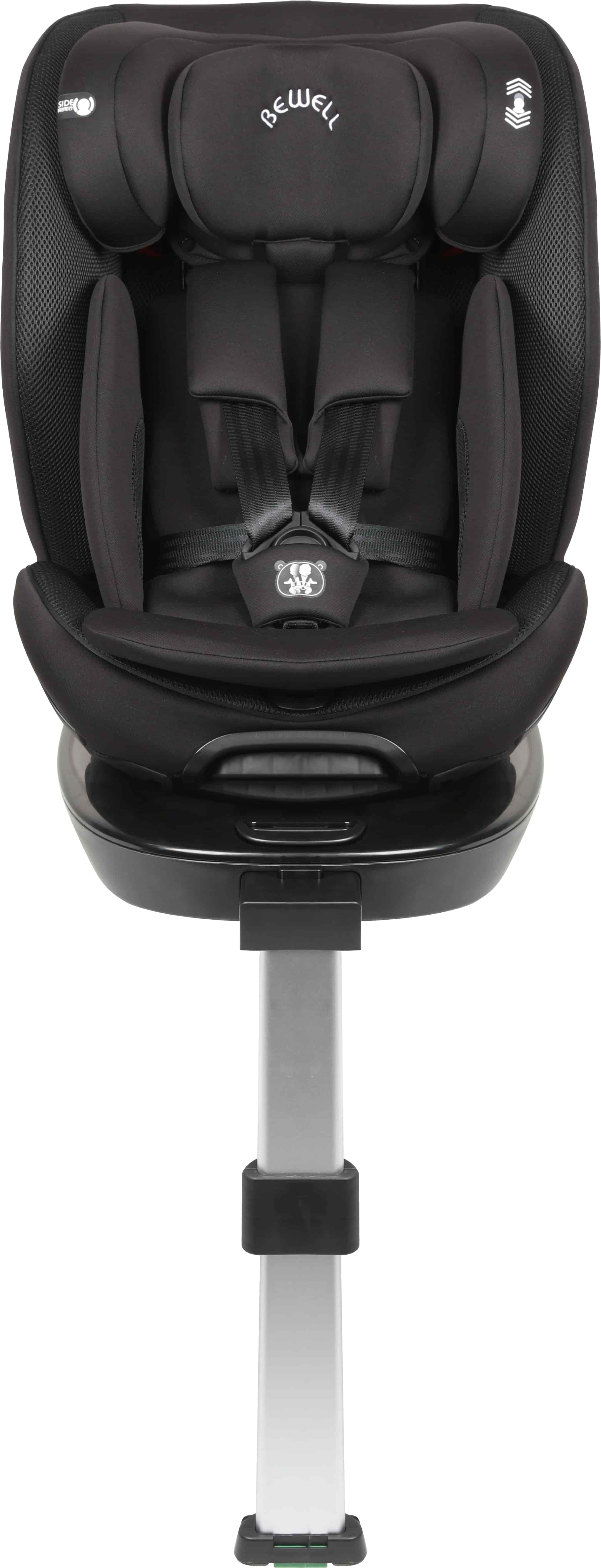
BW25
40-150 cm, rotating platform, ISOFIX and support leg.
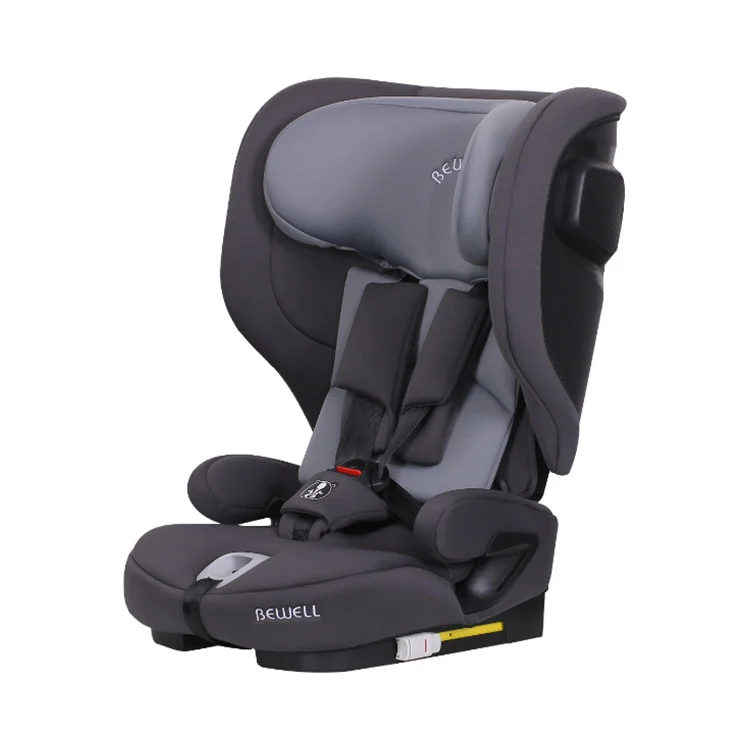
BW26
76-150 cm, forward-facing platform with foldable backrest.
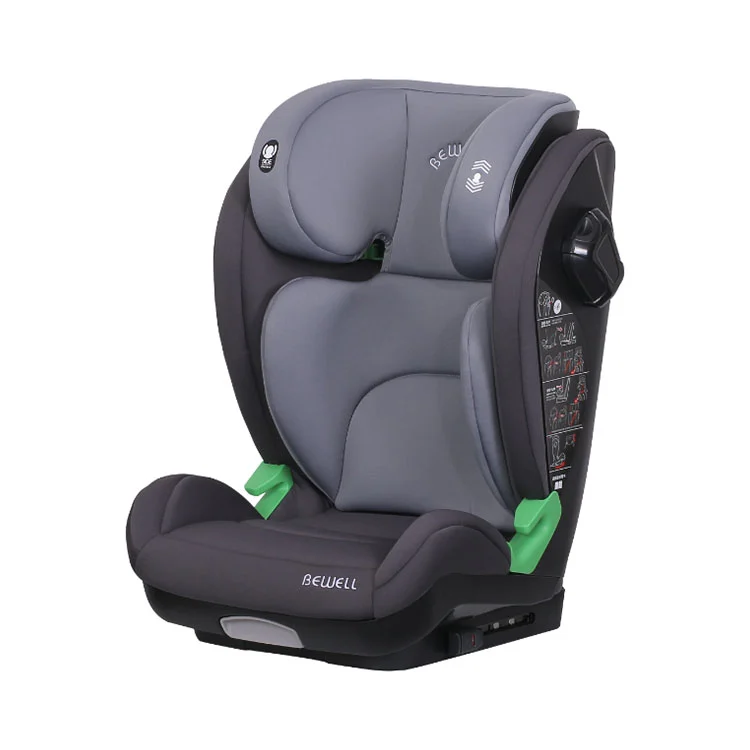
BW16
100-150 cm high-back booster with ISOFIX and vehicle belt use.
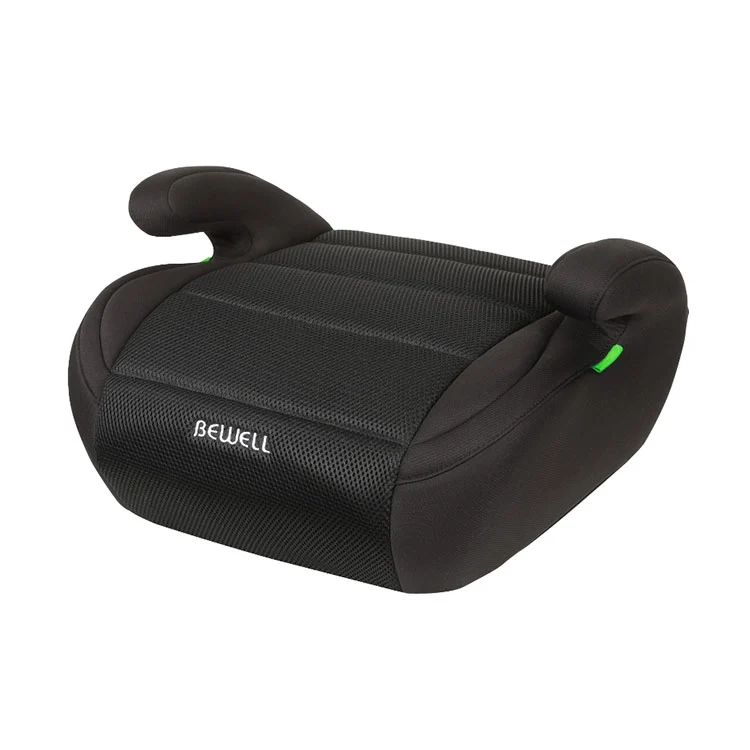
BW29AB
125-150 cm backless booster with belt-only and ISOFIX options.
Product images and reference specifications are taken from the BEWELL product catalogue. Confirm the current approval, installation configuration and commercial specification for the model named in your quotation.
| Model example | Product brief | Installation detail to confirm | Catalogue 40HQ reference |
|---|---|---|---|
| BW25 | 40-150 cm rotating seat | ISOFIX plus support leg; orientation by child height | 560 pcs |
| BW26 | 76-150 cm forward-facing, foldable backrest | Approved attachment modes and top tether configuration | 1,150 pcs |
| BW16 | 100-150 cm high-back booster | ISOFIX plus vehicle belt | 518 pcs |
| BW29AB | 125-150 cm backless booster | Version A: belt; version B: ISOFIX connector plus belt | 2,190 pcs |
The loading figures explain why "best price" is not enough. A lower unit price on a large rotating seat can still produce a different landed-cost result from a compact booster. Ask for carton size, gross weight and loading quantity beside the unit price, then calculate freight against the same destination and order mix.
3. Separate private label work from product development
Changing a logo is not the same project as changing the shell, buckle, restraint geometry or approved installation. Put every requested change in the RFQ and ask the manufacturer to identify which items are cosmetic, which affect the bill of materials, and which need an approval review.
- Project route. Say whether you want a current platform with private label work, a modified platform or a new product built from drawings or a reference sample. BEWELL describes its customization process as requirement review, design, prototype, molding where needed, sample confirmation and bulk production.
- Logo application. Provide the logo file, colors, dimensions, position and preferred method. Ask what artwork format the factory needs and request a pre-production visual for approval.
- Fabric and trim brief. Identify fabric type, color references, stitching, piping, harness pad, infant insert and washability requirements. If you require chemical or flammability evidence for the target market, write that into the material brief.
- Retail packaging. Define color box or plain carton, print languages, barcode or product identifier, labels, carton marks and inserts. Ask for artwork dielines before your designer begins.
- Manual and on-product information. List every required language and who will provide or approve the translation. Include warnings, installation diagrams, approval labels and traceability information in the review scope.
4. Ask for model-specific evidence and a quality plan
A factory certificate, a product approval and a test report answer different questions. The RFQ should name the files you expect to see and the exact model or configuration each file must cover.
- Approval and test document list. Request the approval certificate, approval number, relevant test reports and product label for the quoted model. Check the model, height range, approval holder and installation configuration across the documents.
- Factory and quality-system documents. Ask for the quality-management certificates and audit records required by your company. A factory-level certificate does not replace product approval, but it helps you evaluate how production is controlled.
- Conformity and change control. Ask how the supplier controls approved materials and components, identifies production batches, approves substitutions and records changes after sample sign-off.
- Inspection and sample plan. Define what you will approve before production and what will be checked during production and before shipment. Include workmanship, function, labels, manuals, carton marks and agreed critical components. Review the supplier's quality control information and adapt the checklist to your own risk assessment.
For a new supplier, add a factory audit or live production review. Compare the legal entity and address on the quotation, approval documents and factory records. BEWELL publishes its manufacturing flow from sample confirmation through molding, fabric work, assembly, inspection and packing, which gives buyers a useful structure for audit questions.
5. Make the commercial quote comparable
Ask every shortlisted manufacturer to use the same price table. A total at the bottom of an email hides the assumptions you need to compare.
- Sample request and approval criteria. State the sample quantity, colors, branding level, delivery address and what you need to inspect. Ask whether the sample is from current production or prepared specifically for your project.
- Order quantity and forecast. Give the first-order quantity by model and color, plus a realistic annual forecast if available. Ask for the MOQ per model, color and packaging design rather than one blended number.
- Price breakdown. Request unit price, mold or tooling charges, sampling, approval or testing charges, packaging setup and any one-time engineering cost as separate lines.
- Trade term and destination. Specify the Incoterm, named port or place, destination country and preferred shipment mode. Ask for carton dimensions, gross weight and container loading data even if you begin with an EXW or FOB comparison.
- Lead time and payment milestones. Ask for the time required for artwork, sample, tooling if applicable, approval work, mass production and shipment booking. Tie payment stages to clear deliverables rather than an informal timeline.
- Warranty, spare parts and after-sales process. Ask how claims are reported, investigated and resolved; which replacement parts can be supplied; how long records and parts remain available; and who handles corrective action in your sales market.
| Quote line | Supplier response |
|---|---|
| Model and approved configuration | Exact model, height range, installation and restraint mode |
| Unit price | Price, currency, Incoterm, named port or place, quantity tier |
| MOQ | Per model, color, fabric and packaging version |
| One-time charges | Tooling, artwork, sample, engineering, testing or approval work |
| Packaging and logistics | Product and carton dimensions, net and gross weight, loading quantity |
| Timeline | Sample, artwork, approval work, production and shipment readiness |
| Documents included | Approval, test, quality, material, inspection and shipping documents |
| Quote validity | Expiry date and assumptions that may change the price |
How to judge the reply
A useful supplier response does more than fill in a price. It flags conflicts in your brief, identifies the exact approved model, separates optional features, names missing information and shows which changes need review. That is a better signal than a quotation returned in ten minutes with every box marked "yes."
Shortlist on comparable facts: approved configuration, documentation, sample quality, change control, landed-cost inputs and the supplier's ability to explain what it will make. Price still matters, but now you know what the price includes.
Sources and scope: Product examples, specifications and loading references come from the BEWELL product catalogue supplied by Ningbo Bewell Baby Products Manufacturing Co., Ltd. Regulatory context is linked to the European Commission's April 2026 market surveillance report. Requirements vary by market and product configuration. Confirm current legal and approval requirements with the relevant authority or qualified conformity-assessment professional before ordering.