

Quick answer: Choose 40-150 cm when you want one all-stage product story; 76-150 cm when the range can start after the newborn stage; 100-150 cm for a high-back booster offer; and 125-150 cm for a compact backless booster. That is only the first cut. The approved installation, restraint mode, vehicle compatibility, carton size and target price must also fit your market.
A wide height range looks attractive on a sales sheet. One model, one listing and a simple promise can make a 40-150 cm seat feel like the obvious starting point. It may be. It may also leave a gap at the lower price end, take more warehouse space than expected or overlap with a booster that your retailers already sell well.
The better question is not "Which range is best?" It is "What job should each range do in our assortment?" A brand launching one hero product needs a different answer from a distributor building good-better-best price tiers.
This article sits inside our buyer-focused content cluster. Start with the complete OEM baby car seat guide if you are still deciding between private label and a new product project. Use this page when you are ready to shortlist product platforms.
What a child car seat height range tells a buyer
UN Regulation No. 129 uses the child's stature as a core part of the approved product definition. The approval and product information identify a minimum and maximum stature range. The regulation also requires the restraint to accommodate the relevant body dimensions across the range declared by the manufacturer. Buyers can check the current text and amendments on the official UNECE Regulation No. 129 page.
That makes height more useful than a broad age claim, but the range still does not describe the whole product. Two 40-150 cm seats can use different anti-rotation devices, shell processes, recline systems and attachment configurations. Two 125-150 cm boosters can differ in whether ISOFIX connectors are included. Always read the approved configurations and current product specification alongside the range.
Ages are only a planning reference. BEWELL's catalogue gives familiar age bands such as 0-12 years or 4-12 years, but the product's approved stature range, label and manual control how it is used. Avoid turning an approximate age into a technical claim on packaging or a marketplace listing.
40-150 vs 76-150 vs 100-150 vs 125-150 cm: quick comparison
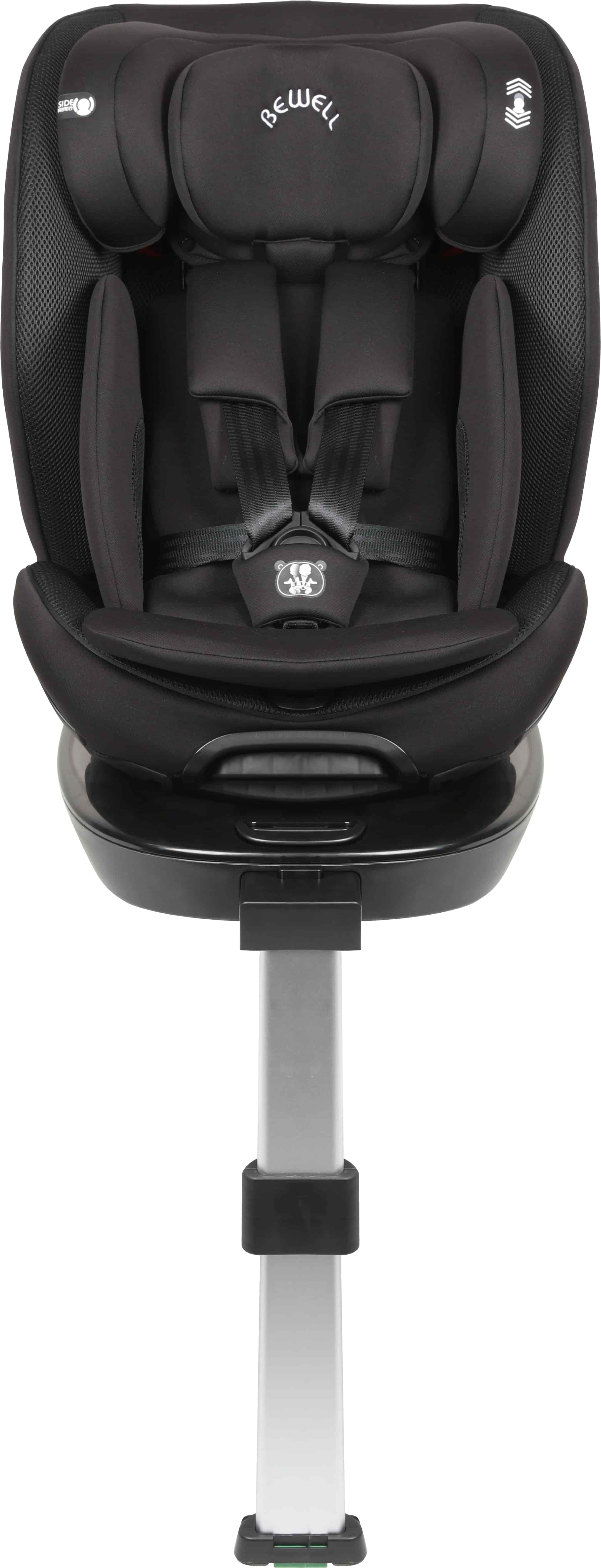
40-150 cm range
All-stage positioning with rear-facing and forward-facing configurations. BW25 shown.
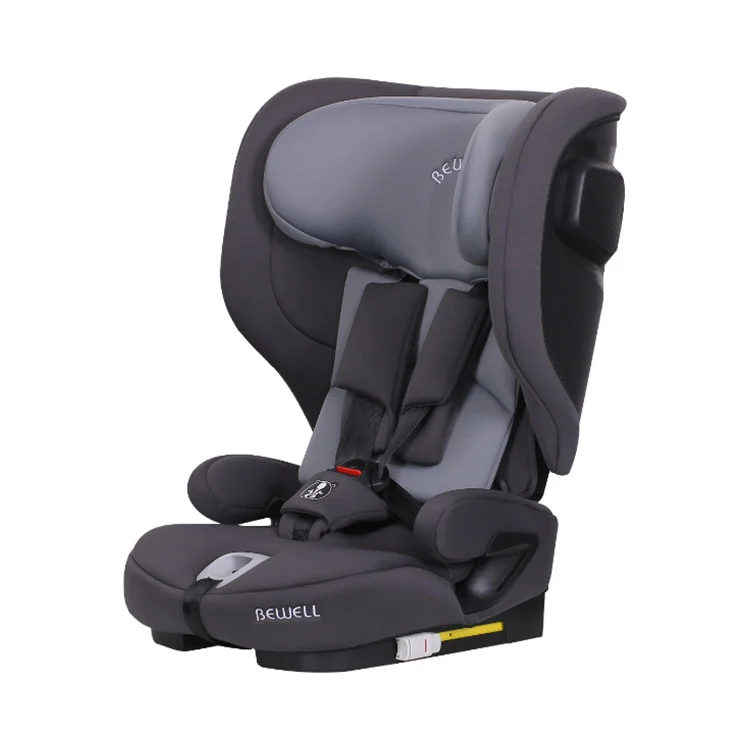
76-150 cm range
Forward-facing harness-to-booster positioning without the newborn stage. BW26 shown.
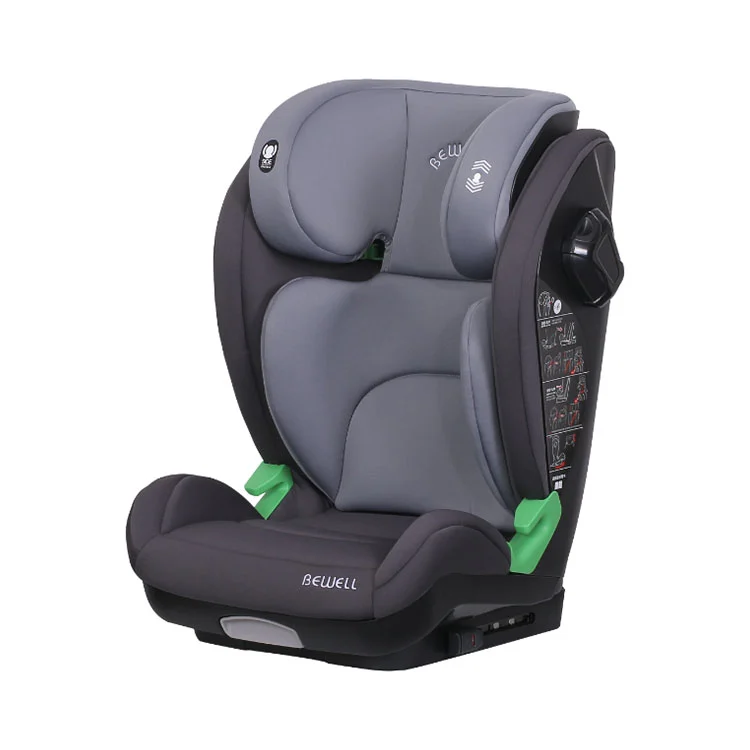
100-150 cm range
High-back booster category for school-age children using the vehicle belt. BW16 shown.
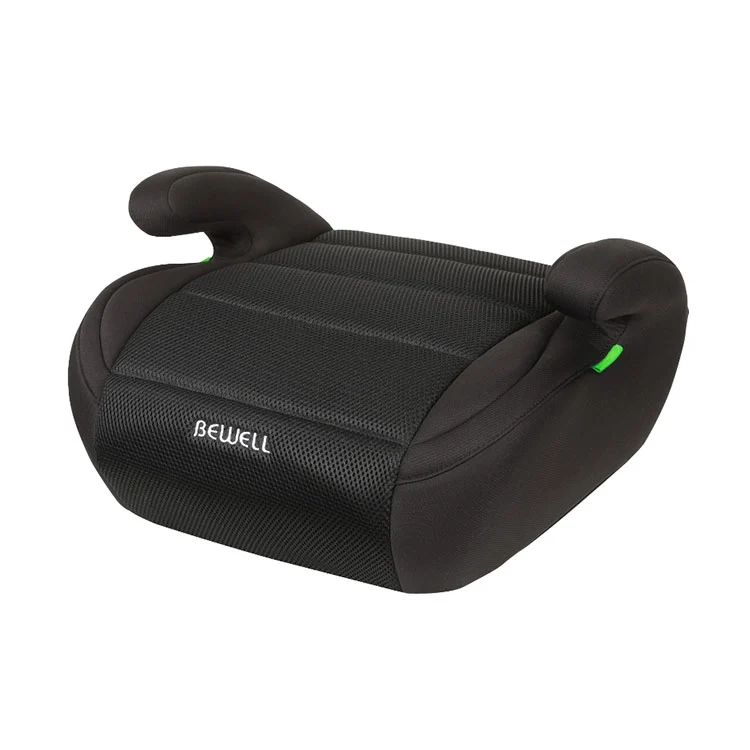
125-150 cm range
Compact backless booster category with belt-only and ISOFIX connector versions. BW29AB shown.
| Height range | Typical product role | Commercial strength | Buyer watchpoint | BEWELL examples |
|---|---|---|---|---|
| 40-150 cm | All-stage rotating or convertible platform | Strong single-product story and long usable range | More configurations, larger carton and a more detailed manual | BW25, BW22, BW23 |
| 76-150 cm | Forward-facing harness seat that transitions to booster use | A broad range without newborn inserts or rear-facing positioning | Confirm the attachment and restraint mode for each part of the range | BW26, BW17 |
| 100-150 cm | High-back booster | Focused school-age offer with adjustable head support | Vehicle-belt routing and vehicle compatibility must be clear | BW16, BW15 |
| 125-150 cm | Backless booster | Compact packaging, simple range extension and high container utilization | It serves a narrower, later stage and cannot replace a high-back booster in every use case | BW29AB, BW28B2 |
Where each height range fits
40-150 cm: the all-stage hero product
A 40-150 cm platform is useful when your launch needs one clear lead product. It can cover rear-facing and forward-facing configurations and later move into a vehicle-belt booster mode, subject to the model's approval and instructions.
The BW25 40-150 cm model combines 360-degree rotation, ISOFIX and a support leg. Buyers comparing another anti-rotation approach can review the BW23 with ISOFIX and top tether. The full 40-150 cm category shows the wider platform choice.
- Good fit: premium retail, direct-to-consumer launches and brands that want one flagship SKU.
- Tradeoff: more operating modes mean more label, manual, training and after-sales detail.
- Ask for: the approved orientation, attachment and restraint mode at every height transition.
For a deeper look at the category, read the convertible child car seat OEM guide and the practical comparison of 360-degree swivel car seats.
76-150 cm: a broad range without newborn positioning
A 76-150 cm seat begins later. For a buyer, that can simplify the product story and remove the newborn-specific insert and rear-facing configuration found on many 40-150 cm seats. It still needs a clear transition between integral harness use and vehicle-belt use where applicable.
The foldable BW26 76-150 cm model uses ISOFIX and top tether and is positioned for forward-facing use. The BW17 76-150 cm model provides another ISOFIX and top-tether platform. Compare both with the wider 76-150 cm product range.
- Good fit: retailers whose customers already own an infant seat, travel-focused assortments and mid-price family ranges.
- Tradeoff: it cannot make a from-birth claim, so your range may still need an infant product.
- Ask for: harness limits, vehicle-belt routing, top-tether requirements and the folded carton dimensions.
If top tether is unfamiliar to your sales team, link product training to BEWELL's top tether explainer.
100-150 cm: the high-back booster offer
A 100-150 cm model is a focused school-age product. The vehicle belt restrains the child while the seat manages belt positioning and provides head and back support. ISOFIX connectors, where included in the approved configuration, attach the booster to the vehicle; they do not replace the vehicle belt that restrains the child.
The BW16 high-back booster uses ISOFIX plus the vehicle belt and has an adjustable headrest. The BW15 100-150 cm model adds a detachable-backrest option. See all current choices on the 100-150 cm category page.
- Good fit: a dedicated school-age range, good-better price tiers and retailers that prefer clear stage-based listings.
- Tradeoff: it does not cover babies or smaller harnessed children.
- Ask for: belt guides, headrest range, side wings, vehicle list or compatibility guidance, and whether the backrest is removable.
Retail content should explain the product distinction clearly. BEWELL's article on high-back versus backless boosters is a useful supporting page.
125-150 cm: the compact backless booster
A 125-150 cm backless booster serves the final part of the child restraint journey. It is compact, easy to merchandise and efficient to ship, which makes it a practical range extender. It should be sold as a distinct later-stage product, not as a smaller substitute for every high-back booster use case.
The BW29AB backless booster is offered in a vehicle-belt version and an ISOFIX-connector plus vehicle-belt version. The BW28B2 booster cushion gives buyers another 125-150 cm option. Browse the full 125-150 cm booster category before selecting a shell and attachment format.
- Good fit: value tiers, travel ranges, secondary-car products and an add-on SKU beside a high-back booster.
- Tradeoff: the narrower range limits the addressable customer group.
- Ask for: belt-routing device, connector version, carton dimensions and the exact model identifier on the approval.
Consumer-facing stores can support this category with the existing guide on when to switch to a booster seat, while keeping the product page focused on specifications and conversion.
How to build a practical product range
There is no universal SKU count. Start with the customer, channel and price ladder, then assign one job to every model. These four structures are useful for an initial discussion with your sales team and manufacturer.
One-SKU launch
Use a 40-150 cm platform as the flagship. This keeps photography, listing work and stock concentration simple. It works best when your target price can absorb a more complex seat and the product story is strong enough to carry the launch.
Two-SKU lifecycle range
Pair a 40-150 cm all-stage seat with a compact 125-150 cm booster. The booster gives you a lower price point and a separate travel or secondary-car use case without copying the flagship.
Three-SKU retail ladder
Use a 40-150 cm hero model, a 100-150 cm high-back booster and a 125-150 cm backless booster. Each listing has a clear stage and price role, which helps stores avoid near-duplicate products.
Logistics-led range
Consider a foldable 76-150 cm model plus a compact 125-150 cm booster when carton utilization, travel retail or distributor storage is a major constraint. Add an infant product separately if the channel needs full lifecycle coverage.
These are commercial assortment patterns, not instructions for choosing a seat for an individual child. Validate the plan with your target-market approval requirements, sales data and the exact certified product configuration.
Use overlap deliberately
Overlap is not automatically bad. A 40-150 cm model and a 100-150 cm high-back booster can both serve part of the same height band, yet target different budgets and shopping occasions. The problem begins when the product pages have the same promise, nearly identical copy and no clear reason to choose one. That creates customer confusion and weakens the search intent of both pages.
Give each model a job: premium all-stage convenience, foldable travel, school-age high-back support or compact later-stage booster. Then write the category and product copy around that job instead of repeating "safe, comfortable and high quality" on every URL.
Calculate logistics before you settle the price ladder
Large rotating seats and compact boosters produce very different freight economics. BEWELL's catalogue lists 560 units per 40HQ as a reference for BW25 and 2,190 units for BW29AB. Those figures are model-specific and should be reconfirmed for the final packaging, but they show why a unit-price comparison is incomplete. Ask for carton dimensions, gross weight and current container loading beside every quote.
Seven decisions to make before shortlisting a model
- Sales market. Confirm the target country and applicable approval before discussing colors or carton art.
- Range role. Decide whether the model is a flagship, mid-price volume product, high-back booster or compact add-on.
- Approved configurations. Map height bands to orientation, child restraint and vehicle attachment. Do not infer these from the headline range.
- Vehicle compatibility. Review ISOFIX, support leg, top tether and vehicle-belt requirements against the vehicles common in your market.
- Retail package. Set the price tier, channel, language count, label work, barcode needs and online content deliverables.
- Landed cost. Compare tooling, testing, samples, unit price, carton volume and freight using the same order quantity and Incoterm.
- Evidence and change control. Request model-specific approval documents and define how the production specification will be kept aligned with the approved sample.
Once these decisions are written down, send the same brief to every shortlisted supplier. Our 25-point child car seat RFQ checklist covers the product, documentation, private label work, inspection and commercial fields needed for a comparable quote.
If your project needs a current platform with new fabric, logo, manual and packaging, review BEWELL's OEM and ODM customization process. For a new shell or more substantial product change, also review the factory's development and manufacturing flow and its published quality control process.
Continue through the buyer content cluster
OEM baby car seat guide
Understand private label routes, supplier checks, certification questions and the sourcing process.
Child car seat RFQ checklist
Turn your selected range into a quote-ready specification that multiple suppliers can answer.
Convertible car seat OEM guide
Examine the product and sourcing decisions behind wide-range convertible platforms.
High-back vs backless booster
Support the distinction between your 100-150 cm and 125-150 cm product categories.
Quality control
Review the checks and documents that should sit behind the model you shortlist.
BEWELL product catalogue
Compare current product platforms and bring model numbers into your sourcing brief.
Buyer FAQs about child car seat height ranges
Which child car seat height range is best for a new brand?
A 40-150 cm platform can make a strong one-product launch because the retail story is broad. It is not automatically the best commercial choice. A narrower product can have a lower target price, simpler positioning or better freight efficiency. Start with the customer and channel, then choose the range.
Can one 40-150 cm model replace an entire car seat range?
It can cover a broad approved height range, but it does not replace every price point or use case. A compact booster, a travel-focused seat or an infant carrier may still deserve a separate SKU. Retailers also benefit from a clear choice between all-stage convenience and stage-specific products.
Should buyers select an R129 seat by age or height?
Use the approved stature range and the product manual. Ages can help with merchandising, but they are approximate and should not override the approved label, height transitions or usage instructions.
What is the commercial difference between 100-150 cm and 125-150 cm?
100-150 cm is commonly used for high-back boosters, while 125-150 cm is commonly used for backless booster cushions. The high-back product covers a broader stage and provides head and back support. The backless product is more compact and usually more efficient to store and ship.
Does ISOFIX mean the same thing across all four height ranges?
No. The role of ISOFIX depends on the approved product configuration. On an integral seat it can form part of the restraint's vehicle attachment. On a non-integral booster, the vehicle belt restrains the child while ISOFIX connectors may attach the booster to the vehicle. Confirm the manual and approval for the exact model.
How many models should an importer launch first?
Use the fewest models that cover distinct customer jobs and price tiers. One flagship may be enough to test a direct-to-consumer market. A distributor may need three or more clear roles. Avoid adding a model when its product page, price and use case are nearly identical to an existing SKU
Sources and scope: Product examples and reference specifications come from the BEWELL product catalogue and the linked model pages. Regulatory context comes from the official UNECE Regulation No. 129 materials. Product specifications, approval series and packaging data can change, and web pages may not show every approved configuration. Confirm the current certificate, label, manual, quotation and packing specification for the exact model before ordering.