

Quick answer: In the supplied BEWELL catalogue, a 40HQ holds from 515 child car seats for the BW17 high-back harness model to 2,190 seats for the BW29AB backless booster. The foldable BW26 is listed at 1,150 units. Rotating 40-150 cm models load 540 to 560 units. These are planning references, not guaranteed quantities.
A buyer who compares factory prices but ignores carton density can choose the more expensive product without realizing it. The mistake usually appears later, when the freight quote arrives and the landed-cost spreadsheet changes.
Car seats are a good example because the retail product and the shipping product are not the same thing. A rotating seat may have more features and a higher selling price, but its carton occupies far more container space than a folded high-back seat or a backless booster. That affects freight per unit, inventory depth, and how many colorways you can place in one shipment.
40HQ loading quantities for eight child car seat models
The table uses one controlled source, the supplied catalogue. This matters because packaging is revised more often than product pages. If a website, catalogue, quotation, and packing list show different numbers, use the latest approved packing specification for the purchase order.
| Model | Height range | Product format | Installation | Catalogue carton | Planned 40HQ |
|---|---|---|---|---|---|
| BW29AB | 125-150 cm | Backless booster | Vehicle belt; optional ISOFIX connector + belt | 40 × 45 × 24 cm | 2,190 pcs |
| BW26 | 76-150 cm | Foldable high-back harness seat | Vehicle belt + top tether; ISOFIX listed | 53 × 46 × 25 cm | 1,150 pcs |
| BW25 | 40-150 cm | 360° rotating all-stage seat | ISOFIX + support leg | 53 × 46 × 64 cm | 560 pcs |
| BW23 | 40-150 cm | 360° rotating all-stage seat | ISOFIX + top tether | 52 × 46 × 64 cm | 560 pcs |
| BW22 | 40-150 cm | 360° rotating all-stage seat | ISOFIX + support leg | 55 × 46 × 65 cm | 540 pcs |
| BW15 | 100-150 cm | Detachable-back high-back booster | ISOFIX + vehicle belt; belt-only option | 47.5 × 45 × 61 cm | 539 pcs |
| BW16 | 100-150 cm | High-back booster | ISOFIX + vehicle belt | 46 × 45 × 65 cm | 518 pcs |
| BW17 | 76-150 cm | High-back harness seat | ISOFIX + top tether | 48.5 × 47 × 62 cm | 515 pcs |
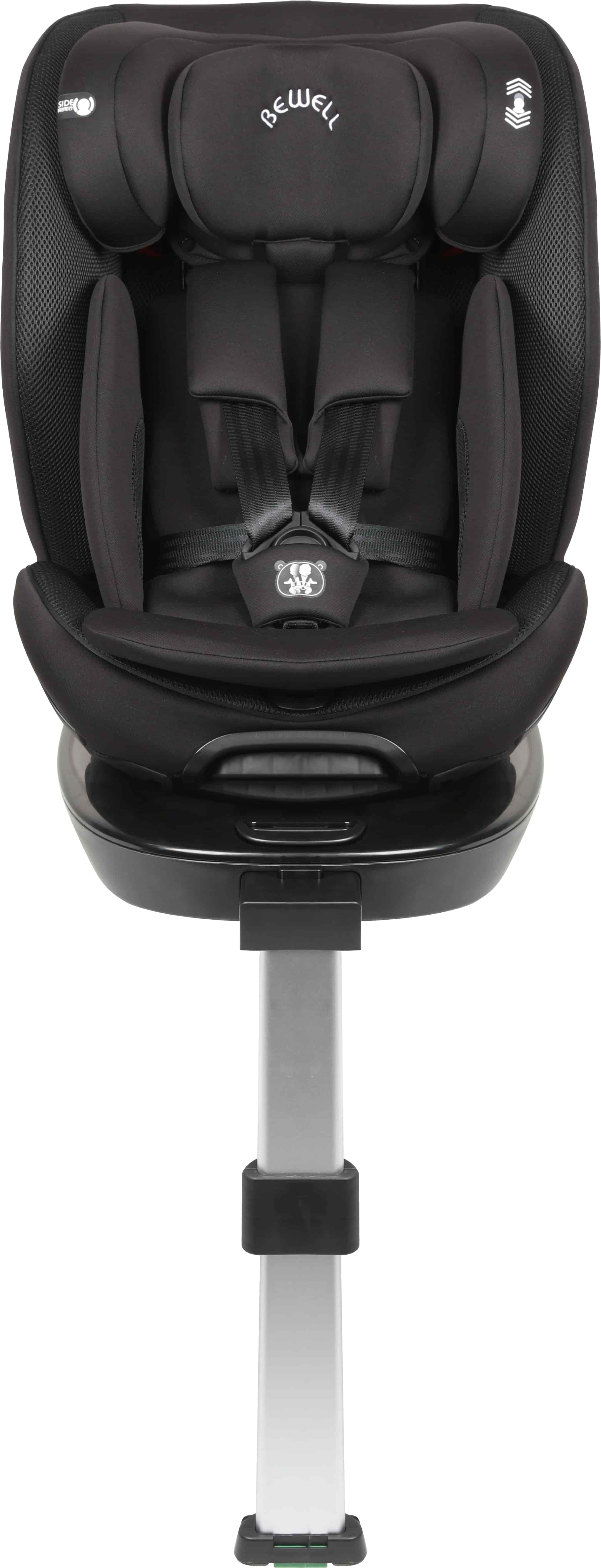 BW2540-150 cm rotating seat · 560 pcs per 40HQ reference
 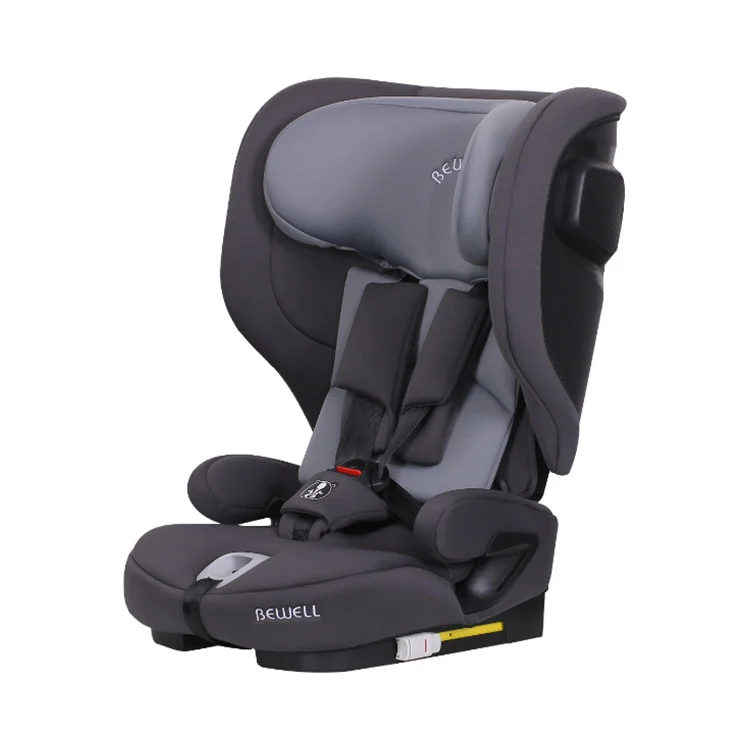 BW2676-150 cm foldable seat · 1,150 pcs per 40HQ reference
 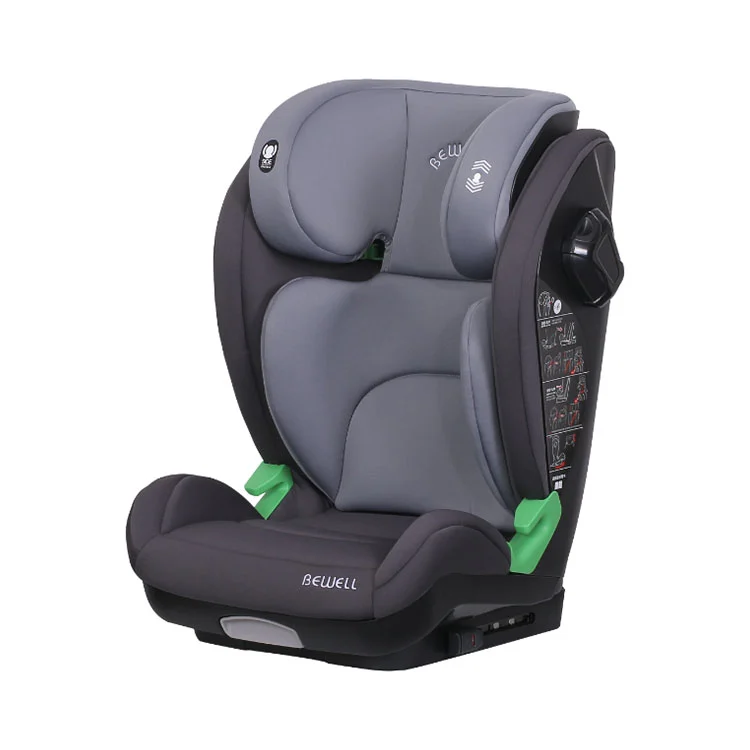 BW16100-150 cm high-back booster · 518 pcs per 40HQ reference
 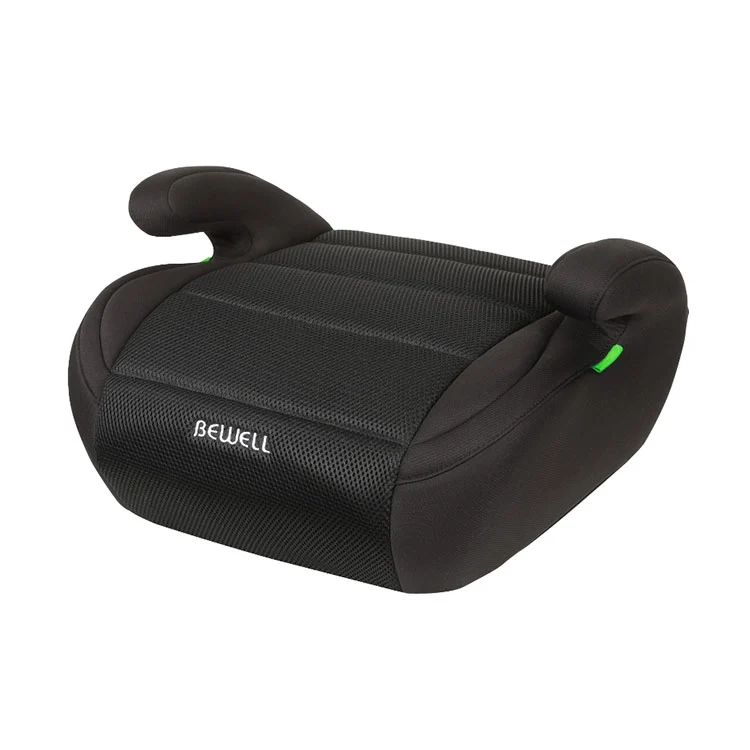 BW29AB125-150 cm backless booster · 2,190 pcs per 40HQ reference
Why loading quantity varies so much
A 40HQ is meant for relatively light, voluminous cargo. Maersk lists a 40-foot high cube steel container at 76.4 m³ capacity and 28,690 kg maximum payload, while warning that limits vary by country. For child car seat planning, the container number comes from the packed product, not the seat's height classification alone.
Carton dimensions set the starting point
Compare the 25 cm packed height of BW26 with the 62 cm carton height listed for BW17. Both cover 76-150 cm, but the catalogue loading references are 1,150 and 515 units. The difference is 2.23 times. The foldable backrest and carton format are obvious contributors, although a final loading plan still has to account for carton orientation and the way rows lock together.
Product format changes the space requirement
A rotating 40-150 cm seat includes a base, rotation structure, harness, and larger shell. A backless booster has a much smaller packed profile. That is why a height-range comparison alone cannot predict freight. Buyers should choose the assortment first, then compare the carton and 40HQ fields inside each category.
Pallets and protection trade density for handling
The catalogue references assume one unit per carton. They do not promise the same total after pallets, extra corner protection, promotional sleeves, or retailer-specific master cartons are added. Ask whether the quoted quantity is floor-loaded or palletized. The answer changes both the loading count and warehouse handling.
How to calculate containers for your order
For a first estimate, divide the order quantity by the supplier's single-model 40HQ reference.
A 1,000-unit BW25 order uses 1,000 ÷ 560 = 1.79 theoretical containers. If you ship only BW25 as FCL, that rounds up to two containers. The final container has space for another 120 units at the same reference density. You may use that space for more BW25 seats or test a mixed load with other models.

The calculation is a space budget, not a booking instruction. It does not know your pallet requirement, order split, carton revision, route restrictions, or container availability.
How to estimate a mixed child car seat load
Mixed loading helps a buyer balance high-value seats with compact volume products. The cleanest early estimate treats every model as a share of one container:
Total theoretical share = sum of all model shares
For example, the following sample is almost exactly one theoretical 40HQ:
- 140 BW25 seats: 140 ÷ 560 = 25%
- 287 BW26 seats: 287 ÷ 1,150 = 25%
- 259 BW16 seats: 259 ÷ 518 = 50%
The total is 686 seats and roughly 100% of the reference space. It is useful for deciding whether an assortment is worth sending to the supplier for simulation. It does not prove that the three carton shapes will physically fill the container without voids.

How loading quantity changes landed cost per seat
Once you have a current freight quote, the first shipping calculation is simple:
This explains why the lowest factory price is not always the lowest landed cost. If two seats have similar ex-factory prices but one loads twice as many units, its container freight allocation per seat is roughly half, assuming the same route and freight charge. Import duty, port fees, inland delivery, inspection, and storage still need separate lines in the model.
Do not force every model into a single cost target. A rotating all-stage seat and a backless booster serve different price points and customer needs. Use container density to test whether each SKU still has enough margin after its own logistics cost.
A practical assortment test
- Choose products by target market, child height range, installation method, and retail channel. The child car seat height-range guide is the better starting point for this decision.
- Request current unit price, carton dimensions, gross weight, and single-model 40HQ quantity for every SKU and color.
- Calculate theoretical container share and freight per unit. Keep factory cost and logistics cost as separate rows.
- Send the proposed mix back to the supplier for an actual stuffing simulation before you confirm the purchase order.
What to confirm before you book a 40HQ
Loading quantity should appear in the quotation or packing specification with the assumptions written beside it. A useful confirmation covers:
- final individual carton dimensions and gross weight;
- one seat per carton or a different packing ratio;
- floor loading or pallets;
- model, color, and accessory split;
- carton artwork, inserts, manuals, and promotional packaging;
- container type and any carrier or destination weight restriction;
- loading photos, seal number, packing list, and verified gross mass process.
Version-control rule: Put a packing revision or date on the carton specification. If the live product page and your quotation disagree, stop and reconcile the documents before calculating landed cost.
The child car seat RFQ checklist includes the commercial and technical fields that should travel with this loading request. Buyers who are still deciding between private-label routes can use the broader OEM baby car seat guide.
FAQs
How many child car seats fit in a 40HQ container?
In the supplied BEWELL catalogue, the reference ranges from 515 units for BW17 to 2,190 units for BW29AB. The exact number depends on the model, final carton, loading pattern, pallets, and container restrictions.
Why can two 76-150 cm seats have very different loading quantities?
Height range does not determine carton size. BW26 has a foldable backrest and a 25 cm carton dimension, while BW17 is listed with a 62 cm carton dimension. Their catalogue references are 1,150 and 515 units per 40HQ.
Can I mix several car seat models in one container?
Yes, subject to order terms and physical loading. Use each model's quantity divided by its single-model 40HQ reference for an early space budget, then ask the supplier to validate the carton arrangement.
Should I use the website or catalogue loading number?
Use the latest packing specification approved for the order. Online pages and catalogues can be updated on different schedules, so the quotation, carton drawing, and packing list must agree before booking.
Does a 40HQ always provide the same usable capacity?
No. Maersk lists 76.4 m³ and a maximum payload of 28,690 kg for one 40-foot high cube steel reference, but it also notes that limits can vary by country. Container series, carrier rules, route limits, and packing method can change the usable result.
Sources and data notes: BEWELL supplied product catalogue, pages 7 to 14, for model specifications and loading references. Maersk cargo weight limit reference for 40-foot high cube capacity and payload. Maersk container guide for container type context. Model data should be reconfirmed at quotation stage.