Convertible Child Car Seats Are Winning the Global Market — Here's What OEM Brands Need to Know in 2026
2026-05-14 14:33:24
The convertible seat's commercial case is almost disarmingly simple: one seat from newborn through toddler, instead of buying two or three. Parents hear that and the math happens fast. But from a product development angle, a convertible is one of the most complex things you can source in the child restraint category. It has to protect a 4-kg infant rear-facing. It has to harness a 25-kg toddler forward-facing. The harness has to adjust without rethreading. The recline has to lock positively across multiple positions. The certification has to cover every phase you're marketing — not just the phases that were convenient to test.
Getting that right in a single platform, without making it too heavy to install correctly, is where the real work is. Here's what the market and the 2026 regulatory environment look like for brands sourcing this product.
The Market Position — Why Convertibles Dominate
Convertible and multifunctional seats accounted for over 42% of total global units sold in 2023 — the largest single product category. The segment's CAGR runs at 5.7–7.1%, faster than infant-only or booster-only categories. The global baby car seat market was valued at USD 6.15 billion in 2026 and is projected to reach USD 9.4–11.9 billion by 2034.
The major brands are voting with their engineering budgets. Graco launched its first convertible with a 360° rotating base (the EasyTurn 360°) in February 2025. Maxi-Cosi released its 360 Pro Family series in 2023. Britax integrated new energy-absorbing materials across its convertible line in early 2024. The pattern is consistent: premium engineering is being deployed in convertibles first, not as a separate product category.
Factor
Convertible / All-in-One
Infant Seat
Booster
Market share (units, 2023)
42%+ of global units
34.5% (value dominant)
Remainder
Active use lifespan
5–6 years
12–18 months
2–4 years
Seat replacements
1 covers rear + forward
1–2 (infant + follow-up)
Assumes prior seat
Retail price range
USD 150–700
USD 80–300
USD 60–250
ISOFIX / R129 compliant
Yes — standard in premium
Yes — integral base
Varies
OEM private-label appeal
High — long value story
Medium
Medium
The lifespan column is what makes the B2B case. An infant seat gets 12–18 months of active use. A properly certified convertible seat gets 5–6 years. For retail partners, that's fewer SKU cycles, fewer returns from children who've outgrown the product, and a stronger safety story to tell at the shelf.
The 3-in-1 Claim — What's Real and What to Push Back On
The 3-in-1 and 4-in-1 configurations have been the fastest-growing sub-segment within convertibles. One seat from birth to 12 years is the pitch. In practice, no single platform is genuinely optimal across that entire span — that's worth stating clearly, because it's the part of the conversation that sometimes gets finessed past in OEM discussions.
The seats that handle all three phases well are the ones built with genuinely different structural configurations for each stage, not just added label claims on an existing design. For booster mode specifically: ask whether the belt path geometry has been evaluated for a child at the lower weight limit of that phase, not just the upper. A child at 40 lbs sitting in a poorly routed booster belt path is getting less protection than the packaging suggests, regardless of what the certification says.
Questions to Ask About 3-in-1 / 4-in-1 Claims
• Does the test report cover booster mode, or only the harnessed phases?
• What is the belt path geometry in booster mode — has it been evaluated at the minimum transition weight?
• Does the seat's harness hardware interfere with the booster belt routing? (Common cost-reduction compromise.)• Is the upper weight limit in booster mode supported by structural certification or just a label?
2026 Regulatory Requirements — The Deadlines That Matter
ECE R129 — EU Standard Since September 2024
R44 is gone. Every convertible seat entering EU distribution now needs ECE R129 type approval — which means ISOFIX for the i-Size category, mandatory side-impact testing, height-based classification, and harness adjustment without rethreading. That last requirement directly affects convertible seat design: older designs that required rethreading when raising the headrest can't be certified under R129. The adjustment mechanism has to be built into the architecture from the start.
FMVSS 213a + 213b — Both Mandatory December 5, 2026
Two standards, one deadline. FMVSS 213a adds mandatory side-impact testing for seats used for children under 40 pounds — covering both the rear-facing and early forward-facing phases of a convertible. FMVSS 213b simultaneously updates the frontal-impact standard, replacing a test bench that modeled a 1974 Chevrolet Impala with a modern vehicle simulation. Any seat manufactured after December 5, 2026 must satisfy both. If your supplier's compliance answer still involves the word 'soon,' that conversation is overdue.
Compliance Checklist for Convertible Seats — 2026
EU: R129 type approval covering the full claimed height range — in all marketed seating positions
US: FMVSS 213a side-impact test report — specific to this model, both rear and forward-facing phases
US: FMVSS 213b frontal-impact compliance — same December 5, 2026 deadline, often overlookedBoth: Harness no-rethread adjustment confirmed; recline positions positively locked (not friction-only)
Engineering That Actually Matters — BEWELL's Approach
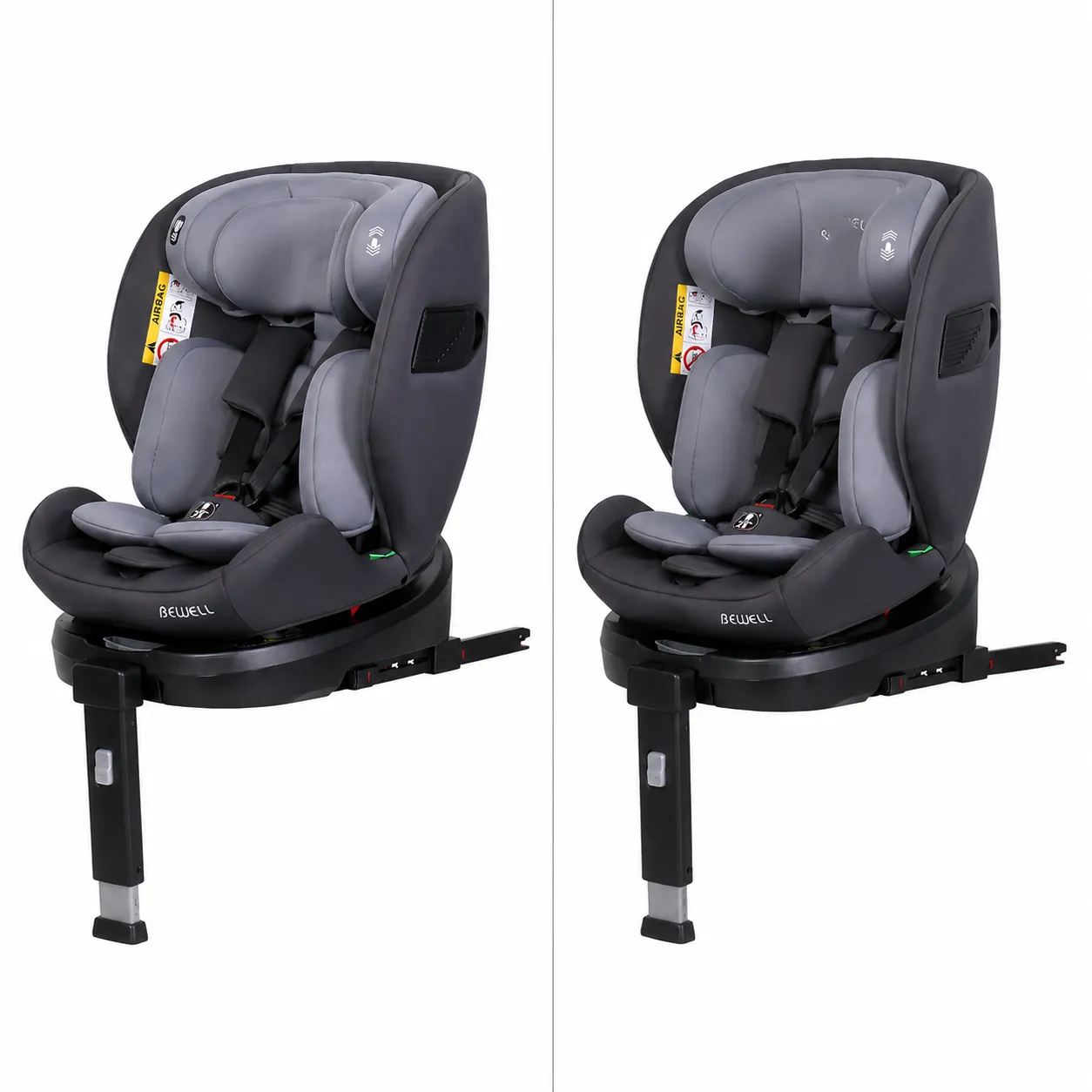
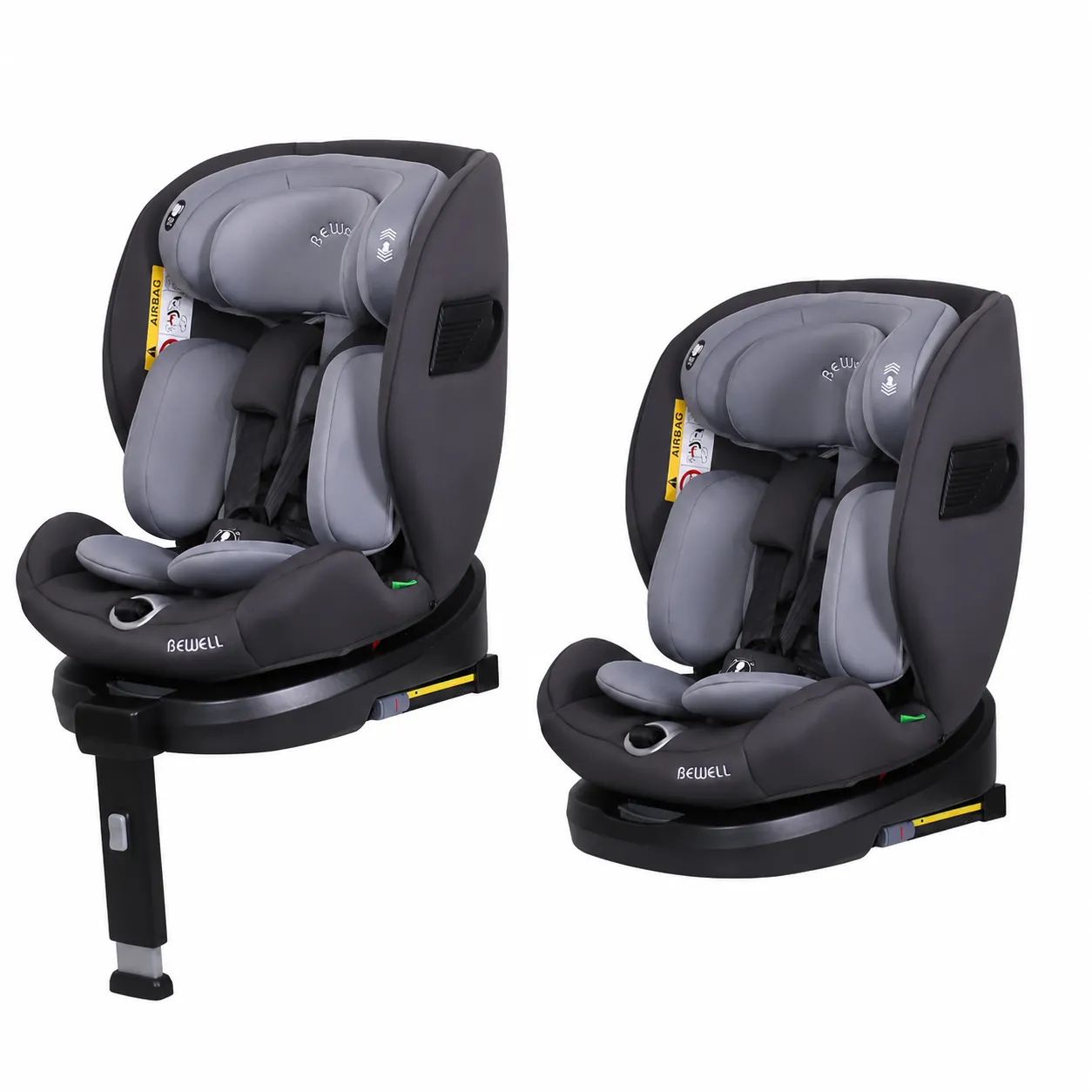
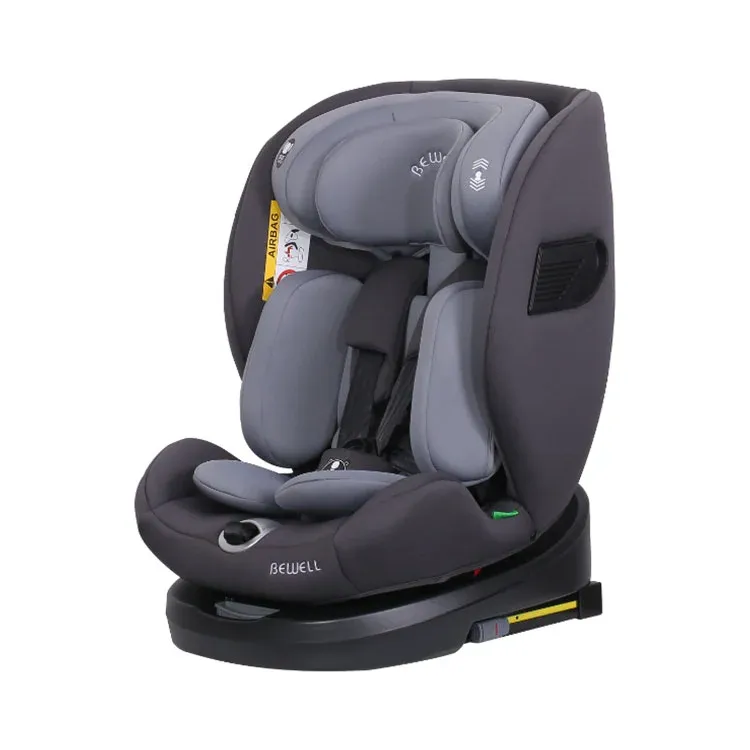
BEWELL's convertible seat platforms start with the structure. The BW23's built-in steel frame carries the crash load, which means the plastic shell doesn't need to be thickened to provide rigidity — the frame handles it. The result is a seat that passes R129 crash testing without the weight penalty that typically follows an over-engineered plastic body.
The SIPS (Side Impact Protection System) on both the BW22 and BW23 places high-hardness sidewall panels at the child's head and shoulder zones. Under lateral impact, those panels absorb and redirect energy — which is exactly the function FMVSS 213a is testing. Seats built around SIPS architecture tend to clear 213a without significant structural revision, because the side-impact protection was engineered in, not retrofitted.
The BW22 adds 360° rotation. The engineering challenge there is making sure the ISOFIX base transfers crash loads correctly regardless of rotation position — the multi-point locking mechanism addresses this, and the audible click and visual indicator both confirm load-path engagement, not just physical position.
What to Specify When Sourcing a Convertible Seat for OEM
The specification decisions that matter most — and where buyer briefs are most often underspecified:
• Certified height and weight range: request the full test report, not the certificate. Confirm that every phase you're marketing falls within the tested parameters — not extrapolated from a related model.
• Harness adjustment: no-rethread, minimum 4–6 positions, confirmed range covers the full certified height span.
• Recline: positive locking (not friction-dependent), minimum 3 rear-facing positions. Friction reclines generate the most warranty returns.
• ISOFIX load rating: ask for the connector load documentation, not just ISOFIX branding. Anti-rotation device type (support leg vs. rebound bar) confirmed.
• Seat weight: total weight with base. For US distribution, calculate the LATCH headroom: 65 lbs combined minus seat weight = maximum child weight for LATCH use.
• Cover materials: removable and machine-washable. Flame retardant spec differs between EU and US — confirm which applies to your target market.
BEWELL OEM Program — Key Numbers
Standard MOQ: 500 units (standard specs) — contact team for custom spec minimums
Sample lead time: 10–15 working days from approved specification
Bulk production: 25–35 working days from approved sample
Markets covered: EU (R129 certified), US (FMVSS 213a + 213b documentation), 30+ countriesCustomizable without re-certification: fabric, color, harness color, canopy, branding, export packaging
Frequently Asked Questions
Q: When should a child move from rear-facing to forward-facing in a convertible seat?
A: Under ECE R129, rear-facing is mandatory until at least 15 months or 75cm. In the US, NHTSA and the AAP (updated in 2018) recommend keeping children rear-facing as long as the seat's height and weight limits allow — typically until age 3–4 on most convertibles. The older 'switch at 2 years' guideline reflects a recommendation that's since been revised. Earlier switching meaningfully increases injury risk in frontal crashes.
Q: Does the FMVSS 213a test need to cover both rear-facing and forward-facing phases?
A: FMVSS 213a covers seats used for children under 40 pounds — which spans both orientations on most convertibles. The test uses a Q3s dummy representing a 3-year-old. If you're marketing the seat for sub-40-lb children in either orientation, both phases should appear in the test report. Ask your supplier to confirm which configurations were tested and provide the specific NHTSA test numbers.
Q: Is a 3-in-1 convertible seat worth the complexity for an OEM program?
A: Depends on the execution. Brands that do it well — Graco's 4Ever DLX, Britax's One4Life — invest in genuinely different geometry for each phase. The booster conversion on cheaper configurations is often a label claim rather than an engineered solution: the belt path is awkward, the harness hardware interferes, and the certification may cover only the harnessed phases. For OEM programs, the honest version of this feature costs more to develop. The cheaper version generates returns.
Q: Does BEWELL supply documentation for Amazon marketplace compliance?
A: Yes. BEWELL provides the full documentation set needed for Amazon's Children's Product Certificate (CPC) process, including R129 test reports for EU marketplaces and FMVSS 213a/213b compliance documentation for the US. Contact the team to confirm the specific format required for your ASIN category.
Convertible seats are where the market is going, the regulatory environment in 2026 is raising the compliance floor, and the brands that treat specification as a sourcing checkbox rather than an engineering conversation are the ones that end up with compliance gaps and warranty problems six months after launch.
BEWELL's product platforms — steel frame architecture, SIPS side-impact integration, ISOFIX designed from the ground up — are built around the requirements that matter in EU and North American markets, not retrofitted to meet them. If that's a useful starting point for your program, the conversation is worth having.
Written by the BEWELL Product Team at Ningbo Bewell Baby Products Manufacturing Co., Ltd. — a specialist child car seat manufacturer based in Ningbo, Zhejiang, with ECE R129 certification across multiple product lines, in-house mold design and R&D capability, and OEM programs for brands in 30+ markets. For inquiries: www.nbbewell.com.
We use cookies to offer you a better browsing experience, analyze site traffic and personalize content. By using this site, you agree to our use of cookies.
Privacy Policy