You've been counting down to your baby's first birthday so you can finally flip that car seat around. I get it. Rear-facing is awkward. Your kid kicks the back of the seat. Loading them in feels like a yoga class.
But the rules changed back in 2018. The AAP reaffirmed those rules again in February 2025. What used to be "turn at age 2" is now a much messier answer — and it depends on your child's body, not their birthday.
Here's everything you actually need to know.
The Short Answer in 2026
The Short Answer in 2026
|
What the AAP Recommends
|
0–12 months
|
Rear-facing only. No exceptions.
|
1–2 years
|
Still rear-facing. Most kids haven't outgrown the seat yet.
|
2–4 years
|
Rear-facing preferred. Only turn if they've outgrown the seat's height/weight limit.
|
4+ years
|
Forward-facing with a 5-point harness is fine for most kids.
|
8–12 years
|
Booster seat until the adult belt fits right.
|
Notice what's gone? A magic age.
The AAP officially scrapped the age milestone in 2018. The data didn't support a clean cutoff anymore. What stuck — and what they keep repeating — is that rear-facing protects babies and toddlers better than anything else.
So if your in-laws tell you "they can turn at one because that's what we did" — they mean well. They're also wrong.
Why Rear-Facing Is Safer
A baby's head is huge. About 25% of their body weight, give or take. For an adult, it's closer to 6%.
That's a lot of mass hanging off a neck that hasn't finished forming. Infant vertebrae aren't fully fused — they're held together by cartilage. The bones don't lock in until somewhere between ages 3 and 6.
Now picture a frontal collision. The most common kind of serious crash.
Forward-facing: The harness holds the body. But the head whips forward. The neck takes the hit. In a young child, that force can stretch the spinal cord past its limits. Sometimes fatally. Sometimes without a single visible injury on the outside.
Rear-facing: The shell of the seat catches the head, neck, and spine all at once. The crash force spreads across the whole back of the seat instead of getting funneled into the neck.
NHTSA puts the injury-reduction number at up to 71% for infants under 1. Child restraints overall have saved more than 11,000 lives since 1975.
That's not a marginal stat. That's the gap between "scary near-miss" and a funeral.
The 3 Criteria That Decide When to Turn
Forget age. Ask these three questions instead.
1. Height
Usually the first limit kids hit. Most convertible seats let you go rear-facing until the top of the child's head sits within 1 inch of the top of the seat shell. Closer than that, and the seat can't protect their head in a crash.
The big myth: if their legs are bent or dangling over the edge, they've outgrown it.
Nope.
Pediatricians studied this for years. Kids are flexible. There are zero documented cases of leg injuries from rear-facing use. Bent knees are fine. Crossed legs are fine. Hanging over the edge is fine.
2. Weight
Check your manual. Rear-facing weight limits vary:
• Infant-only seats: 22–35 lbs
• Convertible seats: 40–50 lbs
• All-in-one seats: 40–50 lbs rear-facing
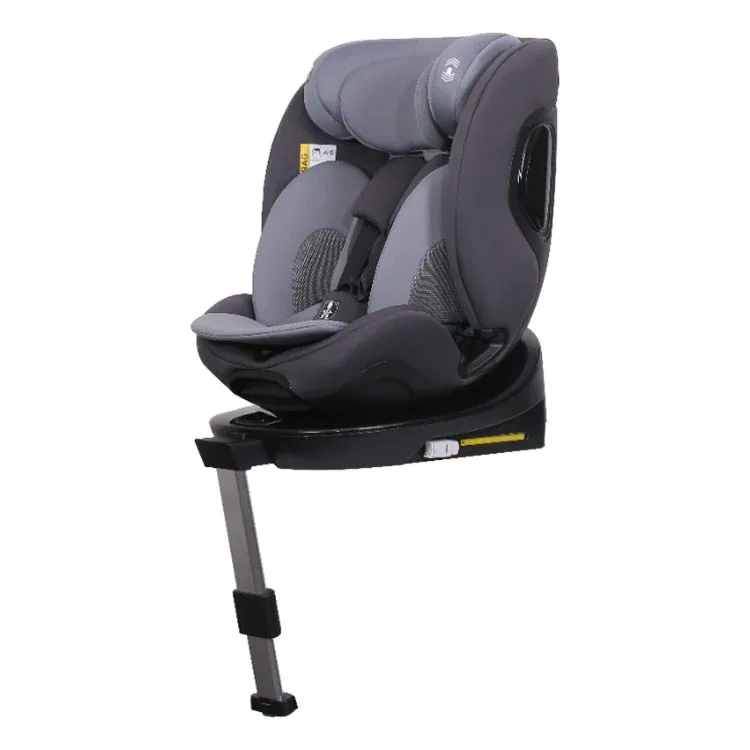
Hunting for a seat that grows with your child? Look for high rear-facing weight limits. Our all-stage car seats cover an extended rear-facing range — which is the single biggest factor in following AAP guidance long enough to matter.
3. Age + Developmental Readiness
The AAP dropped the strict age rule. But most CPSTs (Child Passenger Safety Technicians) still suggest age 2 as a floor — that's when the spine is more developed and neck muscles can actually do their job.
The working consensus right now: age 3 to 4 is the new standard for turning forward, if they haven't outgrown the seat before then.
Signs Your Child Is NOT Ready
A lot of parents convince themselves their kid is ready before they actually are. Here are the false alarms I hear most often:
❌ "Their legs are squished." Bent legs aren't a safety issue. Kids find their own comfy position.
❌ "They turned 2." Birthdays aren't a safety milestone. Inches and pounds are.
❌ "They scream when they're rear-facing." Annoying? Yes. A reason to turn them? No. Fix it with mirrors, music, a window shade — not by changing orientation.
❌ "They got carsick last drive." Motion sickness sometimes feels worse rear-facing. The safety trade-off still isn't worth it. Your pediatrician can help.
❌ "My friend turned hers at 18 months and her baby is fine." Yeah — and most people who don't wear seatbelts are also "fine." Right up until the day they aren't.
Here's the thing parents don't love hearing: rear-facing is inconvenient sometimes. That inconvenience is the price of much better protection during the most fragile years of your child's life.
How to Make the Transition
Once your child has actually outgrown the rear-facing setup, congrats — it's a real milestone. Don't rush it.
Step 1: Confirm they've actually outgrown it. Re-check the manual. Measure their height. Weigh them on the scale. If you're between sizes, wait another month.
Step 2: Read the manual for forward-facing install. It's not the same setup. Harness slots, recline angle, belt routing — all of it changes.
Step 3: Re-thread the harness. For forward-facing, the harness sits at or above the shoulders (rear-facing was at or below). This is the single most common install error in the country.
Step 4: Use the top tether. That strap that anchors the top of the seat to a tether point in your car? About 64% of U.S. parents don't connect it. That mistake adds up to 6 inches of extra head movement in a crash. If your seat doesn't have a top tether, get one that does. Our Bewell top tether system builds it into every forward-facing model for exactly this reason.
Step 5: Get the install checked. Find a free certified CPST inspection station near you — fire stations, hospitals, police stations usually have them. About 46% of car seats are installed wrong. Even confident parents benefit from a second pair of eyes.
Mistakes Parents Keep Making
After ten-plus years of building, crash-testing, and inspecting these seats, the same handful of errors keep showing up.
1. Bulky winter coats under the harness. A puffy coat compresses in a crash. Suddenly the harness is inches too loose. Always do the pinch test: try to pinch the strap webbing at the shoulder. If you can grab a fold of material, it's too loose. Strap your child in first. Then layer a blanket or coat over the buckled harness.
2. Chest clip too low. It belongs at armpit level. Not the belly. Not the ribs. A low chest clip can fail to restrain a child in a crash.
3. Skipping the recline angle. Rear-facing seats need enough recline to support a baby's head. But not so much they slide forward. Most seats have a built-in level indicator. Use it.
4. Using an expired seat. Most car seats expire 6–10 years after the manufacture date. The plastic degrades. The foam loses its energy absorption. A hand-me-down from a friend's older kid might already be done. Always check the sticker on the bottom of the shell.
5. Buying based on price alone. A seat that's $100 cheaper but harder to install correctly isn't a deal. It's a risk. The best seat is the one you'll install right every single time. Our quality control process is built around exactly that idea — a seat that's complicated to use safely isn't actually safe.
What the Experts Say
Two voices matter most. Both have said the same thing for years.
American Academy of Pediatrics: In its 2018 policy statement — reaffirmed in February 2025 — the AAP recommends "rear-facing car safety seats as long as possible." Meaning: until your child hits the max height or weight allowed by the seat manufacturer.
NHTSA: Echoes the AAP. Adds that child car seats cut fatal injury risk by 71% for infants and 54% for toddlers aged 1–4.
Consumer Reports (2018, still standing): "Making the transition to forward-facing too early exposes your child to head and spine injuries during a crash."
None of these groups sell car seats. They just read the data. The data keeps saying the same thing.
State Laws in the U.S.
Here's where it gets weird: state laws are not the same as safety recommendations.
State law is the legal minimum. AAP guidance is the safety standard. Many states still let you turn a kid forward at 12 months — but legal does not mean safe.
A quick snapshot (always check your state's current DMV/highway safety page for the latest):
State
|
Minimum Rear-Facing Requirement
|
California
|
Under 2 years AND under 40 lbs AND under 40"
|
New York
|
Under 2 years
|
Pennsylvania
|
Under 2 years
|
Texas
|
Under 2 years (best practice; law requires under 1)
|
Florida
|
Under 3 years (harness required)
|
Delaware
|
Under 2 AND under 30 lbs (as of June 2024)
|
Bottom line: even if your state says it's legal to turn your child forward at 12 months, the AAP, NHTSA, and every pediatric safety org in the country say don't.
FAQs
Can a 1-year-old face forward in a car seat?
Legally? In a lot of states, yes. Safely? No. AAP guidance: keep them rear-facing as long as possible. For most 1-year-olds, that's at least another 1–2 years.
Is it illegal to turn my baby forward too early?
Depends on the state. Some have a hard 2-year rule. Others let you flip at 1. But "legal" isn't the same as "safe." You can be following the law and still putting your child at unnecessary risk.
What happens if I turn my baby forward too soon?
In a frontal crash, the force on a young child's neck can cause severe injury — including internal decapitation, a rare but well-documented outcome in young children whose spines haven't fused yet. That's the single biggest reason rear-facing exists.
Can my 3-year-old still be rear-facing?
Yes. And a lot of pediatricians strongly recommend it. Plenty of convertible seats now have rear-facing limits up to 40 or 50 pounds — that fits most 3-year-olds. Some 4-year-olds too.
Do all car seats convert from rear to forward facing?
No. Infant-only seats (the ones with detachable carriers) are rear-facing only. They usually max out at 30–35 lbs. Convertible seats and all-in-one seats are designed to transition. Our child safety car seat for ages 0–12 is an example of an all-in-one design built for the full journey.
When can my child stop using a car seat altogether?
When they pass the 5-step test: their back sits flat against the vehicle seat, knees bend over the edge, the lap belt rests low on the hips (not the stomach), the shoulder belt crosses the middle of the shoulder (not the neck), and they can stay like that the whole ride. Most kids don't pass until age 10–12.
Do European i-Size seats follow the same rules?
i-Size (UNECE R129) is actually stricter than the U.S. version — by law, kids stay rear-facing until at least 15 months. Many European parents keep them rear-facing until age 4 or beyond. Shopping for a seat sold internationally? Look for i-Size certified models — it's a strong signal of safety standards.
Final Thoughts
Truth is, most parents turn their child forward too early. Grandma did it. A friend did it. Their kid "looks big enough." But "big enough" isn't a safety standard. The seat's height and weight limit is.
The longer you keep your child rear-facing, the safer they are. End of story.
It might mean wrestling a wiggly toddler into a less-convenient position for another year. It might mean dealing with some loud complaints. But the kids who stay rear-faced longest are the kids who walk away from crashes with no injuries — and that's the only outcome that matters.
Shopping for a seat that supports extended rear-facing and converts safely through every stage? Take a look at our full car seat range. Every model is independently crash-tested and certified to ECE R44/04 or i-Size R129. We've spent more than a decade engineering seats that grow with your child without giving up the safety that matters most in those first critical years.
Stay safe out there.
Sources:
• American Academy of Pediatrics — Child Passenger Safety Policy Statement (2018, reaffirmed February 2025)
• National Highway Traffic Safety Administration — Car Seat Safety Recommendations
• Consumer Reports — Rear-Facing Car Seat Recommendations
• Brown University Health — Car Seats: What Is Safest for My Child?