

Two car seats. One points at the back window, one points forward. Parents ask us which is "better" almost every week.
Most assume forward-facing is the upgrade — a milestone, like ditching the crib. It isn't. Which way your child faces isn't a reward for getting older. It's a safety call, and after a decade of building and crash-testing these seats, I can tell you the data isn't close.
Here's the real comparison.
The Quick Verdict
Read nothing else? Read this.
Rear-facing wins. Not narrowly — by a wide margin. The shell cradles a child's head, neck, and spine as one unit. That matters enormously in the years before their body can take a crash on its own.
| Your Child's Age | The Right Position |
|---|---|
| 0–2 years | Rear-facing. Always. |
| 2–4 years | Rear-facing preferred — switch only once outgrown. |
| 4+ years | Forward-facing is fine, once the rear-facing limit is reached. |
Need the full breakdown of when to switch — exact height, weight, and how state laws differ? That's our companion guide on when babies can safely face forward. This piece is about the why.
Rear-Facing vs Forward-Facing: 7-Point Comparison
The whole debate, one table:
| Factor | Rear-Facing | Forward-Facing |
|---|---|---|
| Crash protection | Head, neck & spine cradled together | Neck absorbs the impact |
| Best for ages | 0–4 (longer is better) | 4+, or once rear limit is reached |
| Weight range | Up to 40–50 lbs on most seats | Usually starts at 22 lbs |
| Injury reduction | Up to 71% for infants (NHTSA) | Lower in frontal crashes |
| Installation | ISOFIX/LATCH or seat belt | Same, plus top tether (essential) |
| Harness position | At or below the shoulders | At or above the shoulders |
| Typical legal rule | Required under 2 in many states | Allowed once criteria are met |
Look closely: forward-facing doesn't win a single safety row. Its one advantage is fitting bigger, older kids whose bodies can finally handle it. Which is exactly the point.
How Each Position Works in a Crash
To see why the data leans so hard, picture the most common serious accident — the frontal collision.
Rear-Facing
The seat works like a cupped hand. The car stops, the child presses back into the shell, and the force spreads across the entire back, head, and neck at once. Nothing whips forward. The fragile parts move together.
Forward-Facing
Now flip it. The five-point harness holds the torso fine. But the head — heavy, perched on a neck that hasn't finished forming — keeps going. The momentum funnels straight into the neck and spine. In a toddler, that's exactly where the worst injuries occur. Sometimes with no mark on the outside at all.
Force spread across the back, versus force jammed into the neck. That's the entire safety argument in one line.
Why Rear-Facing Is Safer: The Anatomy
This isn't a brand pitch. It's how a small child is built.
A baby's head is about 25% of their body weight. An adult's is roughly 6%. So a toddler carries a bowling ball on a neck that's still under construction — the vertebrae aren't fused, and the spinal cord stretches in ways an adult's can't. Those bones don't fully harden until somewhere between ages 3 and 6.
Until then, the neck is the weak link. Rear-facing is the only position that takes the load off it.
This is why the American Academy of Pediatrics recommends keeping children rear-facing as long as possible— guidance it set in 2018 and reaffirmed in February 2025.
When Forward-Facing Becomes the Right Choice
Let's be fair to forward-facing. It's not dangerous — it's the next stage. Once a child is big and developed enough, a forward-facing seat with a five-point harness is perfectly safe. The mistake isn't using it. The mistake is switching early.
Your child is ready only when they meet all three — not one, all three:
- Height: top of the head within 1 inch of the top of the seat shell.
- Weight: reached the seat's max rear-facing weight, usually 40–50 lbs.
- Age: at least 2, ideally 3–4, since the spine keeps developing.
One box unchecked means not ready. Our full transition guide covers how to measure each.
Crash Test Data: What the Numbers Say
The stats aren't subtle.
- NHTSA reports rear-facing seats cut serious-injury risk by up to 71% for infants under 1. Child restraints overall have saved more than 11,000 lives since 1975.
- Sweden — which has pushed extended rear-facing to age 4 for decades — records some of the lowest child crash-fatality rates on earth, near zero in some years.
- That record is why the European i-Size standard (UNECE R129) makes rear-facing mandatory until at least 15 months by law — stricter than most U.S. rules.
We unpack the standards in our i-Size vs ECE R44/04 guide.
3 Myths About Forward-Facing
These are the stories parents tell themselves to justify turning early. None hold up.
❌ "Facing forward lets them see more, so it's better." A view doesn't make a crash safer. Rear-facing kids see plenty — window, mirror toy, the back seat. Engagement isn't a safety metric.
❌ "Once they hit 1, forward-facing is fine." The age-1 rule died in 2018. A birthday doesn't change anatomy. Height and weight do.
❌ "Their legs look cramped — forward must be comfier." Bent legs aren't a safety issue. There's no documented case of leg injury from extended rear-facing. Kids find their own position; the spine is the priority, not the knees.
Rear-Facing vs Forward-Facing by Age
A reference you can screenshot:
| Age | Recommended Position |
|---|---|
| 0–12 months | Rear-facing only — no exceptions |
| 1–2 years | Rear-facing |
| 2–4 years | Rear-facing preferred; switch only if outgrown |
| 4+ years | Forward-facing with harness (once rear limit reached) |
| 8–12 years | Booster until the adult belt fits properly |
What About Convertible Seats?
Here's the practical answer to all of this: you don't have to pick two seats.
A convertible seat does both. Rear-facing through the infant and toddler years, then forward-facing once your child genuinely outgrows the rear mode. One seat, the whole journey — which saves money and, more important, removes the temptation to switch early just because you bought the "next" seat.
The spec that matters most when you shop: a high rear-facing weight limit. The higher it goes, the longer you can keep your child in the safer position.
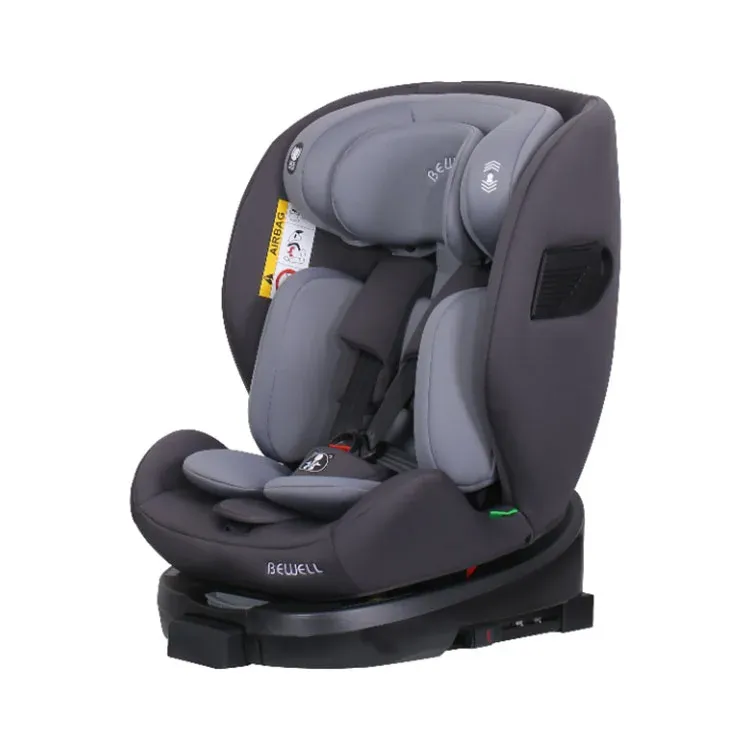
Our BW22 rotating convertible seat is built for exactly that: a 360° rotating base for easy loading, a support leg for extra crash stability, and an extended rear-facing range that follows AAP guidance through the years that matter most.
FAQs
Is rear-facing really safer than forward-facing?
Yes, significantly, for young children. Rear-facing spreads crash force across the whole back and supports the head and neck together. NHTSA puts the injury reduction at up to 71% for infants.
At what age can I turn my car seat forward?
There's no fixed age — the AAP dropped that milestone in 2018. What matters is whether your child has hit the rear-facing height or weight limit. For most, that's between 3 and 4.
Can a forward-facing car seat be used rear-facing?
Only if it's a convertible or all-in-one. Forward-facing-only seats can't go rear-facing. Check the manual — using a seat in a mode it wasn't built for is dangerous.
Why do European cars require rear-facing longer?
The i-Size standard (UNECE R129) mandates rear-facing to at least 15 months, based on crash research. Many European parents go to age 4.
Do my child's legs touching the seat mean they should face forward?
No. Bent or crossed legs aren't a safety concern. No documented leg injuries from extended rear-facing — kids are far more flexible than adults assume.
Is it ever safe to forward-face before age 2?
It's legal in some states, but not advised. Both AAP and NHTSA say keep children rear-facing as long as possible. Legal and safe aren't the same thing.
The Final Verdict
The conclusion is hard to argue with: while your child is young, rear-facing is safer, full stop. Forward-facing isn't the enemy — it's the next chapter, and it should wait until their body is ready.
The easiest way to get this right? Stop treating it as two decisions. Buy a convertible seat with a generous rear-facing weight limit, keep your child rear-facing as long as the seat allows, and let the switch happen naturally when they've truly outgrown it.
Shopping for a seat that does both safely? See our full range of convertible car seats — every model is independently crash-tested and certified to ECE R44/04 or i-Size R129.
Whatever you pick, keep them rear-facing as long as you can. Their neck will thank you.
About the Author
This article is for informational purposes. Always consult your car seat's manual and a certified Child Passenger Safety Technician for guidance specific to your vehicle and child.
Sources:
- American Academy of Pediatrics — Child Passenger Safety Policy Statement (2018, reaffirmed February 2025)
- National Highway Traffic Safety Administration — Car Seat Recommendations
- UNECE Regulation No. 129 (i-Size) — Enhanced Child Restraint Systems
- Swedish Transport Administration — Extended Rear-Facing Child Safety Data