New Car Seat Safety Standards 2025–2026: What the FMVSS 213a and R129 Shift Really Means for Buyers and Brands
2026-04-28 09:18:32
Somewhere between the supply chain chaos of recent years and the steady drumbeat of road safety research, a quiet transformation has been building inside the child car seat industry. It isn't a minor tweak to labeling requirements or a voluntary best-practice update. We're talking about the most consequential regulatory shift the category has seen in a generation — hitting both the U.S. and EU markets simultaneously, with hard deadlines that don't move for anyone.
If you manufacture, import, wholesale, or retail child car seats, this is the moment to pay close attention. And if you're a parent trying to decode what it means for the seat already in your car, there's a clear answer for you too.
Let's work through this properly.
The U.S. Side of the Story: FMVSS 213a and the Side-Impact Gap
For most of the history of child car seat regulation in the United States, safety testing focused almost entirely on what happens in a frontal crash. That made sense for a long time — head-on collisions cause the most fatalities, and the engineering response to frontal impact is well understood. But the data told another story on the side-impact question, and researchers, advocacy groups, and manufacturers had been pushing for a formal response for years.
The National Highway Traffic Safety Administration (NHTSA) first proposed mandatory side-impact testing back in 2014. The final rule didn't land until June 2022. The resulting standard — Federal Motor Vehicle Safety Standard No. 213a — requires all child car seats designed for children under 40 pounds to pass standardized lateral crash tests that simulate a real T-bone collision. Not a simplified proxy, not an internal best-efforts benchmark. Actual side-impact testing, conducted with crash dummies representing a 3-year-old child, across four validated test protocols.
The original compliance deadline was June 30, 2025. When that date arrived, the picture was mixed: major manufacturers had already made the switch, but smaller producers raised legitimate concerns about a shortage of accredited testing labs and the cost of internal sled systems. NHTSA listened. The deadline was extended to December 5, 2026 — giving the broader industry more runway while keeping the safety outcome firmly on the calendar.
What Side-Impact Protection Actually Requires
A T-bone crash is particularly unforgiving for young passengers. Unlike a frontal collision where the engine block and crumple zones absorb energy before it reaches the cabin, a side impact hits close to the occupant. Less structure stands between the child and the point of impact. The new FMVSS 213a standard addresses this directly, requiring seats to:
• Restrain the child and prevent ejection during lateral impact
• Prevent harmful head contact with vehicle door structures or seat frames
• Reduce crash forces transmitted to the child's chest within safe thresholds
Many manufacturers had been voluntarily testing to something like this standard for years. The difference now is that it's mandatory, standardized, and independently documented. Buyers can verify compliance, retailers can confirm it, and the benchmark is identical for every brand — from the largest global name to the smallest regional supplier.
Europe Closed the Door on R44. Here's What Replaced It.
Across the Atlantic, the shift played out on a different timeline but arrived at the same destination. The European safety standard for child car seats — ECE R44 — had been in place for decades, classifying seats by the child's weight. In theory it worked. In practice, weight alone proved an imprecise guide for parents: two children can weigh the same at very different stages of development, making seat selection unnecessarily confusing and prone to error.
ECE R129, introduced in phases starting in 2013, fixed this by switching to height-based classification. And as of September 2024, that transition is complete. R44 seats can no longer be sold as new products anywhere in the EU. What's more, the latest version — R129/04 — came into effect in June 2024, bringing updated Q-series crash test dummies that more accurately replicate child anatomy during impact events.
Feature
ECE R44 ✕ Banned (EU)
ECE R129 ✓ Required
Classification basis
Child's weight (kg)
Child's height (cm)
Side-impact testing
Not required
Mandatory
Rear-facing minimum
Optional guideline
Mandatory: 15 months / 75 cm
ISOFIX requirement
Optional in most cases
Required for i-Size category
EU sale status
Prohibited since Sept 2024
Only valid option
R129 and i-Size — A Distinction Worth Getting Right
These two terms get used interchangeably, but they describe different things. R129 is the regulatory framework — the umbrella under which all approved European car seats now operate. i-Size is a specific classification tier within R129 that adds universal vehicle compatibility requirements via ISOFIX anchor points. Every i-Size seat meets R129 standards. But not every R129 seat qualifies as i-Size.
For most European retailers, i-Size compatibility has become the expectation rather than the exception. Consumers recognize the branding, and the mandatory ISOFIX installation requirement meaningfully reduces incorrect fitting — which remains one of the biggest real-world safety problems regardless of what any seat is rated to withstand in a lab.
When evaluating seats for European distribution, three things to verify with your manufacturer: the seat carries a valid orange R129 approval label; the certified height range covers your target demographic; and whether ISOFIX / i-Size is specified if your retail channel expects it.
The Practical Stakes for Brands, Importers, and Retailers
There's a version of this story where you file it under "something to revisit" and move on. That version ends with a difficult conversation about inventory liability sometime in late 2026. Here's what the regulatory timeline actually means for sourcing decisions being made right now.
If you're distributing seats in the EU, you should already be dealing exclusively in R129-certified stock. Any seats without that certification have been off the market for over a year. The question now is whether your current R129 range covers the right height categories for your core customer, and whether i-Size compatibility is specified correctly for the vehicles prevalent in your region.
If the U.S. market is your focus, you have until December 5, 2026 — but that timeline compresses fast when you factor in lead times, testing schedules, and the practical reality that shelf-ready stock takes months to develop, certify, and ship. Brands that haven't yet confirmed FMVSS 213a compliance with their manufacturer need to do so now, not next quarter.
Five Questions Every Buyer Should Put to Their Supplier
Regardless of which market you're targeting, these questions separate suppliers who've done the work from those who are still getting there:
• Can you provide the full R129 certification document — not just a label photo?
• Has FMVSS 213a side-impact testing been completed, and if not, when?
• What height ranges and weight limits does the certification actually cover?
• Is ISOFIX included, and is the seat classified as i-Size?
• Can you supply compliance documentation for customs clearance and retail audit purposes?
How BEWELL Seats Are Engineered for the New Compliance Reality
Compliance is the floor, not the achievement. Meeting a standard is what any certified product does by definition. What's worth examining is how a seat is engineered to meet it — because that tells you something real about the manufacturer's priorities.
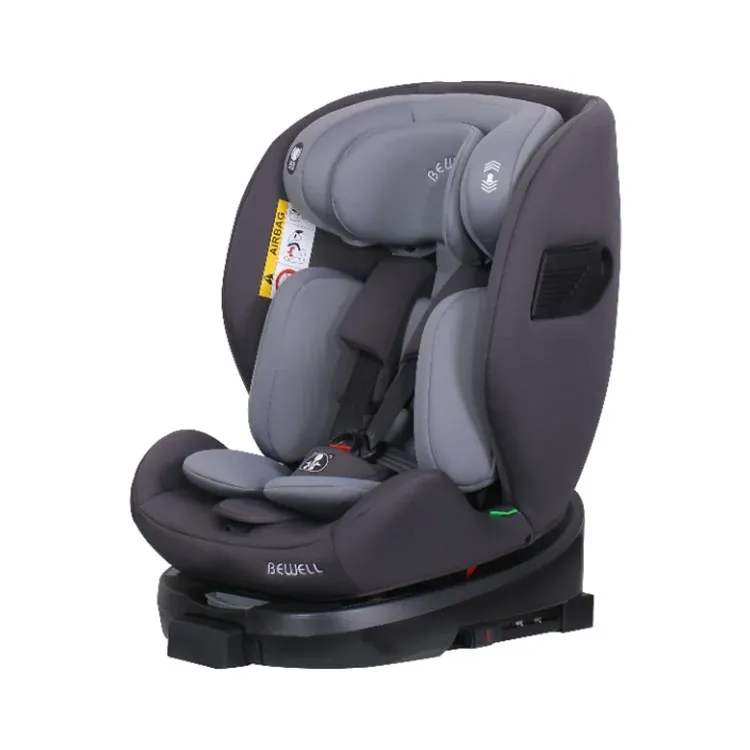
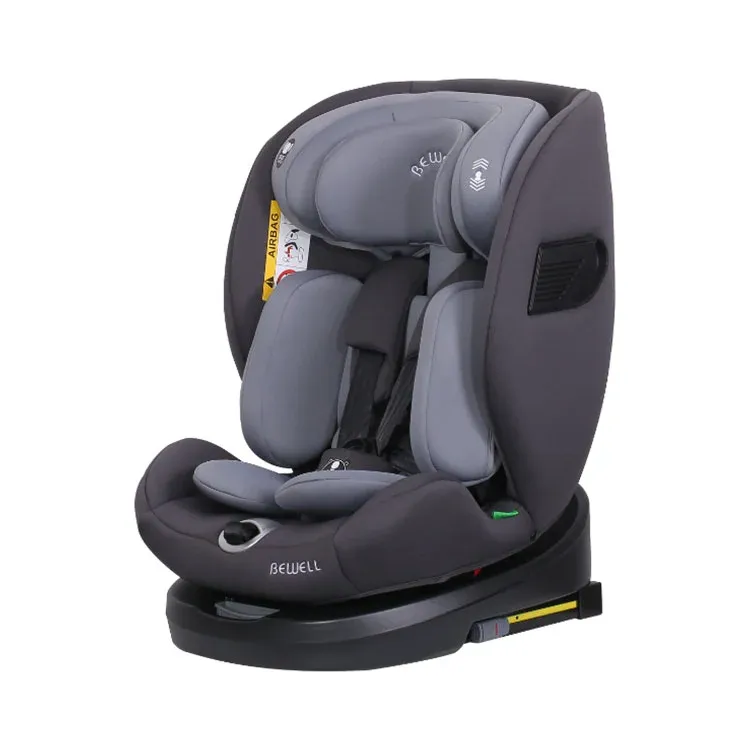
BEWELL's current product lineup was developed with evolving global regulations in mind from the start. The core structure of flaghip models like the BW22 and BW23 combines a reinforced built-in steel frame with energy-absorbing materials in the sidewalls — not applied as a retrofit, but integrated into the original mold geometry. The SIPS (Side Impact Protection System) uses high-hardness wing panels that activate under lateral force, dispersing and rebounding collision energy away from the child's head and torso.
For European buyers, the product range covers multiple height categories under ECE R129, with i-Size certification available on key models. Formal approval testing is conducted through an accredited crash test partner laboratory. For brands targeting North American distribution, the compliance team provides model-specific recommendations and the full documentation package required for FMVSS 213a verification.
OEM and ODM work runs through the same compliance infrastructure. Market requirements vary — export labeling, packaging language, compliance markings, fabric customization — and BEWELL handles those adjustments without extending development timelines unnecessarily. Prototype cycles typically run 10–15 days, with a minimum order quantity starting at 500 units depending on project scope.
Use this as a reference when planning your inventory and sourcing calendar. One date in particular demands attention.
Date
Milestone
Sept 2023
R129 becomes the only EU standard for new type-approvals. No new R44 seats can enter the approval pipeline.
Sept 2024
R44 seats banned from sale across all EU member states. Retailers must be fully transitioned.
June 2024
R129/04 revision takes effect with updated Q-series crash dummies for more accurate injury data.
June 30, 2025
Original U.S. FMVSS 213a deadline — extended after manufacturer concerns about lab access.
Dec 5, 2026
FINAL U.S. FMVSS 213a DEADLINE. All car seats manufactured from this date must pass mandatory side-impact testing. No further extensions currently proposed.
If your sourcing contracts run through 2026 — and most do — the December deadline is closer than it looks when you account for manufacturing cycles, testing schedules, and ocean freight lead times. The time to confirm compliance status with your manufacturer is now, not when the clock runs out.
A Straight Answer for Parents Reading This
Most people reading this article are trade buyers. But parents searching for clarity on these standards deserve a direct response — not a redirect to another government FAQ page.
If you already own a car seat: You don't need to replace it. The new rules apply to manufacturers, not to seats already in use. Keep your current seat as long as it hasn't expired (check the expiration stamp on the base — most seats carry a 7–10 year lifespan), hasn't been in a crash, and isn't listed on an active recall. The NHTSA recall database at nhtsa.gov takes less than a minute to check.
If you're buying something new: Ask whether the seat meets FMVSS 213a (U.S.) or carries R129 certification (EU/UK). A growing number of brands have already updated their products. If the packaging doesn't specify, a quick call to the manufacturer's customer service line will confirm it.
On installation: No certification compensates for a seat that isn't properly installed. Incorrect fitting remains one of the most common — and most preventable — factors in child car seat injuries. NHTSA maintains a free Inspection Station Locator at nhtsa.gov/cpst where Certified Child Passenger Safety Technicians will check your installation at no charge.
Frequently Asked Questions
Q: Will my existing R44 car seat become illegal to use?
A: No. In the EU, R44 seats can no longer be sold as new products, but seats already in use remain entirely legal. In the UK, the sales deadline extends slightly beyond the EU cutoff, though R44 is widely considered outdated by safety professionals and is no longer type-approved.
Q: What's the actual difference between FMVSS 213 and FMVSS 213a?
A: FMVSS 213 required only a simulated 30 mph frontal crash test. FMVSS 213a adds mandatory side-impact testing for seats designed for children under 40 pounds — a category that had never faced standardized lateral crash requirements before. It's a significant upgrade to the protection standard, not a cosmetic revision.
Q: Can retailers still sell old stock after December 5, 2026?
A: Yes. The compliance requirement is tied to the manufacturing date, not the sale date. Retailers can continue selling seats manufactured before the December 5, 2026 deadline. The restriction applies only to seats manufactured from December 6, 2026 onward.
Q: Does BEWELL provide certification documentation for private label or OEM brands?
A: Yes. BEWELL provides full documentation for OEM and branded partners, including R129 approval certificates, test reports, and market-specific compliance markings. Contact the team via the product inquiry page for specifics on your target market and required documentation format.
Q: Is ISOFIX required under R129?
A: ISOFIX is mandatory for i-Size classification within R129, but not for all R129-approved seats. If your retail channel or market partner specifically requires i-Size designation, confirm that the seat uses ISOFIX connectors and meets universal seating position compatibility requirements for your target vehicle fleet.
Regulatory transitions are rarely clean. There's always a window where old stock coexists with new requirements, where some suppliers are ahead and others are catching up, and where buyers who did their homework early find themselves with a real competitive edge. That window is open right now.
The FMVSS 213a and R129 changes aren't coming — they're already here. One is fully in force across the EU, reshaping every conversation about new seat certification and distribution. The other has a firm U.S. deadline less than 20 months out, which in manufacturing terms is not a lot of runway. Brands that treat this as a checkbox will get through it. Brands that treat it as a product story — certified side-impact protection, transparent documentation, confident compliance — will get something more.
If you need to verify the compliance status of a current product line, explore certified alternatives, or understand what OEM customization looks like for your specific market, the BEWELL team is the right starting point.
This article was written by the BEWELL Product Safety & Compliance Team at Ningbo Bewell Baby Products Manufacturing Co., Ltd. The company has more than a decade of specialist experience in child safety seat design, manufacturing, and global export compliance. BEWELL holds R129 certification across multiple product lines, operates an in-house R&D team with crash test partner laboratory access, and supports OEM/ODM programs for brands distributing in North America, Europe, and across 30+ countries worldwide. For product inquiries or certification documentation, visit www.nbbewell.com.
We use cookies to offer you a better browsing experience, analyze site traffic and personalize content. By using this site, you agree to our use of cookies.
Privacy Policy