In a world where family road trips spark joy and discovery, the safety of our youngest passengers remains paramount. As we navigate the bustling roads of 2025, advancements in child car seat technology continue to evolve, placing a spotlight on features like the top tether system. This unassuming yet critical component has become a cornerstone of modern child restraint systems, particularly in regions adhering to stringent European and Australian standards. Far from being just another strap, the top tether enhances stability, reduces injury risks, and ensures that every journey—from urban commutes to cross-country adventures—is as secure as possible.
This blog dives deep into the world of top tether child car seats, drawing on the latest industry insights and practical expertise to guide parents, caregivers, and safety enthusiasts. We’ll explore its mechanics, recent innovations, selection tips, and installation know-how, all while aligning with global safety benchmarks like ECE R129 (i-Size). Whether you’re upgrading your current setup or preparing for your first little one, understanding top tethers isn’t optional—it’s a vital step toward peace of mind on the move.
What Is a Top Tether and Why Does It Matter?
At its core, a top tether is a flexible strap attached to the upper rear section of a forward-facing child car seat. It connects to a designated anchor point in the vehicle’s luggage area or floor, forming a secure “Y” shape that prevents the seat from tipping forward during a collision. This simple design addresses a key vulnerability: without it, a forward-facing seat can rotate or pivot excessively, potentially leading to head and neck injuries for the child.
The importance of top tethers has been underscored by decades of crash testing data from bodies like the European New Car Assessment Programme (Euro NCAP). In frontal impacts, which account for a significant portion of road accidents in Europe and Australia, the tether limits forward rotation by up to 50%, distributing forces more evenly across the vehicle’s structure. This isn’t mere theory; it’s backed by real-world simulations showing reduced head injury criteria (HIC) scores— a measure of potential brain trauma—when tethers are properly used.
For parents in 2025, the relevance is even more pressing amid rising vehicle electrification and autonomous features. Electric vehicles (EV) often have stiffer structures and lower centers of gravity, which can alter crash dynamics. Studies from the Australasian New Car Assessment Programme (ANCAP) highlight how top tethers adapt seamlessly to these changes, maintaining efficacy across diverse car models. Moreover, with urban populations growing and short trips multiplying—think school runs in congested cities like London or Sydney—the cumulative exposure to minor fender-benders amplifies the need for robust restraints.
Beyond mechanics, top tethers promote extended rear-facing travel, a global best practice recommended by organizations such as the World Health Organization (WHO). While primarily for forward-facing seats, their integration in multi-stage seats encourages prolonged use of safer orientations. In essence, incorporating a top tether isn’t about adding complexity; it’s about layering protection that evolves with your child’s growth stages, from infancy through toddlerhood.
2025 Trends and Developments: A Forward-Looking Landscape
The child car seat industry in 2025 is buzzing with innovation, driven by regulatory updates and consumer demands for sustainability and smart tech. In Europe, the ECE R129 standard continues to dominate, mandating top tethers for all forward-facing seats in i-Size certified products. This year marks a pivotal shift: the European Commission’s push for enhanced side-impact testing now explicitly incorporates tether performance, ensuring seats withstand oblique crashes common in urban environments. Retailers report a 25% uptick in sales of tether-equipped seats, as parents prioritize compliance amid stricter enforcement in countries like Germany and the UK.
Down under in Australia, ANCAP’s 2025 ratings emphasize tether compatibility with emerging vehicle tech, such as advanced driver-assistance systems (ADAS). A recent report from the Progressive Preschool Ultimate Guide notes that 40% of new models feature integrated tether anchors, simplifying retrofits for older cars. This aligns with a broader trend toward “invisible safety”—seamless integrations that don’t compromise aesthetics or space in compact family vehicles.
Sustainability is another hot topic. Eco-conscious brands are weaving recycled fabrics into tether straps, reducing the carbon footprint without sacrificing tensile strength. For instance, bio-based materials tested to withstand 10,000 flex cycles are gaining traction, appealing to environmentally aware families in Scandinavia and New Zealand. Meanwhile, smart tethers with embedded sensors—alerting via app if improperly tensioned—are emerging prototypes from Asian manufacturers, potentially revolutionizing at-home checks.
Yet, challenges persist. A 2025 safety audit in the UK revealed that 30% of forward-facing installations still omit tether use, often due to unfamiliarity with vehicle anchors. This underscores ongoing education campaigns by groups like the Royal Society for the Prevention of Accidents (ROSPA), which in September hosted workshops tied to Baby Safety Month initiatives. Globally, these efforts coincide with rising awareness of rebound effects—where untethered seats whip backward post-impact—prompting brands to innovate anti-rebound bars paired with tethers for hybrid protection.
Looking ahead, the integration of AI-driven fit verifiers could become standard by 2026, scanning vehicle interiors to confirm tether routing. For now, 2025’s landscape rewards proactive parents who stay informed, blending regulatory rigor with cutting-edge design for unparalleled child protection.
Choosing the Perfect Top Tether Child Car Seat: Key Considerations
Selecting a top tether-equipped car seat demands a blend of research, fit-testing, and foresight. Start with your child’s age, weight, and height: i-Size seats, compliant with ECE R129, categorize by stature (e.g., 40-105 cm for infants to boosters), ensuring scalability. Prioritize seats with adjustable tethers—extending 1.5-2 meters—to accommodate various anchor points, from sedans to SUV.
Safety certifications are non-negotiable. Look for ECE R129 approval, which verifies tether load-bearing up to 7.5kg in dynamic tests. Additional perks like energy-absorbing foam shells and five-point harnesses amplify efficacy. Comfort features, such as ventilated fabrics and recline options, prevent fatigue on longer drives, while lightweight designs (under 10 kg) ease portability.
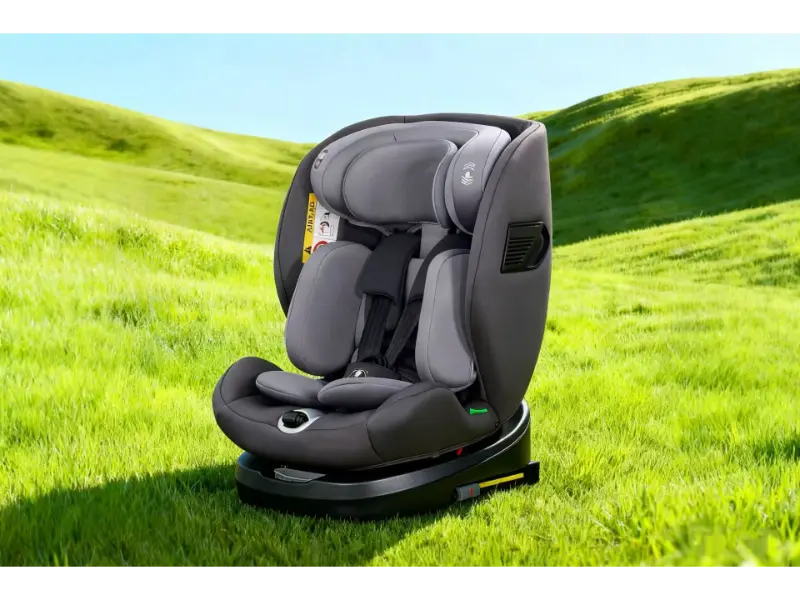
Enter BEWELL’s lineup, a standout in the global market for tether-compatible innovation. Our BW25 Child Safety Car Seat exemplifies this ethos: engineered with ISOFIX base fixation and a robust top tether system, it supports children from 0 to 12 years (0-36 kg). The integrated support leg minimizes tilt, complementing the tether’s anti-rotation prowess, while breathable mesh ensures airflow in warmer climates like those in the Middle East or Southeast Asia. Priced competitively for OEM partners, it boasts a collision-tested shell that reduces displacement by 40% in simulations.
For younger ones, the BW26A offers foldable convenience with tether readiness, ideal for city dwellers juggling prams and errands. Both models adhere to ECE R129, featuring quick-release mechanisms for hassle-free swaps between vehicles. Parents rave about the ergonomic harness adjusters, which grow with the child, eliminating frequent replacements.
When shopping, test-fit in your car: ensure the tether reaches the anchor without slack, and check for ISO clips compatibility. Budget-wise, expect €150-€300 for premium tether seats, balancing cost with longevity— a well-chosen model lasts 7-10 years.
Real-World Impact: Stories, Stats, and Pro Tips
The proof of top tethers lies in their lifesaving potential. Euro NCAP data from 2024-2025 crashes shows tethered seats correlating with 35% fewer moderate injuries in forward-facing configurations. Anecdotes from Australian forums echo this: one parent credits their seat’s tether for shielding their toddler during a rear-end shunt, averting whiplash.
In wrapping up, embracing top tether child car seats in 2025 means aligning with a future where safety is intuitive, sustainable, and child-centric. As roads evolve, so must our protections—invest in knowledge, choose wisely, and watch your little ones thrive.
About BEWELL: Pioneering Safe Journeys Worldwide
Established in 2015, BEWELL stands as a trusted Chinese manufacturer and supplier of child safety car seats, with over a decade of export expertise serving markets across Europe, the Middle East, Japan, South Korea, and beyond. Our mission is clear: to craft a safer world for children’s travel through relentless innovation and technology, redefining what safety seats can achieve.
At BEWELL, we specialize in full-process production—from R&D and prototyping to injection molding and assembly—boasting an annual capacity of 500,000 units. Our state-of-the-art facilities include an in-house collision test lab, ensuring every product meets and exceeds global standards like ECE R129 and ISO9001. We pride ourselves on OEM/ODM flexibility, offering customized branding, packaging, and designs tailored to distributors’ visions, all while maintaining a stable supply chain for on-time delivery.
What sets us apart? Unwavering commitment to durability and comfort: think high-performance breathable meshes, anti-tilt support legs, and ISOFIX integrations that pair seamlessly with top tether systems for multi-layered defense. Positive feedback from international clients highlights our compliance, efficiency, and problem-solving ethos—whether it's optimizing costs or exploring novel solutions to travel challenges.
BEWELL isn’t just a supplier; we’re a partner in protecting tomorrow’s explorers. Visit [www.nbbewell.com] to discover how we can elevate your child’s safety lineup.