In an era where family road trips are a cherished part of everyday life, ensuring the safety and comfort of young passengers has never been more paramount. As we navigate the bustling roads of modern cities and highways, the humble car seat stands as a silent guardian for our little ones. But what if that guardian could offer more than just protection? Enter the 360-degree rotating children’s car seat—a game-changer that’s swiftly becoming the gold standard for parents worldwide. This innovative design doesn’t just secure your child; it transforms the often stressful ritual of buckling up into a seamless, stress-free experience. In this blog, we’ll dive deep into the world of 360-degree rotating car seats, exploring their features, benefits, and why they’re aligning perfectly with the safety trends shaping 2025. Drawing from the latest advancements in child restraint technology, we’ll uncover how these seats are redefining family mobility, all while prioritizing evidence-based safety and practical usability.
Understanding the Basics: What Makes a 360-Degree Rotating Car Seat Special?
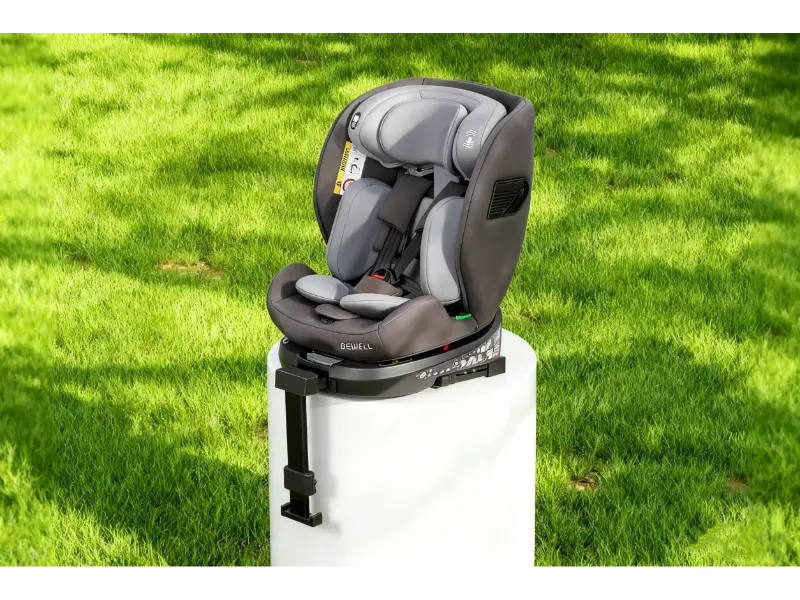
At its core, a 360-degree rotating car seat is a child restraint system engineered with a swivel mechanism that allows the seat to pivot a full circle, typically activated by a simple lever or button. This rotation enables parents to face the seat toward the rear door, making it effortless to place or remove the child without awkward contortions. Unlike traditional forward-facing or rear-facing seats that demand gymnastic-level maneuvering, these rotating models prioritize ergonomics for caregivers while maintaining uncompromised safety for the child.
The mechanics are deceptively simple yet ingeniously robust. The base of the seat remains firmly anchored to the vehicle’s ISOFIX points or seat belt system, while the upper shell rotates independently on a sturdy spindle. High-quality models incorporate smooth, one-handed rotation with a secure locking mechanism that snaps the seat back into the forward-facing or rear-facing position. This isn’t a gimmick—it’s a thoughtful evolution born from years of parental feedback and engineering refinement. According to recent European New Car Assessment Programme (Euro NCAP) insights, such designs are gaining traction for their ability to reduce installation errors, a common culprit in suboptimal child seat performance during accidents.
Safety certifications play a pivotal role here. In regions adhering to stringent standards like ECE R129 (the i-Size regulation), 360-degree seats must undergo rigorous dynamic crash testing, side-impact simulations, and endurance checks on the rotation axis. These tests ensure the swivel doesn’t compromise structural integrity, with many models featuring reinforced steel frames and energy-absorbing foam layers. For parents, this translates to peace of mind: a seat that rotates effortlessly but locks like a vault in the event of a collision.
Key Features: What to Look for in a Top-Tier 360-Degree Rotating Seat
When selecting a 360-degree rotating car seat, discerning parents focus on features that blend safety, comfort, and longevity. Let’s break down the essentials, informed by the latest 2025 product innovations.
First, “versatility across growth stages”. The best models are multi-stage, accommodating newborns up to toddlers and beyond—typically from birth to around 4 years (or 18kg in weight). They seamlessly switch between rear-facing (the safest orientation for infants up to 15 months) and forward-facing modes, with the rotation facilitating easy transitions. For instance, adjustable headrests with no-rethread harnesses grow with the child, ensuring a snug five-point harness fit without constant readjustments.
“Reclining positions” are another hallmark, often offering 4-5 angles to promote natural spine alignment during naps. This is crucial for long journeys, where improper positioning can lead to discomfort or even breathing issues in sleeping infants. Look for seats with intuitive recline levers that operate independently of the rotation, allowing fine-tuning without disturbing the child.
Material choices matter immensely. Premium seats use hypoallergenic, breathable fabrics like merino wool blends or recycled polyester, which are easy to wipe clean and machine-washable. These materials resist allergens and maintain temperature regulation, vital in varying climates from temperate European summers to milder Asian winters. Under the hood, high-density EPS foam provides superior impact absorption, while the outer shell often crafted from impact-resistant polypropylene doubles as a shield against everyday scuffs.
Installation is where rotating seats shine. ISOFIX compatibility is non-negotiable, with visual indicators (green/red lights) confirming a secure latch. Many include load legs or top tethers to minimize forward movement in crashes, and the rotation base ensures level installation even on sloped vehicle seats. Unique touches, like built-in ventilation channels or modular canopies with UPF 50+ sun protection, elevate these seats from functional to family-friendly.
In 2025, smart integrations are emerging, too. While not yet ubiquitous, some models incorporate app-connected sensors for buckle reminders or usage tracking, aligning with the global push toward tech-enhanced parenting. However, the focus remains on mechanical reliability over gadgets, ensuring these seats perform flawlessly without battery dependencies.
The Unmatched Benefits: Why Rotate When You Can Revolutionize?
The advantages of 360-degree rotating car seats extend far beyond convenience, touching on physical, emotional, and practical dimensions of family life.
“Ease of Use for Busy Parents”. Picture this: It’s rush hour, your toddler is melting down after daycare, and you’re wrestling with a finicky harness in a cramped backseat. With a rotating seat, you simply pull the lever, swivel the seat toward you, secure your child comfortably, then rotate back—all in under 30 seconds. Studies from child safety organizations highlight that such designs cut installation time by up to 50%, reducing frustration and errors. This is especially beneficial for solo parents or those with back issues, as it minimizes twisting and bending.
“Enhanced Child Comfort and Bonding”. Rotation fosters better interaction. Facing your child during buckling allows eye contact, soothing words, and a calmer entry into the seat—reducing tantrums and promoting secure attachment. Once settled, the multiple recline options ensure ergonomic support, preventing the “slumped forward” posture that plagues static seats. Ventilation features keep little bodies cool, while padded inserts for newborns provide that cozy, womb-like embrace.
“Safety at the Forefront”. Rear-facing is the gold standard for infants, extending protection to the neck and head in frontal impacts—which account for 70% of crashes. Rotating seats encourage prolonged rear-facing use (up to 105 cm height in i-Size compliant models) by making transitions painless. Side-impact protection pods, often integrated into the design, absorb lateral forces, while the rotation mechanism is engineered to disengage only under extreme, non-survivable loads, preserving the seat’s integrity.
From a broader perspective, these seats support sustainable family travel. Their long lifespan (one seat serving multiple children) reduces waste, and eco-conscious manufacturing—using recycled plastics and low-VOC materials—aligns with global green initiatives. In a year like 2025, where urban congestion is rising in megacities from Shanghai to London, efficient car seats like these contribute to smoother, safer commutes.
Staying Current: 2025 Trends in Rotating Car Seat Technology
The child safety landscape is evolving rapidly, and 360-degree rotating seats are at the epicenter. With increased awareness of whiplash prevention and micro-mobility habits, manufacturers are responding with smarter, more adaptive designs.
A key trend is “extended rear-facing capabilities”. New regulations in forward-thinking markets emphasize keeping children rear-facing until at least 15 months, but 2025 models push this to 4 years where possible. This shift, backed by crash data showing 5x greater protection in rear-facing mode, is driving demand for seats with deeper recline and higher weight limits.
“Sustainability is surging”. Eco-materials are standard now, with brands incorporating ocean-bound plastics and carbon-neutral production. Rotation mechanisms themselves are getting greener, using recycled metals for durability without excess weight—lighter seats mean better fuel efficiency for electric vehicles, tying into the global EV boom.
“Global Harmonization of Standards”. As international trade flourishes, ECE R129 compliance is becoming a universal benchmark, ensuring rotating seats meet side-impact and frontal crash criteria across borders. Innovations like anti-rebound bars, which prevent seat rotation during rear-end collisions, are now commonplace, reflecting lessons from recent real-world incident analyses.
Moreover, the rise of family-oriented urban planning—think pedestrian-friendly zones in Asian and European cities—means more short trips, where quick in-out functionality is invaluable. Parents are also vocal on social platforms about “parent-proof” features, influencing designs toward even simpler rotations and modular accessories like travel bags.
Looking ahead, expect haptic feedback in harnesses or AI-driven fit assessments, but the core appeal remains: seats that adapt to life, not the other way around.
Real-Life Impact: Stories from the Road
To illustrate, consider the feedback from parents in diverse settings. In a bustling family in Seoul, a rotating seat turned chaotic school runs into harmonious routines, with the mother noting, “No more strained backs or fussy kids—it’s like having an extra set of hands.” Similarly, in a rural Italian household, the seat’s weather-resistant fabrics withstood muddy adventures, while its crash-tested frame provided reassurance on winding mountain roads.
These anecdotes underscore a truth: 360-degree seats aren’t luxury items; they’re essential tools for modern parenting, validated by independent reviews from safety watchdogs.
Navigating Choices: How to Select the Right One for Your Family
Choosing a rotating car seat? Start with compatibility—measure your vehicle’s backseat width and check ISOFIX presence. Prioritize i-Size certification for height-based fitting over weight alone. Budget-wise, expect €200-€500 for quality models, factoring in longevity.
Test in-store: Rotate it, recline it, feel the harness. Read verified reviews from diverse users, and consult local safety guidelines. Remember, proper use trumps all features—attend a fitting session if available.
In conclusion, 360-degree rotating children’s car seats represent a pinnacle of thoughtful design, merging cutting-edge safety with everyday empathy. As we charge into 2025, they embody a future where protecting our children feels intuitive and joyful. Invest in one, and watch how it transforms not just your drives, but your family’s confidence on the move.
About BEWELL: Your Trusted Partner in Child Safety
BEWELL, established in 2015 in Ningbo, Zhejiang Province, China, is a dedicated manufacturer and supplier of child safety car seats, with over a decade of expertise in exporting to markets across the EU, the Middle East, Japan, and South Korea. Committed to innovation and quality, BEWELL offers comprehensive OEM/ODM services, enabling global brands and distributors to customize products tailored to diverse needs. Our annual production capacity exceeds 500,000 units, supported by in-house R&D, full-process manufacturing from design to assembly, and state-of-the-art testing facilities, including a dedicated collision laboratory. Holding prestigious certifications such as ECE R129 and ISO9001, BEWELL prioritizes child-centric engineering to deliver reliable, safe, and user-friendly solutions that empower families worldwide. For more, visit [www.nbbewell.com].