

A certificate can identify an approved design. It cannot show who molds today's shell, whether the current bill of materials matches that design, or how the factory controls a change between the approved sample and your shipment. Audit the document trail and the production route together.
Many supplier checks fail because the buyer asks a company-level question about a model-level risk. "Are you certified?" sounds reasonable, but the answer can mix a quality-management certificate, a product approval owned by another legal entity and a factory tour filmed at another site.
Our view from the factory side is stricter. Give the audit one product code and one destination market. Then ask the supplier to prove how that exact configuration moves through its own system. If the documents are real but cannot be joined into one traceable chain, the purchasing risk remains.
1. Define the audit object before you book the visit
A factory audit is not a general tour. The buyer needs a reference configuration before reviewing certificates or machines. Start with the same fields used in a proper baby car seat product specification sheet:
Where the seat will be sold
Name the destination country, applicable approval regime, required language set and sales channel. "Europe" is too broad for artwork, instructions and commercial planning.
Which configuration is being bought
Record the factory model, buyer model name, size range, orientation, installation method, restraint mode and every option included in the quote.
What the factory must deliver
State the first-order quantity, forecast, packaging form, inspection point, requested shipment date and the sample revision that bulk production must match.
This prevents a familiar mistake: auditing a rotating ISOFIX seat while the purchase order later covers a booster from a different tooling, assembly line and approval. A supplier may pass for one product family and still need additional evidence for another.
2. Match four identities before reviewing capability
The first audit table should contain four rows. A difference is not automatically a failure, but each difference needs a documented relationship.
| Identity | Evidence to request | What must be explained |
|---|---|---|
| Seller | Quotation, contract entity, registered name, address and payment beneficiary | Why a trading or group company appears instead of the production company |
| Manufacturer | Factory registration, physical address and site signage | Whether molding, sewing, assembly, inspection or packing is subcontracted |
| Approval holder | Complete UN R129 approval communication, not an isolated cover page or orange-label photograph | How the quoted factory and brand relate to the manufacturer named in the approval |
| Quality-system certificate holder | ISO 9001 certificate with exact entity, site, scope, standard edition, issue date, expiry date and certification body | Whether the audited site and child car seat activities fall inside the certified scope |
Stop condition: pause supplier approval if the manufacturer on the product approval cannot be connected to the factory, if the quoted model does not appear in the approval documents, or if the supplier refuses to provide the complete communication for review. A logo on an orange label does not close any of these gaps.
The separate guide on verifying a UN R129 child car seat approval shows how to read the approval number, manufacturer, model, size range and Technical Service fields.
3. Request these 12 records before the audit
Ask for indexed files before the visit or video call. The auditor can then spend live time testing whether the records match the floor instead of watching a presentation.
| Record | Why it matters | Audit cross-check |
|---|---|---|
| 1. Legal registration and site address | Establishes who sells and who manufactures | Company names on quotation, certificate, approval and factory signage |
| 2. Current ISO 9001 certificate | Defines the certified quality-system entity, site and scope | Exact standard edition, validity and issuing certification body |
| 3. Complete product approval communication | Identifies the approved manufacturer, model, category and use range | Quoted specification, label and product sample |
| 4. Approval extensions and change history | Shows whether later changes were brought into the approved record | Current drawing and bill-of-material revisions |
| 5. Controlled product specification and BOM | Defines the parts and materials production is meant to use | Part labels, stores, line-side material and approved sample |
| 6. Approved supplier list and incoming checks | Connects safety-relevant components to acceptance criteria | Recent lots of shell resin, webbing, buckle, foam and metal hardware |
| 7. Process instructions | Shows how repeatable work is defined at molding, sewing and assembly | Posted instructions, operator action and actual configuration |
| 8. Inspection plan and recent records | Shows what is measured, when and by whom | Recorded result, acceptance limit, instrument and disposition |
| 9. Equipment and calibration register | Shows whether measuring and test equipment is controlled | Equipment ID and calibration status on the floor |
| 10. COP plan and recent results | Connects ongoing production to the approved type | Model, date, sample source, result, corrective action and authority review |
| 11. Sample approval and change-release record | Defines the physical reference for bulk production | Signed sample, photographs, revision and open deviations |
| 12. Artwork and packing master | Prevents the correct seat from shipping with the wrong label, manual or carton | On-seat markings, manual, packaging, carton label and packed sample |
A long document list is useless if the files are unrelated. Put the same model code, revision or approval identity beside each record. If the supplier provides a test for "similar model," mark it as supporting background, not evidence for the ordered configuration.
4. Walk the production route in the order material moves
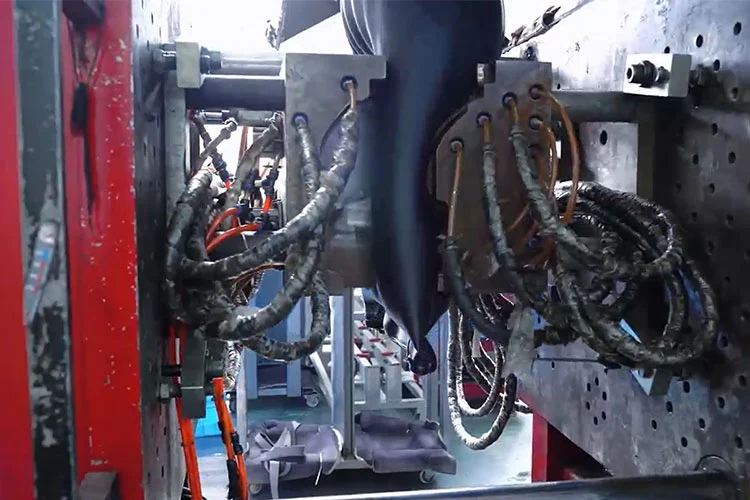
BEWELL's manufacturing page publishes this nine-stage route: sample confirmation, product development, mold manufacturing, injection molding, fabric-cover design and production, product assembly, quality inspection, bulk-production approval, then packing and shipment.
That sequence gives an auditor a practical route through the site. Start with the released sample and current drawings. Move to tooling and molded components, then the sewing area, line-side parts, assembly checks, finished inspection and packing. At each transfer, pick one real batch reference and follow it forward. A process chart on the wall is useful only if the lot, operator, result and disposition can also be found in records.
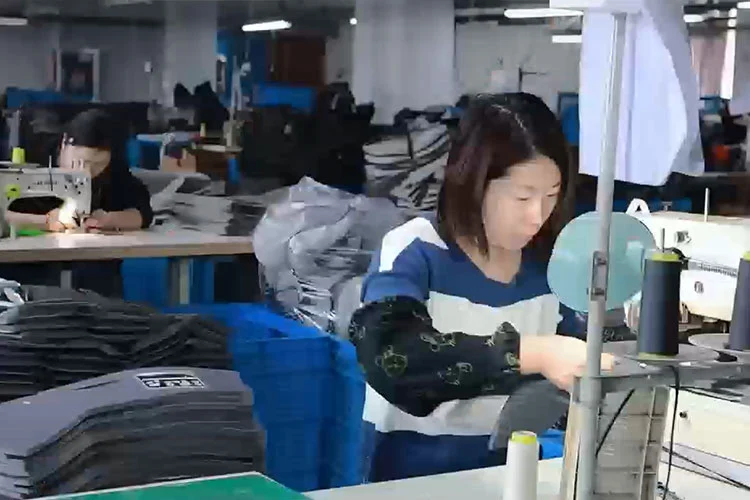
This is also where a buyer should separate process ownership from inspection. A factory can inspect an outsourced part well, but the risk and response time differ from an in-house process. Record both situations accurately instead of giving automatic credit for "full production."
5. Treat UN R129 approval and Conformity of Production as two checks
The current UN Regulation No. 129 publication 2026/1534 states that an approved Enhanced Child Restraint System must be manufactured to conform to the approved type. It also requires the minimum Conformity of Production controls in Annex 12. The normal frequency of Type Approval Authority verification is twice a year.
That distinction changes the audit. The approval communication answers, "What type was approved?" COP evidence answers, "How does current production continue to match it?" You need both.
| Evidence | Question it answers | Weak response |
|---|---|---|
| Approval communication | Who made the approved type, which model it is and which configuration is covered | A cropped certificate image with no model pages or annexes |
| Current controlled specification | What parts, materials and drawings production should use now | A sales catalogue without revision control |
| COP plan and results | How production conformity is sampled, checked and reviewed over time | One old crash-test video with no model or sample identity |
| Change record | How a material, supplier, part, label or process change was assessed and released | An email saying the replacement is "equivalent" |
| Nonconformity and corrective action | What happens when a check fails | A claim that failures never occur |
For a deeper model-and-batch review, use the UN R129 Conformity of Production guide for car seat buyers.
6. Use ISO 9001 as a system check, not a product approval
ISO describes ISO 9001 as a quality-management-system standard. It covers how an organization establishes, operates, evaluates and improves processes. It does not certify that a named car seat has passed UN R129.
Read the certificate itself. Check the exact legal name, site address, certified activities, standard edition, issue and expiry dates, certification body and accreditation details. The ISO page also says certification statements should use the full standard reference rather than the shortened phrase "ISO 9001 certified." This matters during the 2026 edition transition: record the edition on the supplier's actual certificate and confirm its transition status with the certification body instead of declaring it invalid from the year alone.
Do not combine claims: an ISO 9001 certificate applies to the organization's quality system within its stated scope. A UN R129 approval applies to a defined child-restraint type. Neither substitutes for the other, and neither replaces a buyer's check that the ordered product and current production records match.
7. A real document cross-check: BEWELL BW25
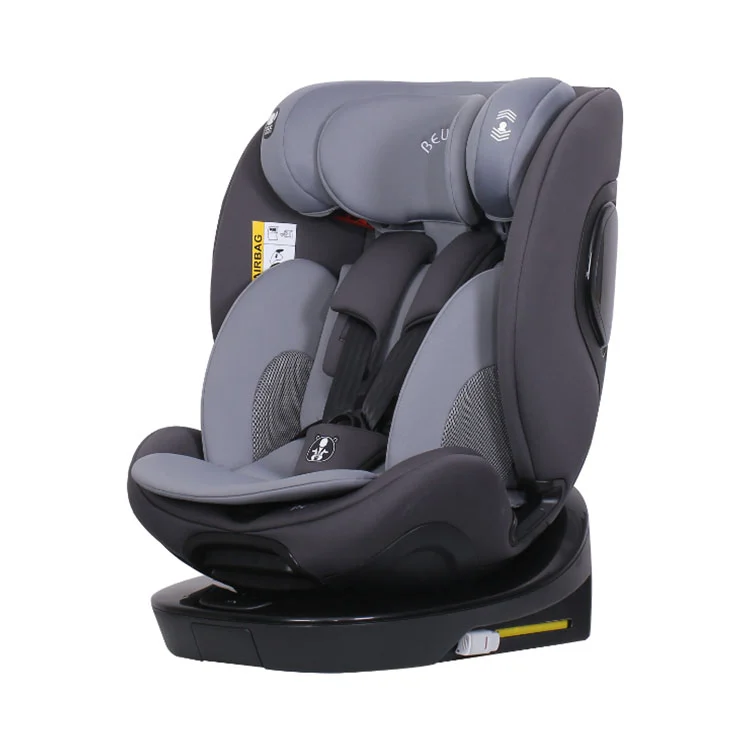
BEWELL's current BW25 product page identifies the model as a support-leg seat and publishes a net weight of 13.3 kg, carton dimensions of 53 x 45 x 61 cm and a 40HQ loading quantity of 560 units. Those are commercial and logistics fields. The approval question needs a different document.
The downloadable BW25 approval communication identifies Ningbo Bewell Baby Products Manufacturing Company., Ltd. as the manufacturer, BW25 as the manufacturer's designation and E8*129R03/09*14928*00 as the approval number. It records 40 to 105 cm for i-Size universal ISOFIX use and 100 to 150 cm for i-Size booster-seat use.
| Audit field | Published BW25 evidence | What the purchase file still needs |
|---|---|---|
| Manufacturer and model | Named in the approval communication | Seller-to-manufacturer relationship and factory-site confirmation |
| Approved use range | 40 to 105 cm i-Size universal ISOFIX; 100 to 150 cm i-Size booster seat | Quoted configuration, current extension, label and instruction match |
| Commercial packing data | 13.3 kg net; 53 x 45 x 61 cm carton; 560 units per 40HQ | Approved packaging sample and loading confirmation for the buyer's version |
| Current production conformity | Not established by the product page or approval communication alone | COP, batch, BOM, inspection and change-control records |
This example is intentionally narrow. It shows how to verify one model without turning a company brochure into a blanket product claim. Repeat the same cross-check for every model included in the purchase order.
8. Score evidence quality, not how polished the tour looks
A simple score keeps the auditor from rewarding a good presentation more than a traceable record. Use the scale below for each audit item, but keep the stop conditions separate. A high total should never cancel a missing approval identity or an unexplained safety-relevant change.
Evidence score for each audit item
Write findings as facts. "Calibration control weak" is too vague. A usable finding names the tool ID, audited line, displayed calibration status and the records reviewed. Fill those fields only with observations from the audit. Do not pre-fill findings from a template.
9. If the first audit is remote, make the evidence live
A remote audit can screen a supplier before travel, but prerecorded clips are easy to detach from the quoted model and current date. Ask for a live route through the site, chosen in the moment, while the auditor holds the document index.
- Begin outside with the site address and company signage, then enter without a cut.
- Choose one model and ask the host to show its mold or tooling identity, line-side parts, work instruction, inspection point and finished sample.
- Select one recent production or inspection record during the call. Ask to see the corresponding equipment ID and material or batch reference.
- Have the host open the original approval communication and current ISO certificate rather than sharing screenshots prepared for sales.
- Record open questions, responsible owner, required evidence and due date. Do not mark an item passed because the camera could not reach it.
Use the later baby car seat sample inspection to verify the physical configuration before bulk release. Supplier approval and sample approval are connected, but they are not the same decision.
10. Put audit findings into the purchase controls
An audit report that stays in procurement's folder does not control production. Move the relevant findings into the specification, approved sample, quality agreement, change-notification rule and pre-shipment inspection plan.
| Audit finding | Purchase control | Release evidence |
|---|---|---|
| Critical component or supplier needs buyer visibility | Named BOM line and written approval before substitution | Current BOM, supplier record and incoming-lot evidence |
| Artwork versions can be mixed | One controlled label, manual and carton register | Photographed packed sample matched to revision |
| Functional check is defined but not tied to the batch | Required inspection frequency and record field | Batch inspection report with model and lot identity |
| COP evidence needs model-level confirmation | Document submission milestone before shipment | Applicable record accepted by the responsible reviewer |
| Packaging or carton data changed | Revised packing specification and loading confirmation | Final carton measurement, gross weight and loading plan |
Close findings with evidence, not promises. If a correction changes a component, material, supplier, drawing, manufacturing process or approved information, route it through the product's change-control and approval review before accepting it.
Questions importers ask about child car seat factory audits
What should I check before approving a baby car seat factory?
Match the seller, manufacturer, product approval holder and ISO certificate holder first. Then trace one quoted model through its approval communication, controlled specification, BOM, incoming parts, production stages, inspection records, COP evidence, approved sample and packed-product artwork.
Does ISO 9001 prove that a child car seat is approved to UN R129?
No. ISO 9001 concerns an organization's quality management system within the certificate's stated scope. UN R129 approval concerns a defined child-restraint type. Check both documents and confirm that they relate to the supplier, site and model you are auditing.
How do I verify that an R129 approval belongs to the quoted model?
Read the complete approval communication and compare the approval number, manufacturer's name, manufacturer's designation, category, size range, orientation and restraint mode with the quote, product label, instructions and physical sample. Do not rely on a certificate cover or an orange-label photograph alone.
Can I audit a child car seat supplier remotely?
A live remote audit can screen the supplier and close defined evidence items. Follow one model through a live factory route and select records during the call. Mark anything the camera or documents cannot verify as open; use an onsite or independent inspection when the remaining risk requires it.
What information should I send when requesting a factory audit?
Send the destination market, required approval, factory and buyer model codes, size range, installation method, customization scope, first-order quantity, forecast, audit type, target date and document list. State whether you are screening a supplier, approving a model or releasing bulk production.
Request evidence for one model, not a generic factory presentation
Send enough detail for the product team to build a model-specific document index and production walkthrough. This makes the first response useful and shows which evidence is available before you schedule an onsite or remote review.
Include in your audit brief
- Destination country and applicable approval regime
- BEWELL model or product-page link
- Required size range and installation configuration
- Buyer brand and customization scope
- First order, annual forecast and target shipment
- Remote, onsite or third-party audit preference
- Your required document list and decision deadline
Ask the response to identify
- Legal manufacturer and production-site details
- Applicable approval communication and extension
- ISO certificate entity, site, scope and edition
- In-house and outsourced production stages
- Model-specific inspection and COP evidence
- Sample, artwork and change-control references
- Evidence available now and open items
Email the same brief to tic@nbbewell.com. The response should confirm which approval, production and quality records apply to the exact model and customization you named.