

A type approval identifies an approved child restraint. Conformity of Production asks a different question: how does the manufacturer keep seats made later consistent with that approved type? This guide turns that question into records a buyer can request before approving a sample or shipment.
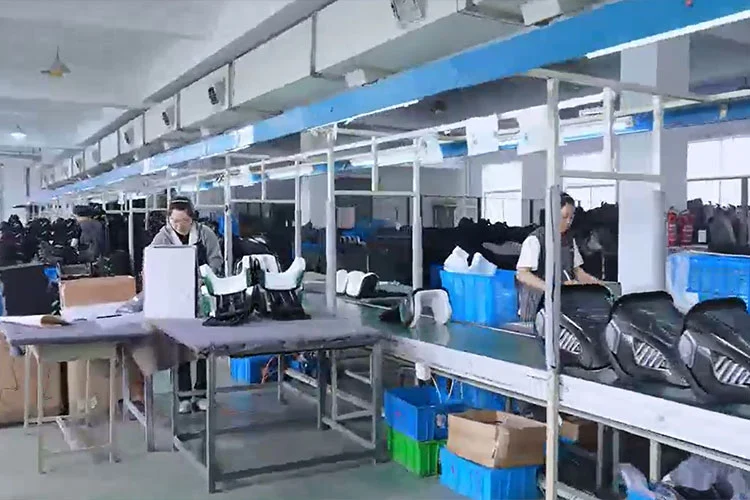
When an importer asks, "Do you have CoP?", a supplier can answer yes without telling the buyer what was controlled, which model was sampled, what revision was tested or what happened after a failure. The question is too broad to produce an auditable answer.
We prefer to start with a single approved model and a single production stage. That immediately exposes missing links. If the approval names BW25 but the inspection sheet records only a buyer SKU, someone still has to prove that both names refer to the same controlled configuration. If a test report has no sample or revision identity, a passing result cannot be assigned confidently to the goods being purchased.
This is also why CoP should be discussed before bulk production, not collected as a folder after shipment. The buyer and factory first agree what must remain fixed, which changes need review, what records will be available and who can release product after a deviation.
1. Type approval, production qualification and CoP are not the same
The current consolidated publication of UN Regulation No. 129 separates production qualification in Section 9 from Conformity of Production in Section 10. Buyers should preserve that separation in their document lists.
Type approval
Defines the Enhanced Child Restraint System type accepted by the approval authority. Its communication identifies the manufacturer, model, approved use and approval number.
Production qualification
Section 9 requires qualification for each new approved ECRS type. The Technical Service selects the test conditions and checks the required markings and instructions.
Conformity of Production
Section 10 requires approved ECRSs to be manufactured in conformity with the approved type. Annex 12 provides the minimum control procedures.
A production qualification result is not a permanent exemption from process control. In the other direction, a neat in-process inspection sheet does not prove that the inspected configuration is the approved one. The approval identity, production qualification and ongoing controls have different jobs, and the buyer's file should show how they connect.
2. Four numbers and rules from the current R129 text
| Current provision | What the regulation says | What a buyer should not infer |
|---|---|---|
| Five ECRSs | For production qualification, five ECRSs are subjected to the dynamic test under the conditions selected by the Technical Service. | This is not a statement that every routine production lot uses a five-seat sample. |
| Each new type | Each new approved ECRS type is subject to production qualification. Where the approval covers modules, each module is qualified. | One model's qualification does not automatically cover every other model or module. |
| Twice a year | The Type Approval Authority may verify the controls used at production facilities at any time. Section 10 gives twice a year as the normal frequency. | This is an authority-verification frequency, not a factory's complete inspection or test schedule. |
| Every modification | Section 11 requires every modification of the ECRS type to be notified to the Type Approval Authority that approved it. | A factory or buyer should not declare a change harmless without following the applicable review route. |
The same current text allows approval to be withdrawn if an ECRS bearing an approval mark fails random checks or does not conform to the approved type. That makes identity and change control part of the compliance question, not administrative housekeeping.
3. Build one product identity line before requesting test records
Every record becomes more useful when it begins with the same identity. For a child car seat, "R129 car seat" is not an identity. At minimum, use the full approval number, factory model, legal manufacturer, approved configuration and current controlled revision.
Bewell currently links public approval communications from two product pages. The BW25 page links approval E8*129R03/09*14928*00. The BW15 page links extended approval E8*129R03/08*13652*01. The final *00 and *01 are part of the identity, not optional characters.
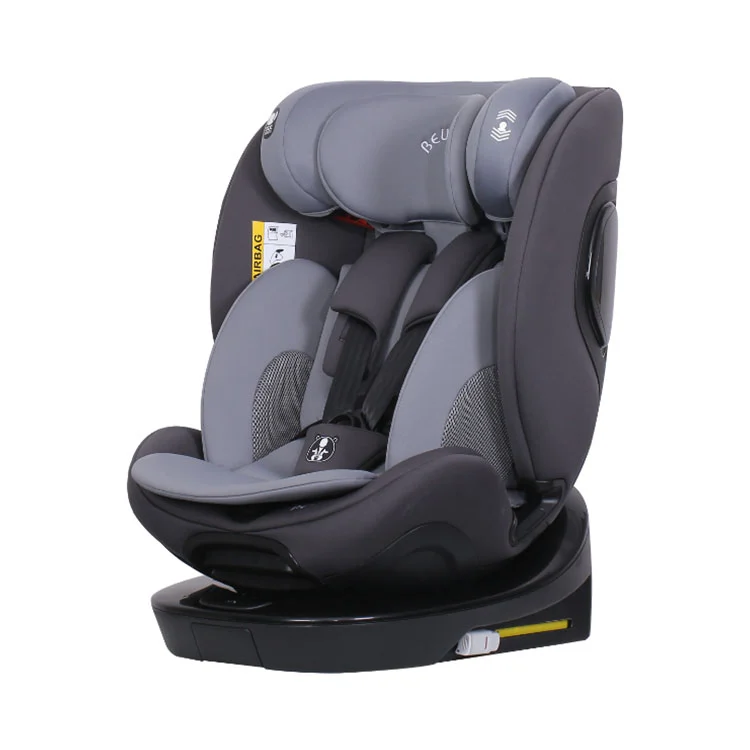
A workable identity line
- Factory model and buyer SKU
- Full approval number, including extension
- Legal manufacturer and production site
- Installation, orientation and restraint configuration
- Approved size range applicable to that mode
- Controlled bill of materials, drawing and work-instruction revisions
- Label and instruction-manual revisions
A buyer-brand SKU can be added to this line, but it should not replace the factory model or approval number. The cross-reference is what allows an incoming-material record, assembly check, finished-seat test and shipment inspection to point back to the same approved type.
For a fuller explanation of certificate fields, use our separate guide on how to verify a UN R129 child car seat approval. That article checks approval identity. This article starts where that check ends: controlling later production.
4. Map Bewell's nine production stages to evidence
Our current manufacturing page publishes nine stages: sample confirmation, product development, mold manufacturing, injection molding, fabric cover design and production, product assembly, quality inspection, bulk production approval, and packing and shipment. A stage name tells a buyer where work happens. It does not yet show what was checked.
For procurement, we would translate the nine-stage route into a shorter evidence map. The records below are practical buyer requests, not a claim that UN R129 prescribes these exact document titles.
| Published stage | Evidence to identify before production | Mismatch it can expose |
|---|---|---|
| Sample confirmation | Signed sample identity, approval number, model, configuration, photos and approved deviations | The buyer approves a visual sample that is not the controlled production reference |
| Product development | Current specification, bill of materials, drawing index and open approval questions | Marketing requirements or customization conflict with the approved type |
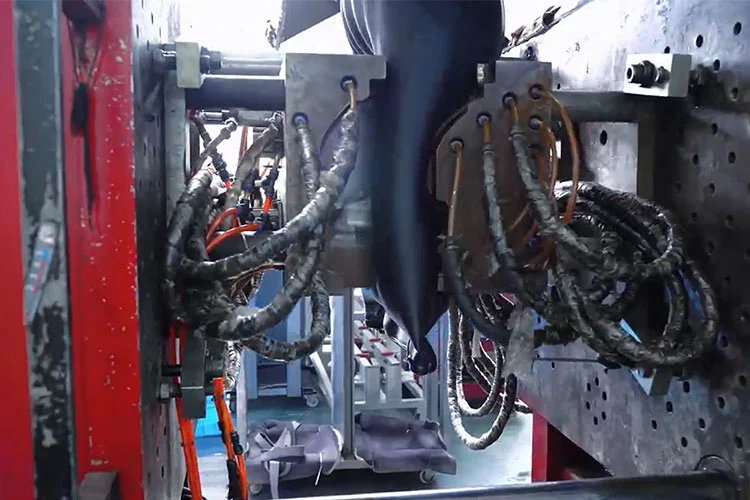
| Mold manufacturing and injection molding | Tool identity, part drawing revision, material identity, setup approval and dimensional checks | A molded component comes from the wrong tool, material or revision |
| Fabric cover design and production | Fabric and padding specification, supplier lot, colour reference, pattern revision and applicable material checks | A trim change affects composition, fit, routing or the approved information set |
| Product assembly | Work-instruction revision, key component traceability, functional checks and operator or line record | Harness, buckle, ISOFIX, support-leg or routing details are assembled inconsistently |
| Quality inspection and bulk approval | Inspection plan, sample identity, result, acceptance rule, release signature and unresolved deviation status | Product is released from a pass stamp that has no scope or acceptance basis |
| Packing and shipment | Label, manual and carton revisions; quantity and lot cross-reference; final release record | The seat is correct but the approval mark, instructions or market packaging is not |
5. Turn a quality-control claim into an auditable record
The current Bewell quality-control page publishes five test categories: structural strength, impact, material, service-life and fabric testing. It also states an engineering-test target of at least 10,000 rotation and disassembly cycles. These details are more informative than a generic "strict QC" claim, but a buyer still needs to ask what they describe.
Take the 10,000-cycle statement as an example. Before using it in a product specification or retailer claim, request the exact model, mechanism, test method, sample quantity, cycle definition, acceptance criteria, date and result. "At least 10,000 cycles" on a general capability page is not the same as a dated result for the model and revision in your order.
Seven fields that make a test record useful
- Product identity
- Factory model, approval number, configuration and controlled revision
- Sample identity
- Serial, lot or other traceable reference and how the sample was selected
- Method
- Applicable regulation, standard, work instruction or approved test procedure and its revision
- Conditions
- Equipment, setup, conditioning and operating parameters needed to interpret the result
- Acceptance rule
- Numeric limit, required function or other pass condition defined before the test
- Actual result
- Measured value or observed outcome, not only a pre-filled pass box
- Decision trail
- Date, reviewer, release status and treatment of any nonconformity
The same rule applies to impact or material claims. A web page may tell a buyer which questions a factory is prepared to discuss. It should not be treated as independent proof that every model, colour, material lot or production batch has the same result.
6. Use three production gates instead of one final inspection
A final inspection can find visible damage, wrong quantities and some functional problems. It cannot reconstruct which resin lot entered a molded shell or whether a changed instruction sheet was reviewed before printing. For buyer oversight, we divide the record request into three gates.
Incoming status
Identify safety-relevant materials and components, their specifications, supplier or lot references, inspection or declaration status, and what happens when the identity does not match.
In-process status
Record the product revision and production line, then check defined assembly and functional points before later operations hide them.
Release status
Confirm finished-seat inspection, applicable tests, approval marking, instructions, carton identity and the person authorised to release the lot.
The appropriate checks depend on the approved product and the factory's authorised control plan. For a rotating ISOFIX seat with a support leg, the review points will not be identical to those for a forward-facing booster. The buyer's document request should therefore name the model and configuration instead of copying a generic checklist across the whole range.
From a factory perspective, this reduces avoidable argument. If the buyer defines only "R129, pass inspection", the factory has to guess whether the buyer wants certificate identity, production records, test evidence, label approval or all four. A model-specific index allows both sides to see which item exists, its revision, who controls it and whether it can be shared before confidential files are requested.
7. Treat customization as a change-control question
Private-label work often begins with changes that sound commercial: new fabric, a brand label, a different manual, new packaging or a feature request. The current UN R129 text is direct: every modification of the ECRS type must be notified to the Type Approval Authority that approved the type. The authority may decide compliance remains unaffected or may require a further report from the Technical Service.
That does not mean every artwork edit automatically requires a new dynamic test. It does mean the buyer and factory should not invent their own exemption. The safe workflow is to identify the proposed difference, compare it with the approved information and controlled production specification, then record the applicable approval or review decision before release.
| Proposed change | Question to resolve | Record to update or cross-reference |
|---|---|---|
| Buyer brand or label artwork | Does the trade name, approval mark and mandatory information follow the accepted route? | Label drawing, approval reference, artwork approval and sample photo |
| Fabric, padding or colourway | Does the change affect an approved material, component, performance or information-document entry? | Material specification, bill of materials, review decision and applicable test evidence |
| Harness, buckle, ISOFIX or support-leg component | Is the proposed part identical to the controlled part, or does it change the ECRS type? | Component and drawing revision, approval review and validation route |
| Instruction or packaging language | Are warnings, installation steps, approved modes and size ranges still accurate for the market? | Manual and carton revision, translation approval and final packed-sample check |
The different endings in the public BW25 approval number (*00) and BW15 extended approval number (*01) are useful reminders that extension status belongs in the project identity. They do not tell a buyer what a future requested change will require. That decision must follow the applicable approval route.
8. Ask what happens after a record fails
A CoP folder made only of passing examples leaves out the decision that matters most: what happens when a part, assembly, marking or test does not conform?
Before production, ask the supplier to show the expected record path for a failure. A practical response should identify the affected product, prevent unintended release, determine how far the issue extends, record the disposition and corrective action, and define the conditions for retest or release. Where the issue may affect the approved type, the applicable approval authority or Technical Service route also has to be considered.
Nonconformity trail a buyer can audit
- Problem
- Requirement, actual finding, date and record reference
- Containment
- Which materials, work in process, finished units or shipments were held
- Scope
- How lot, date, line, component and model traceability defined the affected population
- Disposition
- Rework, replacement, rejection or other authorised decision and responsible person
- Verification
- Inspection or retest evidence needed before release
- Prevention
- Root cause, corrective action, updated control and effectiveness check
This is a buyer's recommended record set, not a claim that every item has one mandatory R129 form. Its value is practical: a pass/fail result becomes a controlled production decision rather than an isolated screenshot.
9. Send a CoP request that a factory can answer
A useful request is narrow enough for the factory to return an index without disclosing every proprietary document. Begin with the destination market, one model, its proposed configuration, the buyer-brand changes and the current order stage. Then request references before requesting complete files.
| Request item | Minimum useful response | Weak response to clarify |
|---|---|---|
| Approved product identity | Model, full approval number, manufacturer, configuration and current extension | "All our seats are R129" |
| Controlled product baseline | Index or revision references for specification, bill of materials, drawings, label and instructions | An undated product sheet |
| Production qualification | Applicable qualification reference, model or module scope, date and Technical Service connection | A test photo without document identity |
| Routine controls | Control categories, frequency or trigger, sample identity, acceptance rule and retained record | "100% QC" without defined checkpoints |
| Change history | Requested buyer changes, approval-review status, effective revision and affected records | "This is only cosmetic" without a documented review |
| Nonconforming product | Containment, traceability, disposition, corrective action and release authority | A replacement promise with no affected-lot analysis |
The result should be an evidence index, not a file dump. Each line can state the document name, number, revision, date, model scope, owner and sharing status. That structure gives a quality manager enough information to identify missing evidence and lets the factory protect drawings or reports that require controlled access.
Questions buyers ask about UN R129 CoP
Is Conformity of Production the same as a UN R129 type approval?
No. Type approval identifies an approved ECRS type. Conformity of Production is the ongoing control needed to keep manufactured products in conformity with that approved type. A buyer should connect the approval number and controlled revision to production and release records.
Does UN R129 require five child restraints for every routine production test?
No. The current text specifies five ECRSs for the production-qualification dynamic test of a new approved type. That number should not be presented as the sampling quantity for every routine production lot. The applicable CoP plan and Annex 12 procedures must be reviewed separately.
Can one test frequency prove the whole car seat CoP system?
No. A frequency says how often one activity occurs. It does not by itself prove approved-type identity, material and component control, production records, markings, instructions, change control, traceability or the response to a failure.
What should match on a model-specific CoP record?
At minimum, match the factory model, full approval number and extension, legal manufacturer, configuration, controlled product revision, sample or lot identity, test or inspection method, date, acceptance rule, actual result and release decision.
What happens when a private-label buyer changes a car seat?
The proposed difference should be compared with the approved information and controlled production specification. UN R129 requires every modification of the ECRS type to be notified to the approving authority, which determines whether compliance remains unaffected or further Technical Service reporting is needed.
Request a model-specific CoP evidence index
Do not begin with "send all quality documents". Give our product team one model and the exact commercial change you are considering. We can use that scope to identify which approval, production and release references need to be discussed before a sample or bulk order moves forward.
Send these project facts
- Destination market
- Bewell model or product-page link
- Buyer brand and proposed SKU
- Installation, orientation and size range
- Requested material, label, manual or feature change
- Stage: selection, sample, pilot or bulk production
Ask the response to identify
- Full approval identity and current extension
- Controlled specification and artwork revisions
- Applicable production-qualification and CoP record index
- Test and inspection categories with record fields
- Change-review status and unresolved questions
- Lot release and nonconformity references
Email the same brief to tic@nbbewell.com. Availability and disclosure of specific controlled documents will be confirmed for the named model and project stage.