

The process name tells you how a plastic part is formed. It does not, by itself, tell you whether a finished child car seat is safer, lighter, cheaper or easier to ship. Buyers need to connect the process to a specific part, material, drawing, assembly and approved product configuration.
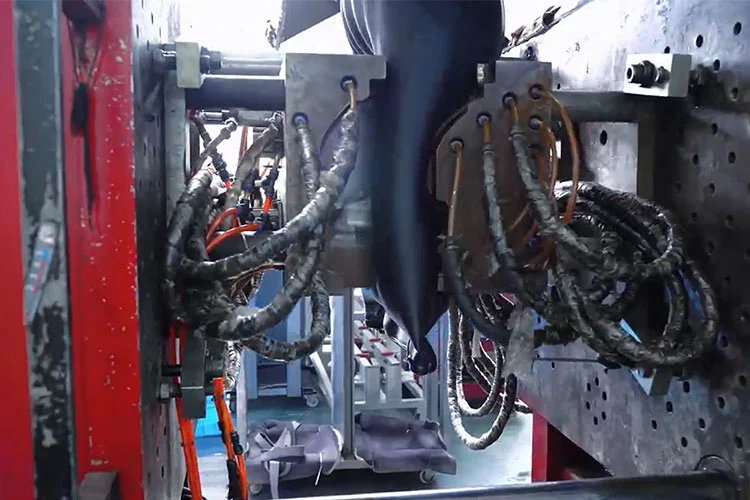
A buyer sometimes asks us, "Which is better, blow molding or injection molding?" We cannot answer that responsibly without seeing what the buyer wants the part to do. A hollow shell, a narrow belt guide and a part with several bosses or snap-fit details do not present the same molding problem.
The first factory question should be: which part are we discussing? The second is: which dimensions and interfaces make that part acceptable? Only then does the process comparison become useful. Otherwise, two technical terms get turned into two marketing labels.
1. How blow molding and injection molding form a part
A hollow parison is inflated
The British Plastics Federation describes extrusion blow molding as a process in which an extruder produces a hollow tube of molten polymer, called a parison. The mold closes around it, then air inflates the material against the mold surface. After cooling, the mold opens and the part is ejected.
The outside of the part follows the mold. The inside is created by the inflated parison, not by a solid core that defines every internal surface. Parison control and the way material stretches therefore matter to wall distribution.
Molten polymer fills a cavity
The British Plastics Federation describes an injection machine as a heated barrel with a reciprocating screw. The screw plasticizes the material and pushes it through gates and runners into a temperature-controlled split mold.
The mold tool defines the part shape. That route can form detailed features directly, but the drawing and sample still need to control how those features fill, cool and fit the mating parts.
| Review point | Blow-molded part | Injection-molded part |
|---|---|---|
| How material enters the shape | A molten parison is enclosed and inflated with air | Molten polymer is injected through a feed system into the cavity |
| Geometry to discuss early | Hollow volume, pinch-off and trim areas, openings and wall distribution | Gates, ribs, bosses, snap fits, ejector locations and assembly faces |
| Sample records worth requesting | Defined wall-check locations, trimmed-edge review and assembly fit | Critical dimensions, gate and ejection review, and assembly fit |
| Unsafe shortcut | Assuming a hollow part is automatically lighter or safer | Assuming visible detail means the finished seat performs better |
This comparison concerns conventional extrusion blow molding and injection molding. Injection blow molding is a separate process, often used for hollow containers. Buyers should make suppliers name the actual process rather than use "blow molding" loosely.
2. Name the car seat part before specifying the process
"The car seat is injection molded" can be too broad to put in an RFQ. A finished seat can contain several plastic parts, textiles, restraint hardware, adjusters, labels and packaging. The process description should point to a part number or a marked component on the drawing.
For each relevant molded part, record:
- the part name and drawing revision;
- the specified polymer and grade, not only a general word such as "plastic";
- the molding process and any secondary trimming, drilling or assembly work;
- critical dimensions and the mating part or hardware;
- the sample or golden-sample reference used for acceptance;
- the approved child restraint type or configuration in which the part is used.
That last line matters. A buyer may want a different shell opening, belt route, connector, cover attachment or label position. A factory can judge whether the requested detail is a cosmetic change only after comparing it with the current drawing and approved configuration. The molding process does not decide the regulatory impact by itself.
Our rule at the quotation stage: if the request says only "blow-molded shell" or "injection-molded seat," the brief is not ready for tooling. We first tie the term to a model, component, material, target function and acceptance method. This avoids a common failure: the buyer and factory use the same process word while picturing different parts.
3. What two current Bewell models do and do not tell us
Current product pages give us two concrete examples. They are useful because they name the molding route. They are not a controlled experiment.
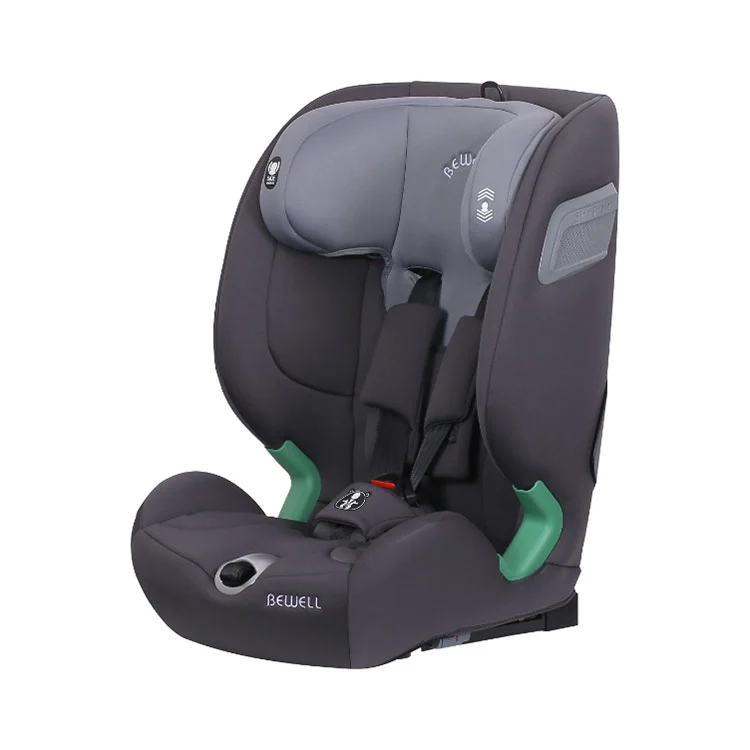
BW17
The page identifies whole-body blow molding and HDPE. It lists ISOFIX plus top tether, a 76 to 150 cm forward-facing range, 8.8 kg net weight, carton dimensions of 48 x 45 x 60.5 cm and 525 units in a 40 ft HQ container.
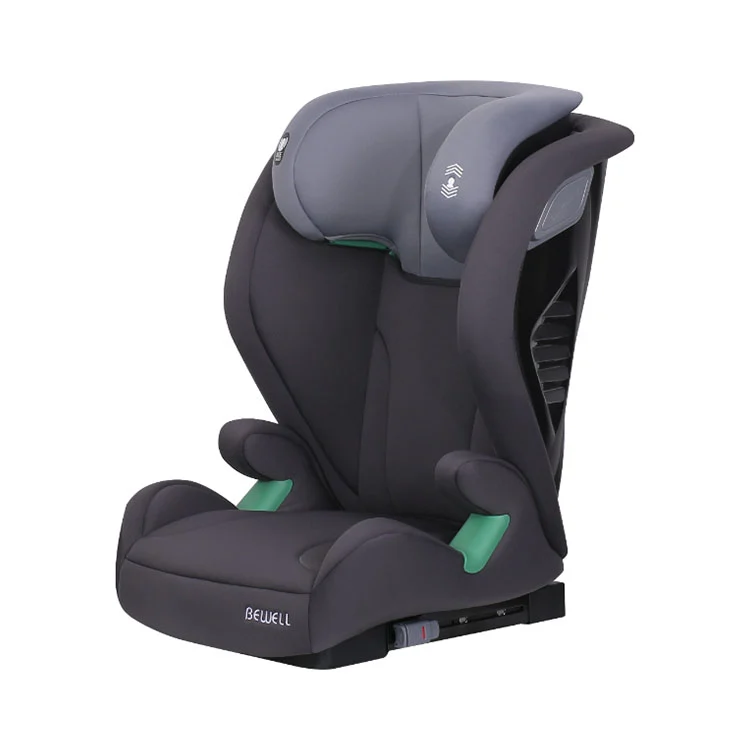
BW15
The page identifies injection molding. It lists a 100 to 150 cm range, ISOFIX, 14 headrest positions, 6.2 kg net weight, carton dimensions of 50.5 x 44.5 x 58.5 cm and 760 units in a 40 ft HQ container.
BW15 is lighter on its published product page and has a higher published 40 ft HQ loading quantity. It would be wrong to credit those differences to injection molding. BW15 and BW17 have different restraint configurations, functions, shapes, hardware and cartons. We would need the same design, with controlled materials and packaging, to isolate the effect of the molding process. These two pages do not provide that test.
This is why a process comparison should not begin with a generic cost or weight claim. Compare the actual candidate models first. If the buyer wants a new part, compare the proposed drawings and manufacturing route. Product-level outcomes depend on more variables than the process name.
4. Six things the molding process does not prove
| Claim | Why the process label is insufficient | Evidence to review instead |
|---|---|---|
| "This seat is safer" | Safety applies to a defined child restraint design and configuration, not to the word used for one forming process. | Applicable approval, product identity, instructions, labels and the evidence for the quoted configuration |
| "The part is stronger" | Strength depends on geometry, material, wall or section design, process control and the applicable test method. | Drawing, material specification, inspection plan and relevant test result |
| "The seat is lighter" | A finished-seat weight includes more than the molded structure. Different models cannot isolate the process effect. | Net weight for the exact model and an engineering comparison of the proposed parts |
| "Freight will be lower" | Container loading depends on the finished product and carton, not only the shell process. | Carton dimensions, units per carton and verified container-loading quantity for the model |
| "Tooling will be cheaper" | Tool cost changes with size, geometry, material, finish, cavities, validation and the requested production route. | Reviewed drawing, tooling scope and written quotation |
| "Quality will be consistent" | Either process can make unacceptable parts if the input, tooling, settings or inspections are poorly controlled. | Approved sample, control points, inspection records and change control |
We reject process-only claims for a simple reason: they cannot tell production which result the buyer will accept. "No flash beyond the signed sample at this identified interface" can be checked. "High-quality injection molding" cannot.
5. What we need to review before a mold decision
Bewell's current customization page lists product structure, installation interface, height range, material, appearance, packaging and language content as separate decisions. It also shows a route from the buyer's idea to drawing, prototype, custom molding, sample confirmation and bulk production.
That sequence is sensible only if the drawing review is specific enough. From a factory perspective, these are the points that usually change the molding conversation:
Product and market definition
- destination market and intended product category;
- target child size range and installation method;
- existing Bewell platform or a new concept;
- features that are mandatory and features that are optional.
Part and interface definition
- part number, CAD file and drawing revision;
- material grade and color requirements;
- belt routes, attachment points and mating hardware;
- dimensions that affect assembly, adjustment or labeling.
Tool and process definition
- molding route for each identified component;
- gate, parting, pinch-off, ejection or trim locations that need review;
- secondary operations and assembly sequence;
- which change requests require a drawing or approval review.
Acceptance definition
- critical dimensions and how they will be measured;
- appearance zones and the signed reference sample;
- fit checks with the correct mating parts;
- document owner, revision and sample sign-off record.
A buyer does not need to design the mold. The buyer does need to state what the molded part must do and which variations are unacceptable. Our engineers can then explain whether a current platform already covers the request, whether a part modification is possible, and what needs to be confirmed before tooling or sampling.
6. Inspect different failure points on the sample
A generic sample checklist misses the features created by each process. The inspection plan should name locations on the drawing or marked sample. Descriptions such as "check the wall" are too vague for repeatable acceptance.
For a blow-molded part
- identify the pinch-off and trimmed areas, then check whether they match the approved sample and assembly requirements;
- define where wall distribution must be checked, especially where the parison stretches into the shape;
- check warpage and openings against the mating parts, cover and hardware;
- inspect drilled, cut or trimmed features after secondary operations, not only the part as it leaves the mold;
- record the material designation and sample revision used for the check.
The Society of Manufacturing Engineers' blow-molding study guide describes parison programming as a method of controlling wall thickness. That is useful process context, but it does not give a universal wall target for a child car seat. The acceptable locations and values must come from the specific drawing, design and validation records.
For an injection-molded part
- inspect gate and ejector locations against the drawing and visible appearance zones;
- check for incomplete filling, excess material at the split line, sink or warpage where they affect the specified part;
- measure the ribs, bosses, holes, snap fits and assembly faces that control the fit;
- assemble the part with the correct hardware rather than accepting dimensions in isolation;
- keep the machine sample, measurement record and approved revision connected.
Both lists are starting points. The part drawing decides which checks matter and where. If a defect term appears in the inspection form without an acceptance limit, marked zone or signed comparison sample, the factory and buyer can still disagree after measuring the same part.
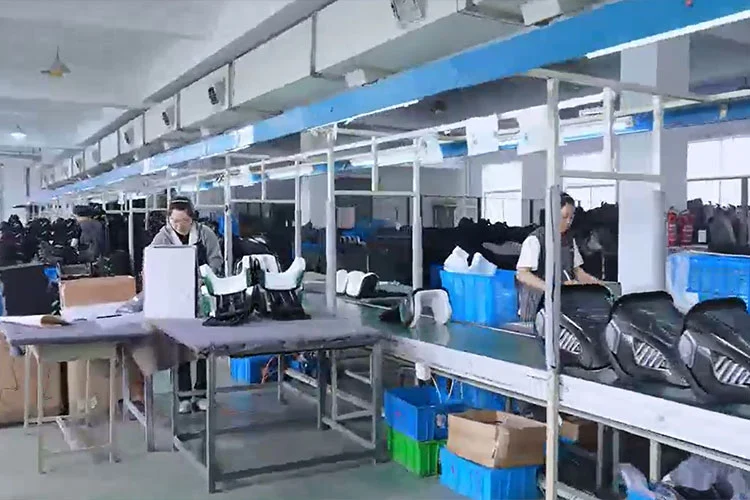
7. Existing platform or new mold: the process decision is different
For an existing Bewell product platform, the useful task is to verify what already exists: model, molded construction, material, functions, published dimensions, approval scope and allowed customization. Changing the molding route is not a routine color change. It can change the part, tooling and the relationship to the approved product.
For a new molded component, the buyer and factory need a controlled path through drawing, prototype, mold, sample and production approval. Bewell publishes that six-stage path on its customization page. Before the mold stage, add a signed design-review record that resolves the molding questions in this article. Before bulk production, add a sample record that resolves the inspection questions.
| Project route | What to verify first | What not to assume |
|---|---|---|
| Existing platform | The current model, process, material, approval and customization boundary | That the platform can take a structural change without further review |
| Modified component | The exact changed feature, mating interfaces and document impact | That a small visible change is technically or legally minor |
| New mold | The drawing, material, process, critical features, sample plan and approval route | That a process name is enough for a firm tooling quotation |
8. Put these details in a molding RFQ
A useful RFQ lets the factory identify an existing route or explain what remains open. Send the target child restraint, not a detached request for plastic processing.
- Name the market and product. Give the destination country, target size range, installation method and intended product category.
- Identify the project route. Link the Bewell model you are considering, or mark the request as a new development.
- Mark the component. Use a part name, drawing, photo or CAD reference so "shell" cannot refer to several pieces.
- State the functions. Record every belt path, hardware interface, adjustment, cover attachment and label area affected by the part.
- State the material information you already control. If the grade is not fixed, ask the factory to document the proposed grade and the reason for it.
- Ask for the process and evidence together. Request the proposed molding route, sample checkpoints, critical dimensions and the change points that require review.
- Separate facts from targets. Mark estimated annual quantity, color plan and packaging targets as buyer inputs, not confirmed factory output.
If your team is still choosing between BW17, BW15 or another platform, send the functional brief first. The answer may be an existing model, a limited customization route or a new-development discussion. Forcing a molding process into the first line of the RFQ can eliminate a suitable platform before the product requirements are clear.
Questions buyers ask about car seat molding
Is an injection-molded car seat automatically safer?
No. Injection molding describes how a plastic part is formed. Safety applies to a defined child restraint design and configuration. Review the applicable approval, model identity, material and design records, instructions, labels and evidence for the exact product being quoted.
Is a blow-molded car seat always lighter?
No. Finished-seat weight depends on the complete design, materials, hardware and features. Bewell's published BW17 and BW15 weights belong to different models, so they cannot isolate the effect of the molding process.
Can one child car seat use both molding processes?
Yes, a finished child car seat can contain several molded components made by different processes. Specify the process by component or part number. Do not use one process label as if it described every plastic part in the seat.
What should be confirmed before a new car seat mold is made?
Confirm the project market and product category, drawing revision, part function, material, molding route, critical dimensions and interfaces, secondary operations, sample-inspection plan and any effect on the approved product configuration.
How can a buyer verify a supplier's molding claim?
Ask the supplier to identify the process for a specific model and component, then connect that statement to the drawing, material record, mold or machine sample, inspection results and assembled product. A factory photo alone does not prove which process made the quoted part.
Send the component brief before asking for a process recommendation
Bewell can compare your requirement with a current product platform or review it as a new molded-part project. A useful reply requires enough detail to identify the part, its interfaces and the acceptance evidence.
Send these buyer inputs
- Destination market and target child size range
- Installation method and required functions
- Bewell model link or new-product drawing
- Marked component, material request and color
- Critical mating parts or hardware
- Estimated order quantity and current project stage
Ask us to return
- Existing-platform match or new-development route
- Proposed process by component
- Material and drawing points still to confirm
- Critical sample checks and assembly interfaces
- Customization boundary for the selected model
- Documents needed before sample approval
You can also email the same brief to tic@nbbewell.com. Attach only project drawings and product requirements that your company is authorized to share.