

It's the question that hits every new parent before the first long drive home from the hospital. Or before a road trip. Or just before that very long traffic jam.
How long can a baby actually be in a car seat?
There's a real answer, and it's not as long as you'd think. Pediatricians call it the 2-hour rule — and most parents have never heard of it.
The 2-Hour Rule: What It Is
Pediatricians — including the American Academy of Pediatrics (AAP) — recommend that babies should not be in a car seat for more than 2 hours at a time within any 24-hour period. That's the rule, in one line.
And it doesn't just mean time in the moving car. If you're using your infant car seat as part of a stroller travel system, or carrying it around while your baby sleeps inside, that counts toward the 2 hours too.
Most parents have never been told this. The rule isn't on the side of the car seat box. It's not in the hospital discharge paperwork. So they assume the car seat is fine until baby fusses — and it isn't.
Why 2 Hours? The Research Behind It
This isn't a guess. It comes from a 2016 study funded by the Lullaby Trust, conducted by researchers at the Great Western Hospitals NHS Foundation Trust, the University of Bristol, and the University of Southampton, and published in the peer-reviewed journal Archives of Disease in Childhood: Fetal & Neonatal Edition (Arya et al., 2017).
What they found:
- Both full-term and preterm babies showed signs of cardiorespiratory stress.
- Heart rate and breathing rate went up.
- Blood oxygen levels dropped, compared to lying flat in a cot.
- This happened even during the static 30-minute test — before motion was added.
The takeaway: an infant car seat is genuinely safe for transport, but it's a semi-upright, vibrating environment that newborns aren't built for over long stretches. That's why the 2-hour limit exists.
Until What Age Does the 2-Hour Rule Apply?
There's no fixed age — the AAP and pediatricians base it on a developmental milestone:
Your baby can stay in a car seat longer than 2 hours once they can sit up unassisted and fully control their head and neck.
For most babies, that lands somewhere between 4 and 6 months. Some hit it earlier, some later. The 2-hour rule applies the entire time before that milestone — and that includes premature babies, who may need it longer.
Before that point, every car-seat session over 2 hours puts unnecessary pressure on a tiny spine that hasn't finished developing, in a position that wasn't designed for sleep or rest.
Planning a Long Trip With a Newborn
Plenty of newborns will need to travel further than 2 hours — hospital discharges, holiday trips, family visits. The rule isn't "never travel." It's "build breaks in."
A few practical tips for trips over 2 hours:
- Stop every 2 hours, for at least 15 minutes. Take baby out of the seat. Let them stretch out flat — a portable bassinet or a flat surface in the back seat works.
- Have a second adult in the back if possible, to watch baby's head position and breathing. Babies' heads can slump forward when they fall asleep upright, which can restrict their airway.
- Plan trips over several hours across two days, especially for newborns under 3 months.
- Choose a car seat with a true reclining position for newborns. A flatter recline angle keeps the airway more open.
If you're shopping right now, look for an infant-capable convertible car seat with a 360° rotating base — easier loading means more breaks taken, not skipped.
Don't Use the Car Seat as a Sleep Space
The other half of the 2-hour rule — and the one parents break most often: once you arrive, move baby out of the car seat. Even if they're asleep. Even if they look comfortable.
The AAP is clear that infant car seats are not safe sleep environments outside the vehicle. Cribs and bassinets are. The same upright angle and harness that keep your baby safe in a moving car can restrict their airway when they're sleeping unattended.
So the rhythm is: car seat for transport, flat surface for sleep. Don't carry a sleeping baby in their seat from the car to the house to a 90-minute nap on the kitchen counter. Move them.
Choosing a Car Seat Built for Newborns
Not every car seat is suitable from birth. If you're still shopping, here's what actually matters for newborn safety:
- Starts at 40 cm height (or your country's equivalent newborn-suitable spec). That's the minimum size most i-Size seats are designed for.
- Proper newborn recline. The flatter the rear-facing angle, the better for an infant's airway.
- ECE R129 (i-Size) certification. It's the newer European standard that mandates side-impact testing — what you want for the most vulnerable months.
- ISOFIX install with a support leg or top tether. Reduces installation error, the most common car seat mistake.
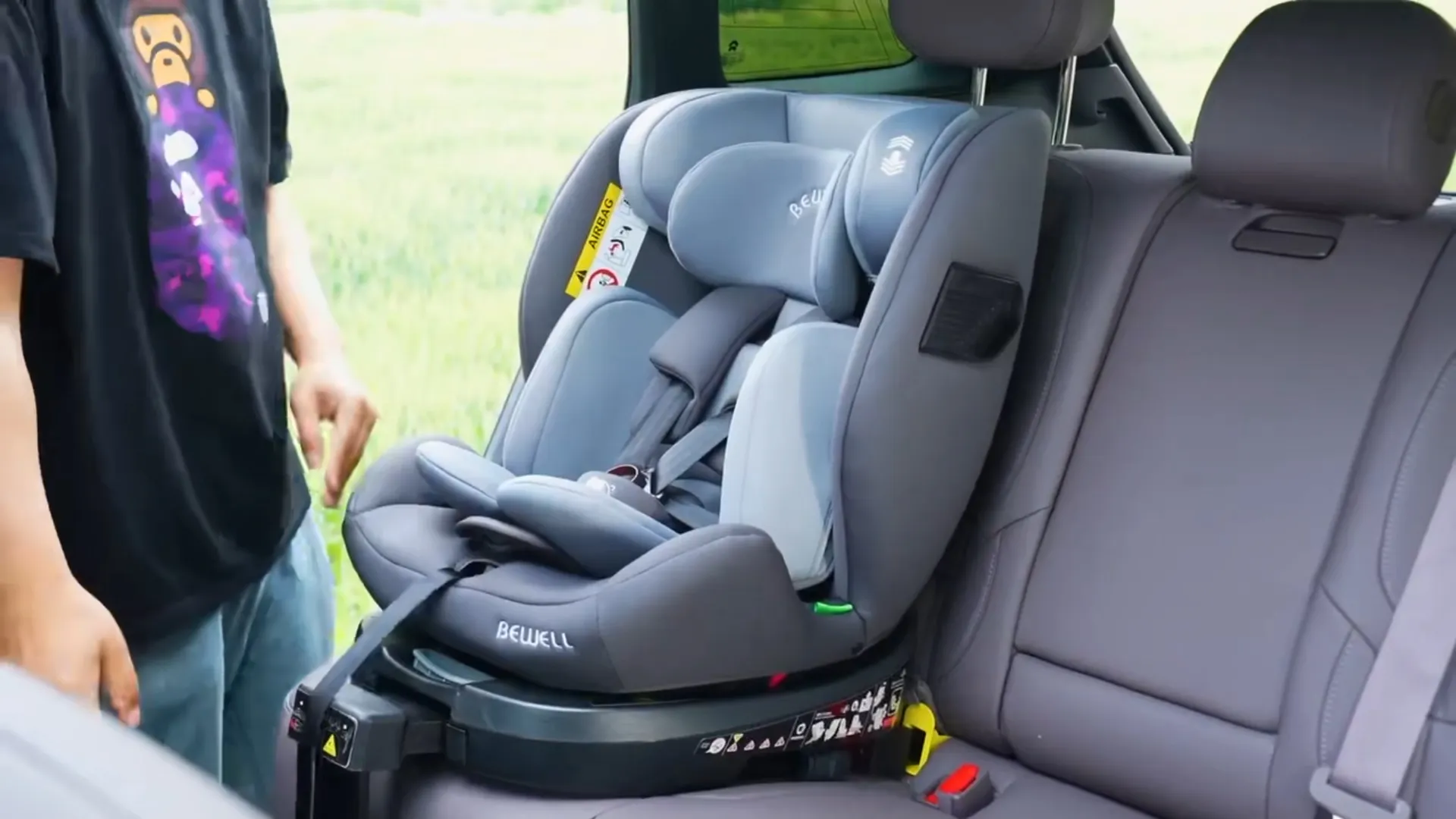
- A 360° rotating base. Not gimmickry — it makes loading and unloading a sleeping newborn realistic, which means the 2-hour breaks actually happen.
All three of our extended rear-facing convertibles — the BW23, BW22, and BW25 — start at 40 cm, rotate 360°, and are certified to ECE R129. The BW22 is the lightest at 7.5 kg if you'll be moving it between cars.
FAQs
Can a newborn be in a car seat for 3 hours?
Not without a break. The 2-hour rule applies to all babies, but especially newborns. If a 3-hour trip is unavoidable, stop at the 2-hour mark for at least 15 minutes — take baby out of the seat and let them lie flat.
Does the 2-hour rule apply to premature babies?
Yes, and arguably more strictly. The 2016 Lullaby Trust study found that preterm infants showed the strongest cardiorespiratory effects in car seats. Some hospitals require a "car seat tolerance test" before discharging preemies for exactly this reason.
What about car seat naps at home?
The AAP advises against using a car seat as a routine sleep space outside the car. Even a 90-minute nap in the carrier on the kitchen floor counts toward the 2 hours, and it puts baby's airway in a less-than-ideal position with no caregiver actively watching.
Is it okay if my baby falls asleep in the car seat during travel?
Yes — sleep in a moving car seat is normal and not dangerous in itself. The issue is duration and what happens after. Keep the trip under 2 hours, monitor baby's head position, and move them to a flat surface as soon as you arrive.
What car seat is best for newborns and long trips?
Look for an i-Size (ECE R129) certified seat that starts at 40 cm with a flat newborn recline, ISOFIX installation, and ideally a 360° rotating base for easier loading. The BW22 is built around exactly that profile.
Until what age can I stop following the 2-hour rule?
Once your baby can sit up unassisted and has full head and neck control — usually 4 to 6 months. After that, the upright position is no longer a concern. Rear-facing for as long as possible still is.
The Bottom Line
Two hours. That's the limit. After that, your baby needs to be out of the car seat, ideally lying flat, before the next stretch.
It feels overcautious to first-time parents. It isn't — it comes from a peer-reviewed study showing real changes in babies' heart rate, breathing, and oxygen in a car-seat angle. The rule exists for a reason, and the reason is your baby's airway.
If you're researching seats right now, our guide to the best convertible car seats with extended rear-facing walks through what to look for at every stage — newborn through booster. For installation, see our step-by-step rear-facing install guide. And for the big-picture safety rule it all hangs on, our pillar guide on when babies can face forward covers the next stage.
Until then: 2 hours, then a break. Every time.
About Bewell
This article is for informational purposes. Always consult your pediatrician for guidance specific to your baby's health and development.
Sources:
- American Academy of Pediatrics — Car Safety Seats: Information for Families (healthychildren.org)
- Arya R, Williams G, Kilonback A, et al. "Is the infant car seat challenge useful? A pilot study in a simulated moving vehicle." Archives of Disease in Childhood: Fetal & Neonatal Edition, 2017;102(2):F136–F141 (Lullaby Trust funded; Great Western Hospitals NHS Foundation Trust + University of Bristol + University of Southampton)
- Lullaby Trust — Car seat safety guidance for parents
- Bewell 2026 Product Catalogue — model specifications