

If you've read anything else on our blog, you already know the single most important rule of car seat safety: keep your child rear-facing as long as possible. The longer they face the back, the better protected their head and neck are in a crash.
But "as long as possible" only works if your seat allows it. A seat with a low rear-facing limit forces an early switch. A true extended rear-facing seat lets a child stay rear-facing to around 105 cm — well past the toddler years.
That's the lens for this guide. Not cup holders, not color — rear-facing capacity, safe installation, and verified certification. Here are the Bewell seats built for exactly that.
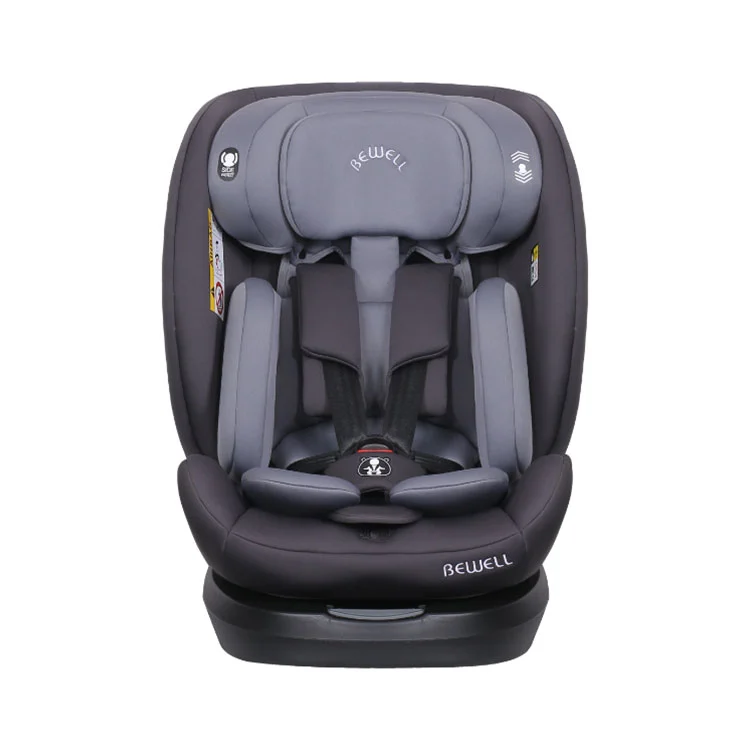
Our Top Picks at a Glance
All real specs, straight from our product range. The first three are true extended rear-facing seats; the last two are forward-facing seats for older children.
| Model | Best For | Height Range | Rear-Facing | Install | Weight |
|---|---|---|---|---|---|
| BW23 | Best all-in-one | 40–150 cm (0–12Y) | 40–105 cm | ISOFIX + top tether | 12.5 kg |
| BW22 | Best for newborns | 40–150 cm (0–12Y) | 40–105 cm | ISOFIX + support leg | 7.5 kg |
| BW25 | Best stability | 40–150 cm (0–12Y) | 40–105 cm | ISOFIX + support leg | 12.5 kg |
| BW17 | Best for older kids | 76–150 cm (9M–12Y) | Forward only | ISOFIX + top tether | 7.5 kg |
| BW15 | Best high-back booster | 100–150 cm (4–12Y) | Forward only | ISOFIX + belt | 7.5 kg |
Notice the rear-facing column. Only the BW23, BW22, and BW25 do it — and all three go to 105 cm, which covers most children to around age 4. That's what "extended rear-facing" means in practice.
What "Extended Rear-Facing" Actually Means
"Extended rear-facing" (sometimes shortened to ERF) means keeping a child rear-facing well beyond the old age-1 or age-2 rule — often to age 4. It's the standard in Sweden, where child crash fatalities are among the lowest in the world.
What makes it possible is the seat's rear-facing height limit. Our rotating convertibles allow rear-facing all the way to 105 cm. For most children, 105 cm arrives somewhere around the fourth birthday — so these seats let you follow best-practice safety guidance for years, not months.
If you want the full reasoning on why rear-facing is so much safer, our guide on rear-facing vs forward-facing car seats breaks down the crash data, and our pillar guide covers when it's actually safe to turn forward.
The number to compare when shopping: the rear-facing height limit. The higher it is, the longer the seat protects your child at the most vulnerable stage.
Our 3 Extended Rear-Facing Picks (Reviewed)
These three are the heart of this guide — the only Bewell seats that rear-face, all to 105 cm, all with a 360° rotating base and five-point harness, all certified to ECE R129.
1. Best All-in-One: Bewell BW23
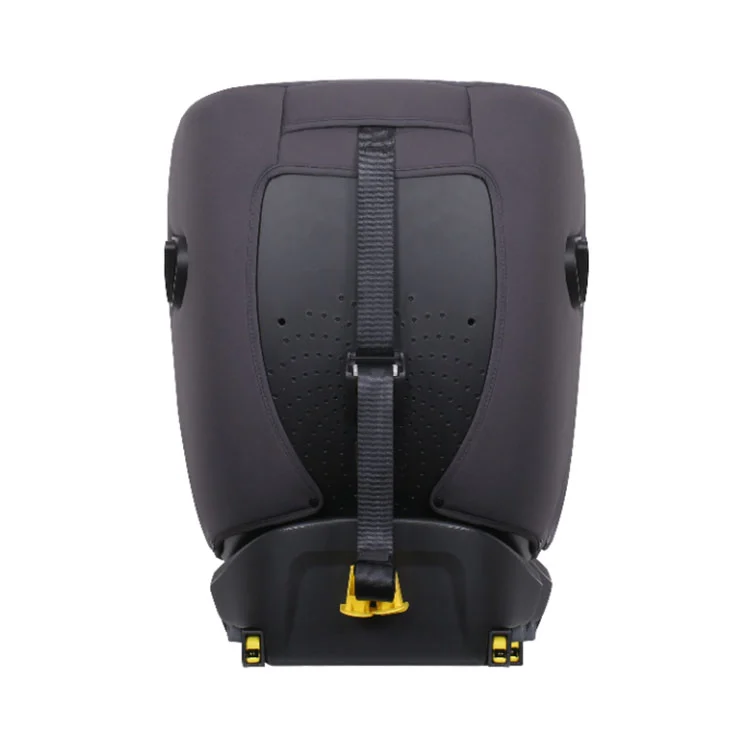
Our most complete seat, and the one we'd point most families to first. The BW23 covers the entire journey — rear-facing from 40–105 cm, then forward-facing to 150 cm — so a single seat carries one child from newborn to around age 12. It installs with ISOFIX plus a top tether for anti-rotation stability, and the 360° rotating base means you turn the seat toward the door to load your child, then spin it rear-facing to drive.
Key specs: Height 40–150 cm · 0–12 years · rear-facing to 105 cm · ISOFIX + top tether · 360° rotation · whole-body blow-molding · built-in steel frame · five-point harness · 12.5 kg.
Best for: Families who want to buy once and cover ages 0–12 with extended rear-facing built in.
→ View the BW23 | Learn how the top tether works and when to switch to booster mode.
2. Best for Newborns: Bewell BW22
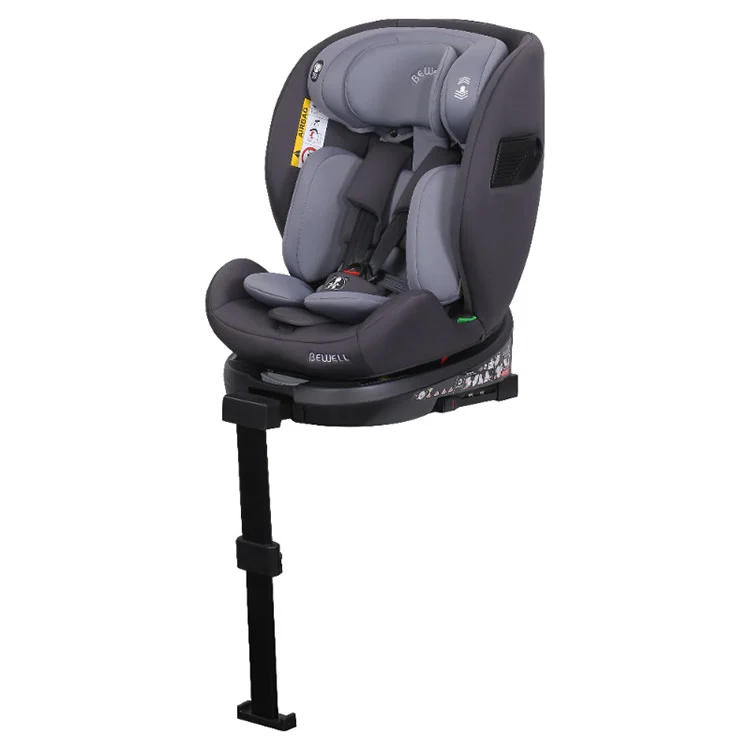
Same extended rear-facing range as the BW23 (40–105 cm rear, to 150 cm forward), but installed with a support leg instead of a top tether — the leg braces against the vehicle floor to reduce crash movement. At 7.5 kg it's the lightest of the three rotating seats, which makes it easier to move between cars. The 360° rotation is a genuine back-saver during the newborn months, when you're loading a baby several times a day.
Key specs: Height 40–150 cm · 0–12 years · rear-facing to 105 cm · ISOFIX + support leg · 360° rotation · whole-body blow-molding · built-in steel frame · five-point harness · 7.5 kg.
Best for: Newborns and infants; parents who want a lighter seat with support-leg stability.
3. Best Stability: Bewell BW25
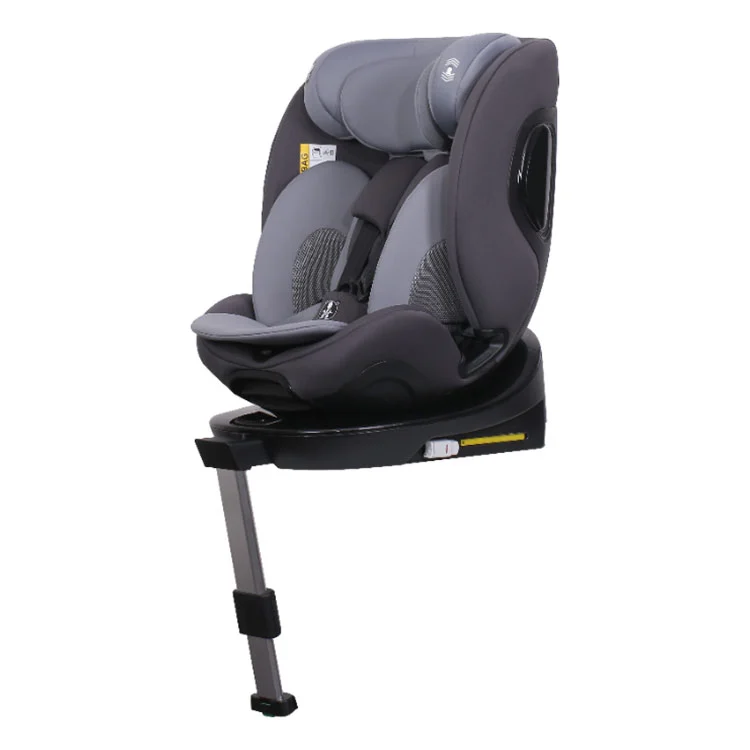
The BW25 pairs the same 40–105 cm rear-facing range with a support-leg install and a hybrid construction — blow-molding plus injection-molding — for a reinforced shell. Like its siblings it rotates 360° and runs a five-point harness with a built-in steel frame. If anti-rotation crash stability is your top priority, this is the pick.
Key specs: Height 40–150 cm · 0–12 years · rear-facing to 105 cm · ISOFIX + support leg · 360° rotation · blow + injection molding · built-in steel frame · five-point harness · 12.5 kg.
Best for: Parents who want maximum anti-rotation crash stability with a reinforced shell.
Two More for Older Kids (Forward-Facing)
If your child has already outgrown rear-facing, or you need a seat for the older years, these two forward-facing options round out the range. They don't rear-face — so they're not extended rear-facing seats — but they're worth knowing for the next stage.
Bewell BW17 — Forward-Facing, 9 Months to 12 Years
A forward-facing seat covering 76–150 cm (roughly 9 months to 12 years), installed with ISOFIX plus a top tether. It uses whole-body blow-molding and a five-point harness, with a reinforced inner structure. A solid choice once your child has finished the rear-facing stage.
Key specs: Height 76–150 cm · 9M–12 years · forward-facing · ISOFIX + top tether · five-point harness · 7.5 kg · ECE R129.
Bewell BW15 — High-Back Booster, 4 to 12 Years
A forward-facing high-back booster for 100–150 cm (about 4 to 12 years), with a detachable backrest, memory foam in the headrest and backrest, and two install options (ISOFIX + belt, or belt only). When your child is ready to graduate from a harness to the vehicle seat belt, this positions the belt correctly.
Key specs: Height 100–150 cm · 4–12 years · forward-facing booster · detachable backrest · memory foam · ISOFIX + belt or belt only · 7.5 kg · ECE R129.
How We Chose These Seats
This guide focuses on extended rear-facing, so the three rotating convertibles lead. We weighed four things:
- Rear-facing capacity. All three top picks rear-face to 105 cm — the spec that keeps a child in the safest position longest.
- Installation stability. Every pick uses ISOFIX, plus either a top tether or a support leg to control crash movement.
- Certification. All are certified to ECE R129 (i-Size), the standard that requires side-impact testing, and carry China CCC certification.
- Real-world fit. 360° rotation for daily loading, a lighter option (BW22), and a reinforced-shell option (BW25).
For the full reasoning on what i-Size certification actually means, see our guide on i-Size vs ECE R44/04.
Key Features to Look For
Comparing against another brand? Here's what actually matters, in order:
- 1. High rear-facing height limit. The single most important spec. A limit of 105 cm keeps most kids rear-facing to around age 4.
- 2. ECE R129 (i-Size) certification. It requires mandatory side-impact testing, which the older R44 standard doesn't.
- 3. ISOFIX plus a tether or support leg. Reduces installation error and controls crash rotation.
- 4. 360° rotation. Not just convenience — easier loading means you're more likely to buckle correctly every time.
- 5. Five-point harness + steel frame. Distributes crash force across five points and reinforces the shell.
- 6. Non-toxic, washable fabric. Practical and important for skin contact over years of use.
Once you've chosen, our step-by-step installation guide walks through getting it in correctly.
FAQs
What is the best convertible car seat for extended rear-facing?
Among Bewell seats, the BW23, BW22, and BW25 all rear-face to 105 cm — the highest in our range. The BW23 is the most complete (all-in-one to age 12 with a top tether); the BW22 is the lightest; the BW25 has the most reinforced shell. All three are certified to ECE R129.
How long can my child stay rear-facing in these seats?
Up to 105 cm in height, which for most children is somewhere around age 4. That's well beyond the 15-month minimum the i-Size standard requires, and in line with extended rear-facing best practice.
Are these seats suitable for newborns?
Yes. The BW23, BW22, and BW25 all start at 40 cm, which fits a newborn, with appropriate recline and a five-point harness. The BW22 is the lightest at 7.5 kg, which some parents prefer for the newborn stage.
What's the difference between the top tether and the support leg?
Both control crash movement. A top tether (on the BW23 and BW17) anchors the top of the seat to a vehicle anchor point; a support leg (on the BW22 and BW25) braces against the vehicle floor. Both are effective anti-rotation systems — it comes down to your vehicle and preference.
Do these seats use ISOFIX or a seat belt?
The three rotating convertibles (BW23, BW22, BW25) install with ISOFIX plus either a top tether or support leg. The BW15 booster offers both ISOFIX-plus-belt and belt-only options. Check your vehicle has ISOFIX anchors before buying an ISOFIX-only model.
Which seats are certified, and to what standard?
Every seat in this guide is certified to ECE R129 (i-Size), the newer European standard requiring side-impact testing, and carries China CCC certification. Bewell operates an ISO 9001 certified factory and uses RoHS and REACH compliant materials.
The Bottom Line
The best convertible car seat isn't the one with the most features or the lowest price. It's the one that keeps your child rear-facing the longest, installs correctly every time, and carries certification you can verify.
In our range, that's the three rotating convertibles: the BW23 for the whole 0–12 journey, the BW22 for a lighter newborn-friendly option, and the BW25 for maximum shell reinforcement. All three rear-face to 105 cm, rotate 360°, and are certified to ECE R129.
Browse the full Bewell car seat range, or download the test reports on our quality control page to verify the certifications for yourself.
Whatever you choose, keep them rear-facing as long as the seat allows. That's the decision that matters most.
About Bewell
This article reflects Bewell's own product range, with specifications taken from our 2026 product catalogue. Always consult each seat's manual for installation guidance specific to your vehicle and child.
Sources:
- Bewell 2026 Product Catalogue — model specifications
- American Academy of Pediatrics — "Child Passenger Safety" policy statement (Durbin & Hoffman, Pediatrics, 2018; reaffirmed 2025)
- National Highway Traffic Safety Administration (NHTSA) — Car Seats and Booster Seats recommendations (nhtsa.gov)
- UNECE Regulation No. 129 (i-Size) — Enhanced Child Restraint Systems
- Folksam — Child car occupant fatality study, Sweden 1992–2024 (extended rear-facing data)