

Look at the label on the side of any European car seat. You'll see one of two codes: ECE R44/04 or UNECE R129 (also called i-Size). Some seats are certified to both. Ours are — and that's deliberate.
Most buyers see those codes and skip past them. They shouldn't. Those small labels are the difference between a seat that meets the safety floor and one that exceeds it — and the gap is wider than most parents realize.
Here's the plain-language version of what each standard actually means, where they differ, and which one matters when you're shopping in 2026. Plus the other compliance marks worth checking: CCC, ISO 9001, RoHS, and REACH.
The Short Answer
Both ECE R44/04 and i-Size (R129) are official European safety regulations for child car seats. A seat sold in Europe must carry at least one of them. Here's the one-line version of each:
| Standard | Year Introduced | What It Means |
|---|---|---|
| ECE R44/04 | 1995 (R44, with R44/04 update) | The older standard. Classifies seats by weight. Optional side-impact testing. |
| i-Size (UNECE R129) | 2013, phased rollout | The newer standard. Classifies seats by height. Mandatory side-impact testing. |
Both are valid for sale through at least 2030 in the EU. But for any new seat purchase, i-Size is the more demanding (and therefore safer) certification — and a seat tested against both gives you the widest safety coverage.
What Is ECE R44/04?
ECE R44 is the older of the two standards. The "04" refers to the fourth amendment to the original regulation, which is the version still in use today. It's been the European baseline for child car seats for nearly three decades.
How R44/04 classifies seats
R44 sorts seats into weight groups:
| Group | Weight Range | Typical Age |
|---|---|---|
| Group 0 | Up to 10 kg (22 lbs) | Birth to ~9 months |
| Group 0+ | Up to 13 kg (29 lbs) | Birth to ~15 months |
| Group 1 | 9–18 kg (20–40 lbs) | 9 months to ~4 years |
| Group 2 | 15–25 kg (33–55 lbs) | 3–7 years |
| Group 3 | 22–36 kg (48–79 lbs) | 6–12 years |
What R44/04 tests
R44/04 mandates frontal and rear crash testing at specified speeds. Side-impact testing is optional, not required — which is the biggest gap in the standard.
That gap matters because around a quarter of serious crash injuries to children come from side impacts. A seat that's never been tested against a side hit may still pass R44/04.
What Is i-Size (UNECE R129)?
i-Size is the newer European standard. UNECE Regulation 129 was first introduced in 2013 and has been rolled out in phases ever since. It's designed to fix the limitations of R44 — most notably the missing side-impact requirement.
How i-Size classifies seats
Instead of weight groups, i-Size uses height ranges. The reasoning: a child's height is a more accurate predictor of how a seat actually fits than weight alone. Two 12 kg toddlers can be very different shapes.
What i-Size tests
Three things i-Size requires that R44 doesn't:
- Mandatory side-impact testing. Every i-Size seat is crash-tested from the side, not just the front.
- Mandatory rear-facing until 15 months. R44 allowed forward-facing as early as 9 months in some configurations. i-Size makes that illegal.
- Mandatory ISOFIX installation. i-Size seats must use ISOFIX (the European name for LATCH) — they can't be installed with just a seat belt. This reduces installation error rates dramatically.
Add a more advanced crash test dummy (Q-series, which measures more impact points than R44's P-series), and the result is a standard that catches a lot more of what can go wrong in a real crash.
5 Key Differences Between R44 and i-Size
The differences in one table:
| Factor | ECE R44/04 | i-Size (R129) |
|---|---|---|
| Classification | By weight (kg) | By height (cm) |
| Side-impact test | Not required | Mandatory |
| Rear-facing minimum | Not specified (some seats allow forward-facing at 9 mo) | Required until at least 15 months |
| Installation | ISOFIX or seat belt | ISOFIX only (most categories) |
| Crash test dummy | P-series (older) | Q-series (more sensors, more accurate) |
Look at that table again. There isn't a single row where R44 is more demanding than i-Size. That's the entire story.
Why Dual Certification Matters
So if i-Size is strictly better, why do some manufacturers — ours included — still certify to both?
Three practical reasons:
- More tests passed, not fewer. A dual-certified seat has been through every test in both regulations — frontal, rear, and the side-impact test R44 never asks for. Two certificates means two complete approval processes, not one shortcut.
- Older vehicles. i-Size requires ISOFIX, but plenty of cars on the road — especially pre-2010 models — don't have ISOFIX anchors. An R44/04 certification means the seat is also approved for seat-belt installation, so it works in those vehicles too.
- International markets. Many countries outside the EU accept either ECE standard. A dual-certified seat is sellable — and verifiable — in more markets than a single-certificate product.
If you see both codes on a label, it's not redundancy. It's a manufacturer choosing the harder path twice.
Which Should You Buy in 2026?
Three scenarios for a buying decision:
Buying a new seat in 2026
Choose i-Size (R129), or a dual-certified seat. i-Size is the current standard, it's been mandatory for new model approvals since 2024, and it's what every safety organization recommends. The price difference between an R44-only seat and an i-Size seat is small, and the safety difference is meaningful.
Already own an R44/04 seat
Keep using it. R44/04 seats are still legal in the EU, and a well-installed R44 seat is far safer than no seat at all. Just make sure you're keeping the child rear-facing as long as the seat allows — that's the biggest behavioral fix you can make regardless of certification.
If you're not sure when to switch to forward-facing, our pillar guide on when babies can face forward in a car seat covers it.
Shopping for a seat sold internationally
Look for dual certification (both R44/04 and R129). It's a strong signal that the manufacturer has put the seat through every test from both regulations — not the bare minimum of one.
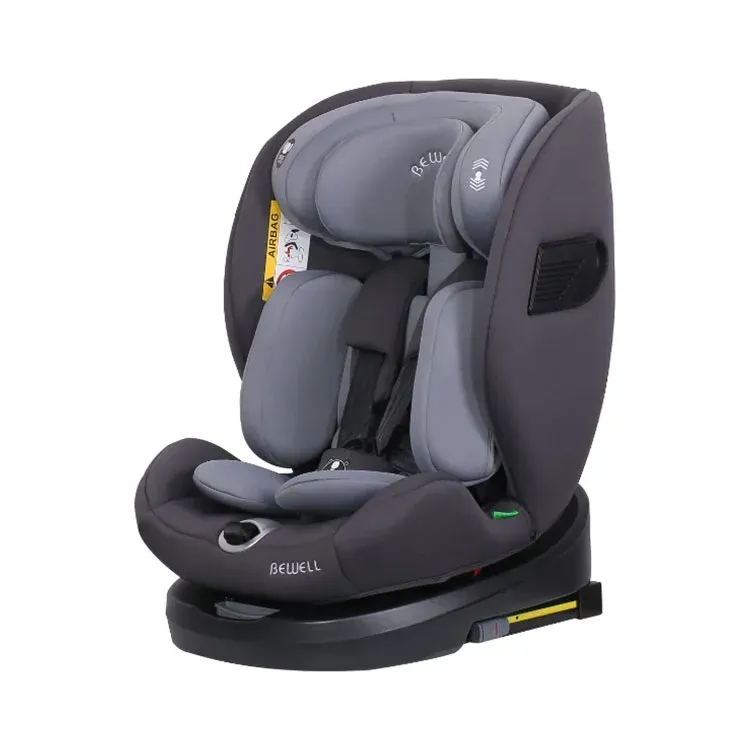
Every Bewell seat is certified to both ECE R44/04 and i-Size R129. Browse our full range — every model passes both frontal and side-impact testing, and the certifications are clearly marked on the label.
How to Verify a Car Seat's Certification
Don't take the marketing copy's word for it. Check the seat itself.
Every certified European car seat carries an orange label, typically on the side or back of the seat. The label shows:
- The standard code: "ECE R44/04" or "R129" (i-Size).
- The category: Universal, Semi-Universal, Vehicle-Specific, or Specific Vehicle.
- The approval number: An E-mark code with a country number (E1 = Germany, E11 = UK, etc.).
- The weight or height range: Depending on which standard.
One more verification step serious manufacturers welcome: ask for the test report. A certificate is the summary; the report is the proof. If a seller can't or won't produce either, walk away.
Beyond the Crash Standards: CCC, ISO 9001, RoHS & REACH
R44 and R129 cover crash safety. But a complete compliance picture includes a few more marks worth knowing — especially if you're buying from an international manufacturer.
CCC (China Compulsory Certification)
China's mandatory product certification. Any child car seat sold within China must carry the CCC mark — it's the legal equivalent of the ECE approval for the Chinese market, with its own crash testing requirements. For a manufacturer, holding CCC alongside ECE certifications means the same product line has cleared two different national testing regimes.
ISO 9001 (Quality Management)
Unlike the others, ISO 9001 doesn't certify a product — it certifies the factory. It means the manufacturer's production process is audited against an international quality management standard: consistent materials, documented procedures, traceable batches. A crash certificate tells you one tested sample was safe; ISO 9001 tells you the production line is built to keep making them that way.
RoHS & REACH (Material Safety)
Two EU frameworks covering what the seat is made of, rather than how it crashes:
- RoHS restricts hazardous substances (lead, mercury, certain flame retardants) in materials — demonstrated through testing reports.
- REACH is the EU's broader chemical regulation, covering substances of very high concern in fabrics, foams, and plastics — also demonstrated through testing.
Your child sits in, chews on, and sleeps against this product for years. Material compliance isn't a footnote.
Bewell seats carry ECE R44/04, i-Size R129, and CCC certification, are produced in an ISO 9001 certified factory, and use RoHS and REACH compliant materials. The full picture is on our quality control page, with downloadable test reports.
What These Standards Mean Outside Europe
R44/04 and i-Size are European regulations, but their influence reaches further than you might expect.
- U.S. (FMVSS 213): America has its own standard, FMVSS 213, which differs from both R44 and R129. U.S. seats don't have to meet i-Size — but i-Size seats often exceed FMVSS 213 in side-impact protection.
- China (CCC): Mandatory for any seat sold domestically in China, with its own testing regime (see the section above).
- Australia (AS/NZS 1754): Australia uses its own standard, often considered stricter than R44 in some categories.
- Middle East, Southeast Asia, Latin America: Many markets accept or reference ECE certifications. A seat certified to both R44/04 and R129 is widely sellable internationally — which is why most serious manufacturers test to both.
FAQs
Is i-Size safer than ECE R44/04?
Generally yes. i-Size requires mandatory side-impact testing, uses a more advanced crash test dummy, mandates rear-facing until at least 15 months, and requires ISOFIX installation. R44/04 doesn't require any of those. Both standards make seats that are far safer than no seat, but i-Size sets a higher bar.
Can I still buy an ECE R44/04 seat in 2026?
Yes. R44/04 seats remain legal for sale in the EU through at least 2030. But new models since 2024 must be certified to i-Size — so the R44-only seats on the market are mostly older models being phased out.
Is a seat with both R44/04 and R129 certification better?
It's been tested more. Dual certification means the seat passed every test in both regulations — including the side-impact test R44 doesn't require — and is approved for both ISOFIX and seat-belt installation, so it fits older vehicles too.
What does "i-Size compatible" mean for vehicles?
Some cars are labeled "i-Size compatible" or have "i-Size" markings on their seats. It means the vehicle has been tested with i-Size car seats and confirmed to fit them properly. Any i-Size seat will fit any i-Size compatible seating position in any vehicle — that's part of the standard's design.
Why is rear-facing required until 15 months under i-Size?
Crash research shows young children's neck and spine aren't developed enough to handle frontal-crash forces in a forward-facing seat. R129 used that data to set 15 months as the legal minimum — and many safety experts recommend going much longer, often to age 4.
What's the difference between i-Size and "Plus Test"?
"Plus Test" is a separate, Sweden-specific approval that goes beyond either R44 or R129, requiring extremely low neck loads in frontal crashes. Only a small number of seats earn it. It's not part of EU regulation, but it's considered the world's toughest car seat safety standard.
The Bottom Line
Certification labels look like fine print. They're not. The difference between R44/04 and i-Size is the difference between a standard set in the 1990s and one written with modern crash science — and a seat certified to both has simply been tested against more of what can go wrong.
If you remember nothing else: look for the orange label, prefer i-Size (R129) or dual certification, check for material compliance (RoHS/REACH), and treat anything without a verifiable label with suspicion.
Every Bewell car seat is certified to both ECE R44/04 and i-Size R129 — frontal and side-impact tested — with CCC certification for China, an ISO 9001 certified factory, and RoHS/REACH compliant materials. See our full product range or download the test reports on our quality control page.
The standards exist for a reason. The label is the proof.
About the Author
This article is for informational purposes. Regulations evolve — always check current UNECE and EU directives for the latest certification requirements.
Sources:
- UNECE Regulation No. 129 (i-Size) — Enhanced Child Restraint Systems
- UNECE Regulation No. 44 — Child Restraint Systems (R44/04 amendment series)
- European Commission — Vehicle Safety and Child Restraint Standards
- CNCA — China Compulsory Certification (CCC) Requirements for Child Restraint Systems
- Swedish Plus Test — Vehicle Test Programme